Stiga DNA Pro H Review: Fast, Grippy, and Built for Aggressive Forehand Play
Pros
- Reviewers describe a crisp, direct feel and a clicking sound on contact
- Excellent multi-gear performance close to and away from the table
- High throw angle makes topspin attacks safer over the net
- Outstanding grip and spin rated 9.03/10 across community reviews
- ESC enlarged sponge cells boost catapult effect and arc
- Durable topsheet with natural-synthetic rubber blend
- Lower-priced alternative to Tenergy 80; the 95 percent figure is one player's estimate
Cons
- Published cut weight is about 52–54 g; one measured uncut sheet was 72 g
- Loop power against heavy backspin is only average
- 50-degree hardness demands arm strength and proper technique
- Tabletennis-Reference's sample averages 7.97/10 for control, below its speed and spin scores
- Can feel too springy for consistent down-the-line loops
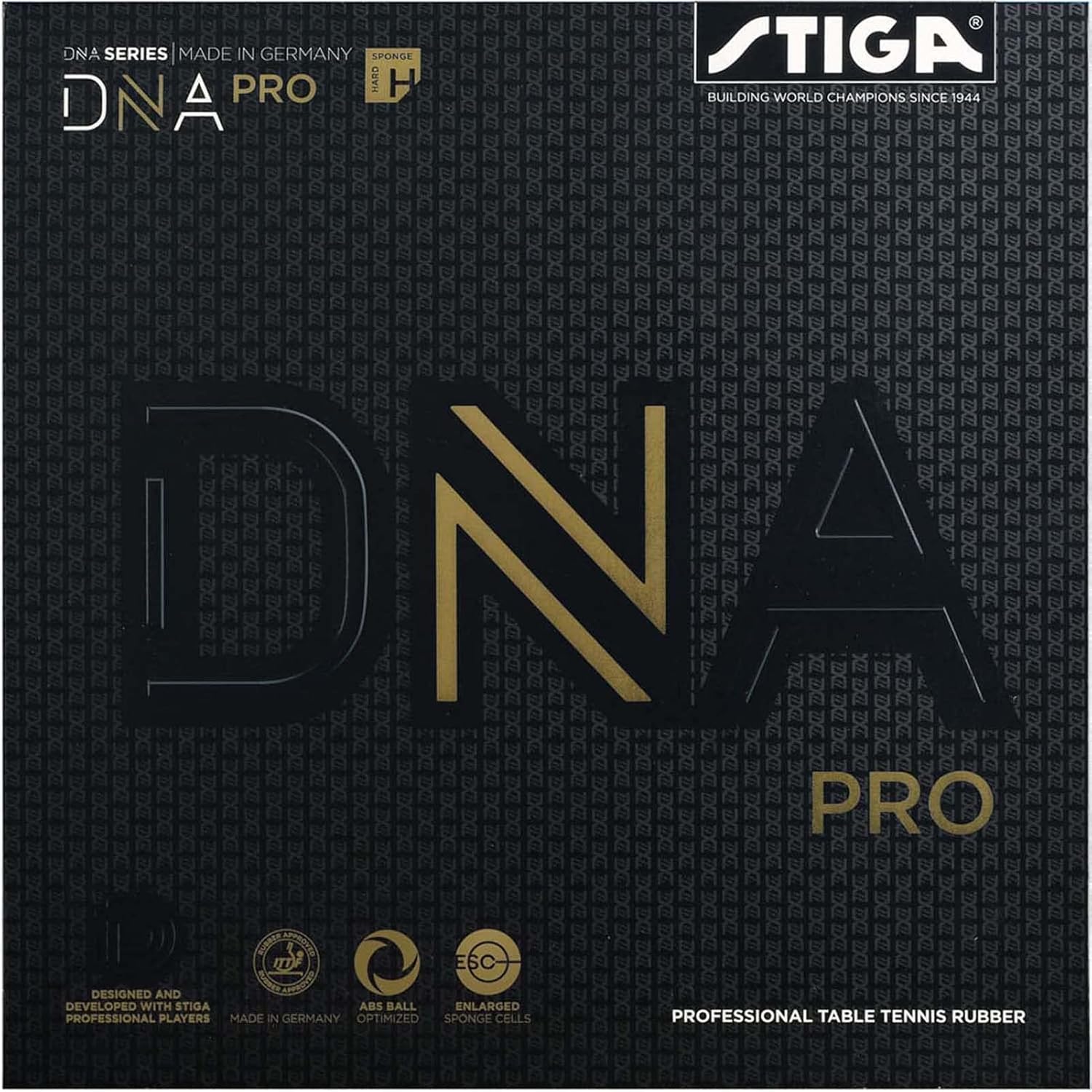
The Stiga DNA Pro H is a hard, German-made inverted tensor from Stiga’s first domestically produced DNA line. The 50-degree orange sponge runs ESC (Enlarged Sponge Cell) tech, which bumps up the catapult and lifts the throw on every stroke. Stiga blended natural and synthetic rubber in the topsheet for durability and a grippy surface that bites the modern ABS plastic ball. Truls Moregardh and other pros have run it on the international circuit. More than 31 community reviews on reference databases average near 9 out of 10, and the name it has built is as a forehand weapon for attackers.
Performance
Tabletennis11’s test against the Andro Rasanter R53 describes direct contact on flat drives. In that head-to-head, serve receive and the short game scored 9.0/10, looping 9.1/10, flat hitting 9.0/10, and blocking 9.1/10. Those are one tester’s ratings. The same test says the ESC sponge lifts the throw, so topspin can clear the net on a slightly ragged swing, and that the topsheet is grippy but not tacky. Stiga’s own chart, on its Japanese product page, rates this sheet 76 control, 160 speed and 134 spin. Those are Stiga indexes, not scores out of 10, and they are not a comparison with Tenergy.
Mid-distance loops feel right, and reviewers keep coming back to the same phrase: many gears. The rubber accelerates step by step with your swing instead of spiking out of nowhere. Flat hitting plays to its strength too. The hard sponge answers in a direct, linear way that rewards driving through the ball, and the trajectory comes out low and penetrating, hard for an opponent to read. Grip on the topsheet sits up with premium names like Dignics, which shows on heavily brushed strokes. Durability holds up as well: the natural-synthetic topsheet blend shrugs off repeated gluing and blade transfers without tearing or separating.
The weak spot is looping against heavy backspin, where spin generation is only average next to softer or tackier rubbers. Down-the-line loops turn inconsistent when the angle slips, because the sponge springs back hard, and FH-to-FH exchanges fall flat without good timing. On the backhand, most reviewers call it too fast and keep it strictly forehand. The Tabletennis-Reference community of 31 reviewers scores it 8.9 for speed, 9.03 for spin, and 7.97 for control — the control hit you sign up for with a hard sponge. Tabletennis11 weighed one uncut 169 × 169 mm sheet at 72 g, and 52 g after cutting it to a 158 × 151 mm test blade. A separate Revspin report put a sheet cut to a normal blade at 54 g. The low-50s number is cut weight, not uncut weight, so a lighter blade still helps if the cut sheet sits in that range.
What Reviewers Agree (and Disagree) On
Two points draw near-unanimous agreement: the DNA Pro H packs speed and spin into one sheet, and it works best on the forehand. Reviewers keep putting its grip in the same bracket as premium rubbers like Dignics, at a much lower price. Control is where opinions split. Players coming off Chinese tacky rubbers often find the control floor surprisingly easy for a 50-degree tensor. Beginners and players with shorter swings tell a different story — the springy sponge leaves them inconsistent. Backhand use divides people the same way. A minority make it work there; most say don’t.
Who Should Buy It
Club-level and competitive players rated 1500 USATT and up, the ones who put forehand speed and spin first, should start here. If you’re on Tenergy 80 or another premium rubber and want to cut the cost without giving up much, the DNA Pro H is a straight swap. Cutsmen who want attack on tap without wrecking their chop consistency will get on with it too. Skip it if you’re a beginner, if you like a medium-soft feel under 47 degrees, or if you want one rubber that handles both wings.
FAQ
What is the sponge hardness of the Stiga DNA Pro H?
The 50-degree orange sponge puts it squarely in the hard category. If you want something gentler, the DNA Pro line also runs softer variants at 42.5 degrees (S) and 47.5 degrees (M).
How does the DNA Pro H compare to Butterfly Tenergy 80?
One Revspin player, also quoted on Megaspin, estimated the speed and spin at about 95 percent of Tenergy 80 and said the lower catapult made it easier to control. That is one report. Stiga’s own indexes for this sheet are 160 speed and 134 spin, against 156 and 132 for its Mantra H, which is a within-brand chart rather than a Tenergy measurement. It costs less than Tenergy 80, which is why players shop it as a substitute.
Is the Stiga DNA Pro H suitable for the backhand?
Most reviewers say no. The speed and springy sponge fight you on the backhand, where a softer touch and finer adjustments matter more. Keep it on the forehand and pair a slower or medium rubber on the backhand.
How heavy is the Stiga DNA Pro H?
Tabletennis11 measured one uncut sheet at 72 g and the same sheet at 52 g after cutting. A Revspin user reported 54 g once cut to a blade. Budget for a cut sheet around the low 50s, not an uncut weight in that range.
What playing level is required to use the DNA Pro H effectively?
Aim for intermediate to advanced. The 50-degree hardness needs real swing mechanics and arm strength to compress the sponge. Beginners will fight for consistency and pay for every off-center hit.
Does the Stiga DNA Pro H work well with the modern ABS plastic ball?
Yes. Stiga built and tuned it for the 40+ ABS plastic ball era. The ESC sponge and grippy topsheet answer the plastic ball’s lower spin with more bite and a higher throw on topspin strokes.