Andro Rasanter R50 vs Stiga DNA Pro H: Which Should You Buy?
| Andro Rasanter R50 | Stiga DNA Pro H | |
|---|---|---|
| Our rating | 8.8/10 | 8.8/10 |
| Best side | Forehand | Forehand |
| Control | 7.5 | 8 |
| Speed | 9.4 | 9 |
| Spin | 9.4 | 9 |
| Sponge hardness | 50° | 50 degree |
| Type | tensor/non-tacky | inverted |
| Uncut weight | 70 g | 54 g |
We may earn a commission from links on this page. Learn more.
Two budget alternatives chasing two different flagships
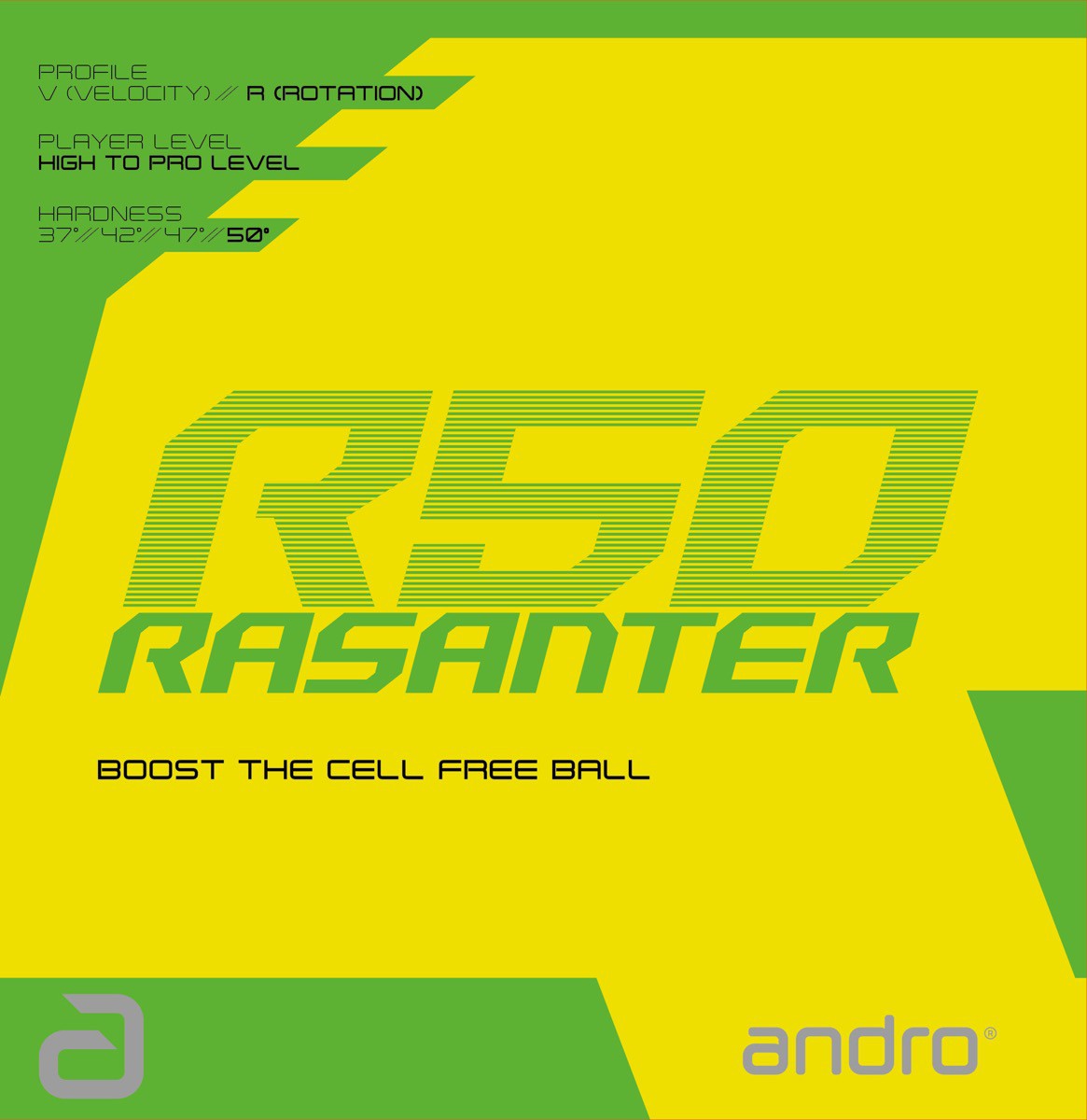
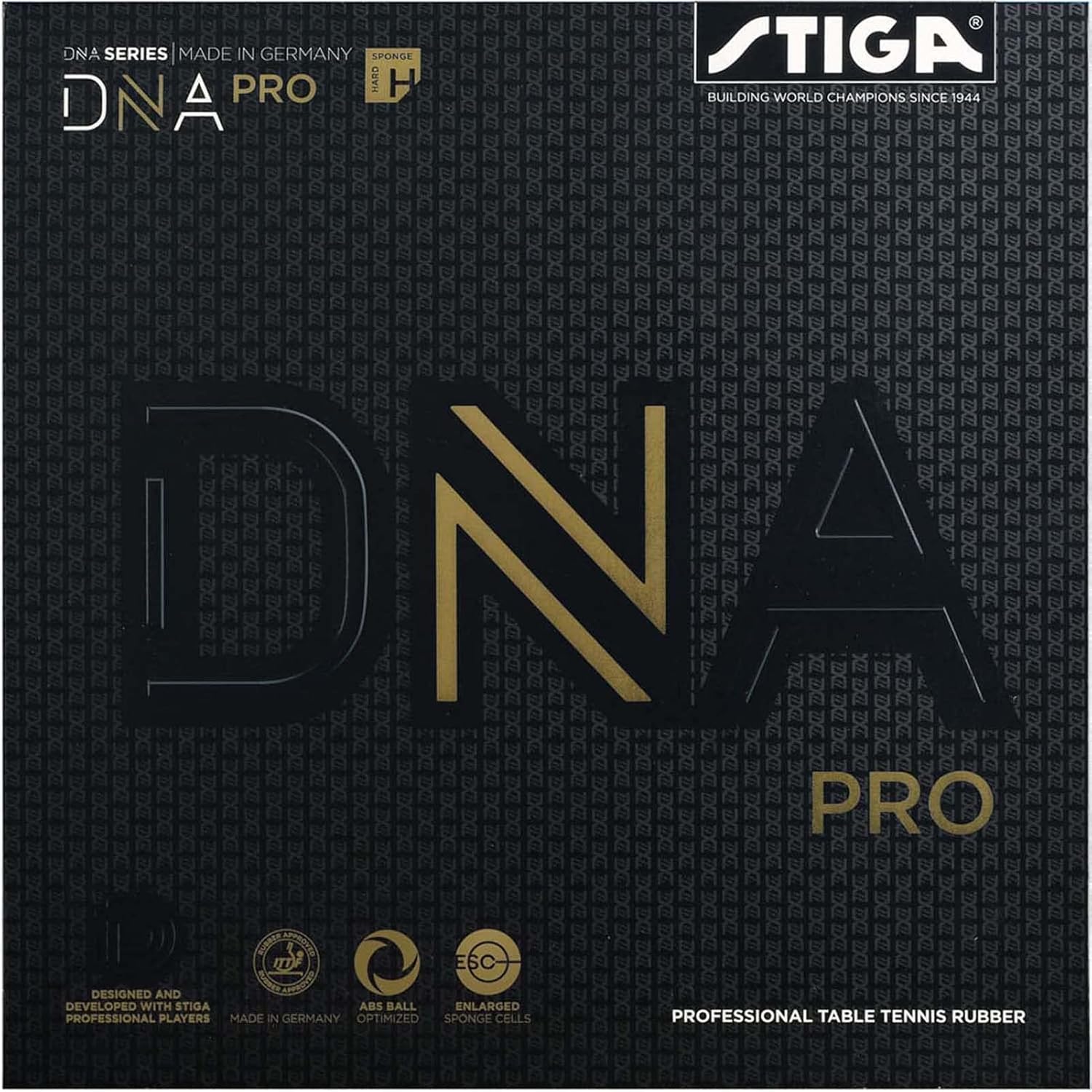
Andro Rasanter R50 markets itself as a lower-cost way to get Tenergy 05-level performance. Stiga DNA Pro H’s own pros list makes a parallel but different claim: a cost-effective alternative to Tenergy 80 at around 95 percent performance. These are not competing for the same job — one is chasing Tenergy 05’s high-spin power-looping character, the other is chasing Tenergy 80’s faster, more direct profile. Worth knowing before you compare their numbers directly, since a gap between them isn’t necessarily a gap against each other — it’s partly a gap between the two Tenergy rubbers they’re each imitating.
The two biggest real gaps
Durability: 8.3 vs 7.1 (delta 1.2). This is the second-largest durability gap anywhere in the Rasanter R50 comparison set, and it favors R50 heavily. If you loop a lot of volume in practice, this is a meaningful cost-per-month consideration weighing against DNA Pro H’s lower sticker price.
Spin: 9.4 vs 8.6 (delta 0.8). R50 pulls clearly ahead here. Interestingly, DNA Pro H’s own pros list cites outstanding grip and spin rated 9.03 out of 10 across community reviews — a number that reads close to R50’s 9.4 on its face, but the aggregated radar spin score used in this comparison puts DNA Pro H at 8.6, nearly a point lower. That gap between DNA Pro H’s own quoted community number and the radar score here is worth flagging honestly rather than picking whichever number flatters the rubber — different aggregation methods produce different numbers, and readers should treat both as directional rather than precise.
The smaller gaps
Speed: 9.4 vs 8.8 (delta 0.6) favors R50 moderately. Control: 8.7 vs 8.4 (delta 0.3) is a small edge to R50. Throw: 5.9 vs 6.2 (delta -0.3) is a small edge to DNA Pro H — a slightly higher, safer arc. Tackiness: 1.8 vs 1.9 (delta -0.1) is a rounding error; ignore it.
The weight gap that changes racket balance
R50 sits at roughly 70g uncut, DNA Pro H at 51-54g by its own cons list — call it a 16-18g difference. DNA Pro H’s cons also flag that it is heavy at around 51-54g uncut for its own category, so understand that R50 is heavier still by a wide margin. If you’re mounting either rubber on a lighter blade, this difference alone can be the deciding factor on whether the finished racket feels head-heavy.
What the sources say — including a comparison that already exists
Tabletennis11’s blog carries a review comparing Stiga DNA Pro H against Andro’s Rasanter R53 — a sibling rubber to R50 in the same Rasanter lineup, though not R50 itself. That means independent reviewers have already put Stiga’s DNA line head-to-head against Andro’s Rasanter line, which lends outside credibility to treating these two as comparable options in the same shopping decision. Revspin.net and Tabletennis-Reference.com both host the underlying rating data behind DNA Pro H’s radar numbers, and Table Tennis Hub’s product page corroborates the cost-effective-alternative positioning from the pros list.
Should you switch?
DNA Pro H’s own cons are candid: loop power against heavy backspin is only average, and its control rating is lower than softer alternatives. Against R50’s 1.2-point durability edge and 0.8-point spin edge, there isn’t a strong data-driven case for switching from R50 to DNA Pro H unless the deciding factor for you is the lighter weight or the slightly higher, safer throw.
Who should buy each
R50: forehand attackers who want maximum spin and durability and don’t mind the heavier cut weight.
DNA Pro H: players who want a lighter, Tenergy-80-style direct rubber with a slightly safer throw, and who are comfortable trading some durability and top-end spin for that.
Frequently asked questions
Are Andro Rasanter R50 and Stiga DNA Pro H alternatives to the same Tenergy rubber?
No. R50's own marketing targets Tenergy 05-level performance, while DNA Pro H's pros list specifically claims to be a cost-effective alternative to Tenergy 80 at around 95 percent of its performance -- they're chasing two different flagship rubbers.
Which rubber is more durable?
R50, by 1.2 points (8.3 vs 7.1) -- the second-largest durability gap in this entire comparison set.
DNA Pro H claims a 9.03 out of 10 spin rating -- is that higher than R50?
That figure comes from DNA Pro H's own quoted community reviews. The radar spin score used for direct comparison here puts DNA Pro H at 8.6, nearly a point below R50's 9.4 -- different aggregation sources can produce different numbers, so treat both as directional rather than exact.
Is DNA Pro H lighter than R50?
Yes, noticeably -- DNA Pro H runs 51-54g uncut by its own cons list versus roughly 70g for R50, a gap large enough to change racket balance.