Butterfly Dignics 80 vs Stiga DNA Pro H: Which Should You Buy?
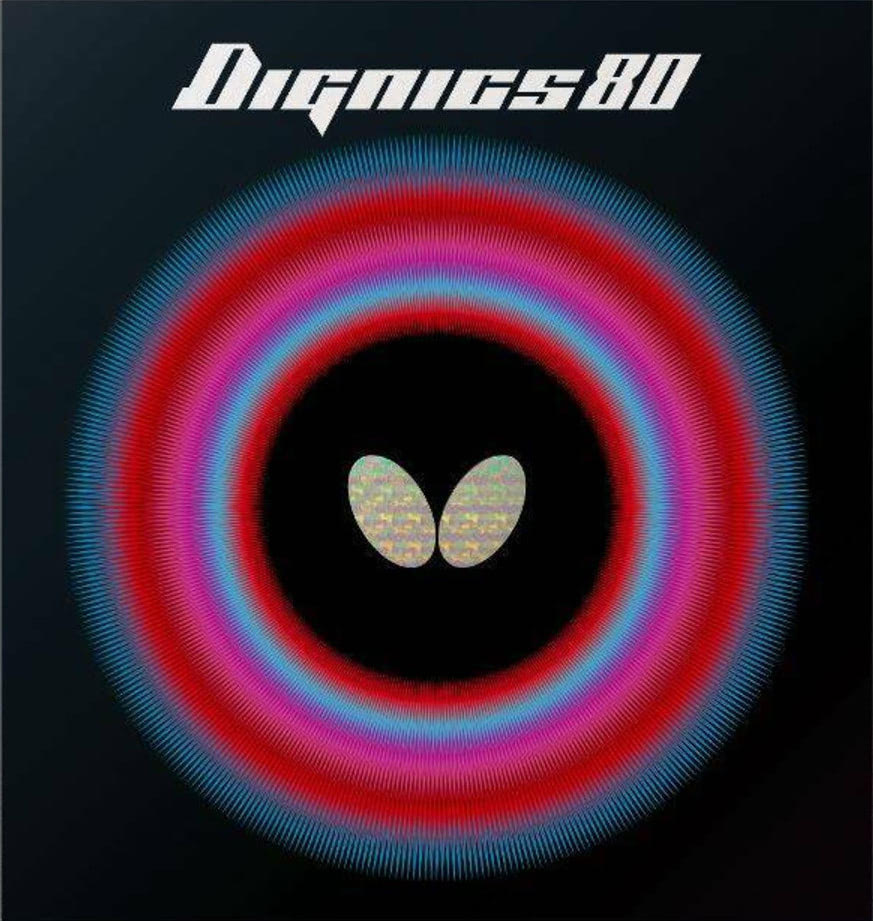
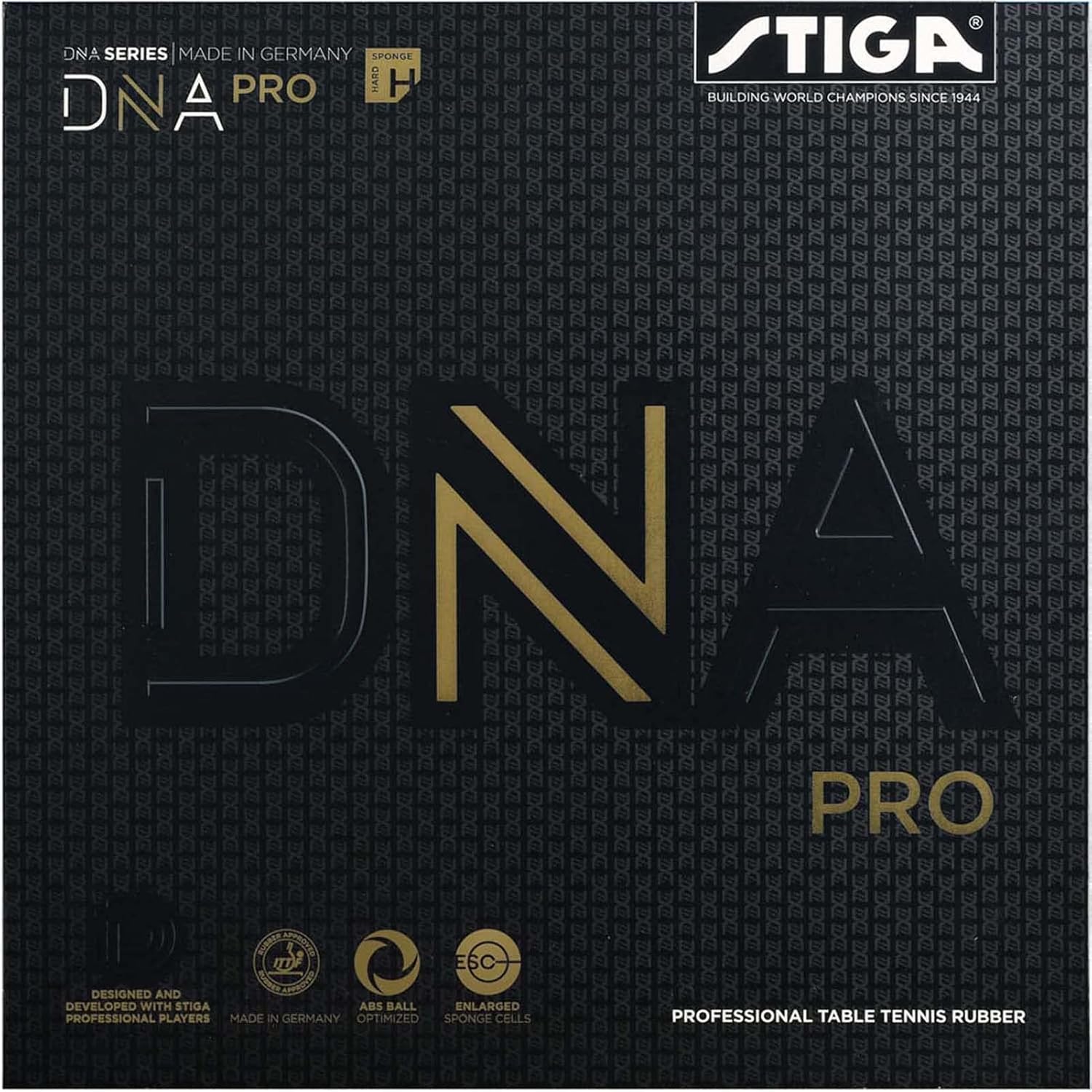
| Butterfly Dignics 80 | Stiga DNA Pro H | |
|---|---|---|
| Our rating | 9.0/10 | 8.8/10 |
| Best side | FH and BH (both sides) | Forehand |
| Control (different scales) | medium | 8 |
| Speed (different scales) | very high | 9 |
| Spin (different scales) | very high | 9 |
| Sponge hardness | approximately 40 degrees | 50 degree |
| Type | Inverted (tensor, Spring Sponge X) | inverted |
| Uncut weight | approximately 70 g | 54 g |
A row marked “different scales” puts two rating systems in one line. Those cells are not a single score you can subtract.
We may earn a commission from links on this page. Learn more.
Quick verdict
Butterfly Dignics 80 (rating 9.0) leads Stiga DNA Pro H (rating 8.8) on three axes by a consistent, moderate margin — speed by 0.6, spin by 0.5, control by 0.5 — while DNA Pro H answers back with a 0.7-point throw advantage and its own value pitch: reviewers describe it as a cost-effective alternative that reaches roughly 95 percent of Tenergy 80’s performance for meaningfully less money. Set against Dignics 80 directly rather than Tenergy 80, that framing still mostly holds, minus the durability gap.
Where Dignics 80 actually pulls ahead
Speed, spin and control all favor Dignics 80 by 0.5 to 0.6 points — not a landslide on any single axis, but consistent across all three, which adds up to a real performance edge for players chasing outright ceiling. The bigger separator is durability: Dignics 80 rates 8.7 against DNA Pro H’s 7.1, a 1.6-point gap. DNA Pro H’s own con list acknowledges this indirectly, noting the rubber demands arm strength and proper technique at its 50-degree hardness and that loop power against heavy backspin is only average — it is not marketed as the longest-lasting option in its class, even though its topsheet is described as durable for its price bracket.
Where DNA Pro H answers back
Throw favors DNA Pro H by 0.7 points (6.2 versus 5.5), and its own pros explain why that matters: “high throw angle makes topspin attacks safer over the net,” helped by ESC enlarged sponge cells that boost the catapult effect and arc. Community reviews cited alongside it rate its grip and spin at 9.03 out of 10 — in the same performance neighborhood as premium tensors, at a lower price. Tackiness is close, favoring Dignics 80 by only 0.2, effectively a non-factor.
The honest caveats on DNA Pro H
Its own cons are unusually specific and worth repeating rather than glossing over: it is heavy, in the range of 51 to 54 grams uncut, which “may unbalance lighter setups”; its 50-degree hardness “demands arm strength and proper technique”; and testers rate its control lower than softer alternatives, in roughly the 6.8-to-8.0 range on some scales. It can also feel “too springy for consistent down-the-line loops” — a specific, credible technical complaint rather than vague dissatisfaction. None of this makes DNA Pro H a bad rubber; it makes it a rubber with a defined personality that will not suit everyone chasing a Dignics-80-like all-rounder.
Switching from one to the other
If you are on Dignics 80 and happy, the case for moving to DNA Pro H is almost entirely about price, not performance — you would be giving up 0.5 to 0.6 points across speed, spin and control, plus 1.6 points of durability, in exchange for a somewhat higher, safer throw arc and a lower cost. That trade only makes sense if durability and outright ceiling matter less to you than budget, or if you specifically want more margin over the net on topspin openings.
Moving from DNA Pro H to Dignics 80 is a clearer performance upgrade on paper — more speed, spin, control and durability — but it comes at a premium price typical of the Dignics range, and Dignics 80 asks for more from your technique and arm speed to unlock that ceiling. If DNA Pro H’s springiness on down-the-line loops or its heavier feel is your specific complaint, Dignics 80’s medium throw and different sponge construction may solve it, but you are also paying for gains you may not use if your game does not already push the rubber that hard.
Who each is actually for
Dignics 80 suits intermediate-to-advanced offensive players who loop and flick with fast arm speed and want a balanced, durable, premium tensor for either wing. DNA Pro H suits intermediate-to-advanced offensive players who favor a direct, speed-first attacking style primarily on the forehand, want a high-arc, grippy tensor that competes with top-tier rubbers on spin and speed, and are comfortable trading some control and durability for a lower price.
Frequently asked questions
DNA Pro H is marketed as 95 percent of Tenergy 80 — how does it compare to Dignics 80 directly?
Against Dignics 80 specifically, DNA Pro H trails by 0.5 to 0.6 points on speed, spin and control, and by 1.6 points on durability, while leading by 0.7 on throw. The value pitch still holds, but the gap versus Dignics 80 is a bit wider than versus Tenergy 80.
Which rubber is safer for topspin attacks over the net?
Stiga DNA Pro H, by 0.7 points on the throw axis (6.2 versus 5.5). Its ESC enlarged sponge cells are specifically credited with boosting the catapult effect and arc for extra net clearance.
Is DNA Pro H too heavy or too hard to control?
It can be. Its own listed cons flag a heavy uncut weight of 51 to 54 grams that may unbalance lighter setups, a 50-degree hardness that demands arm strength, and a control rating lower than softer alternatives.
Which one lasts longer?
Dignics 80, by a clear 1.6-point margin (8.7 versus 7.1) — the single largest axis gap between these two rubbers.