Andro NUZN 55 vs Stiga DNA Pro H: Which Should You Buy?
| Andro NUZN 55 | Stiga DNA Pro H | |
|---|---|---|
| Our rating | 8.8/10 | 8.8/10 |
| Best side | Forehand | Forehand |
| Control | 6.9 | 8 |
| Speed | 9.8 | 9 |
| Spin | 9.8 | 9 |
| Sponge hardness | 55° | 50 degree |
| Type | tensor/non-tacky | inverted |
| Uncut weight | 77 g | 54 g |
We may earn a commission from links on this page. Learn more.
The headline: same rating, very different mass
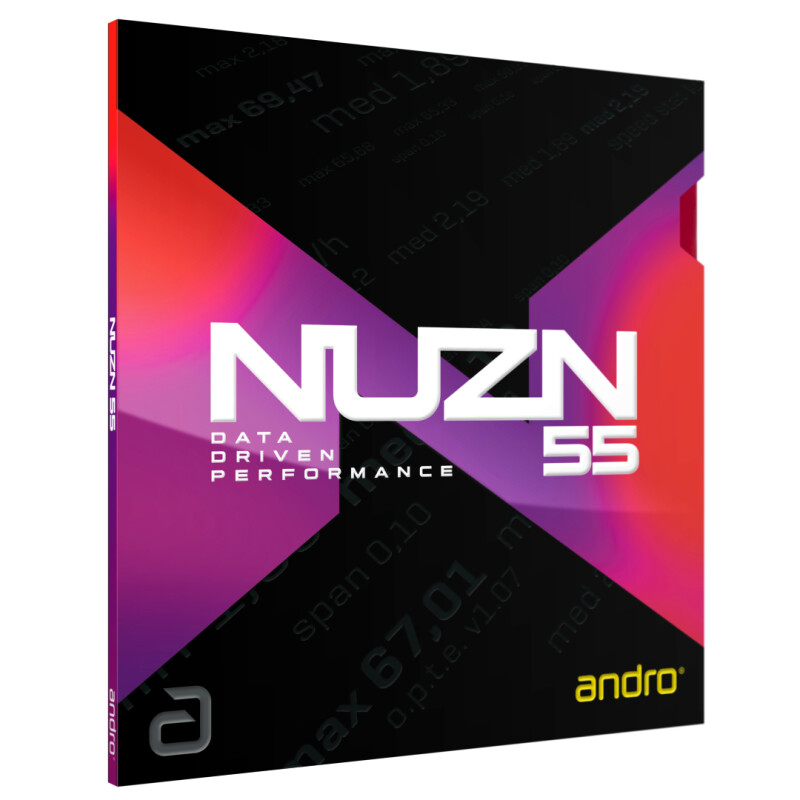
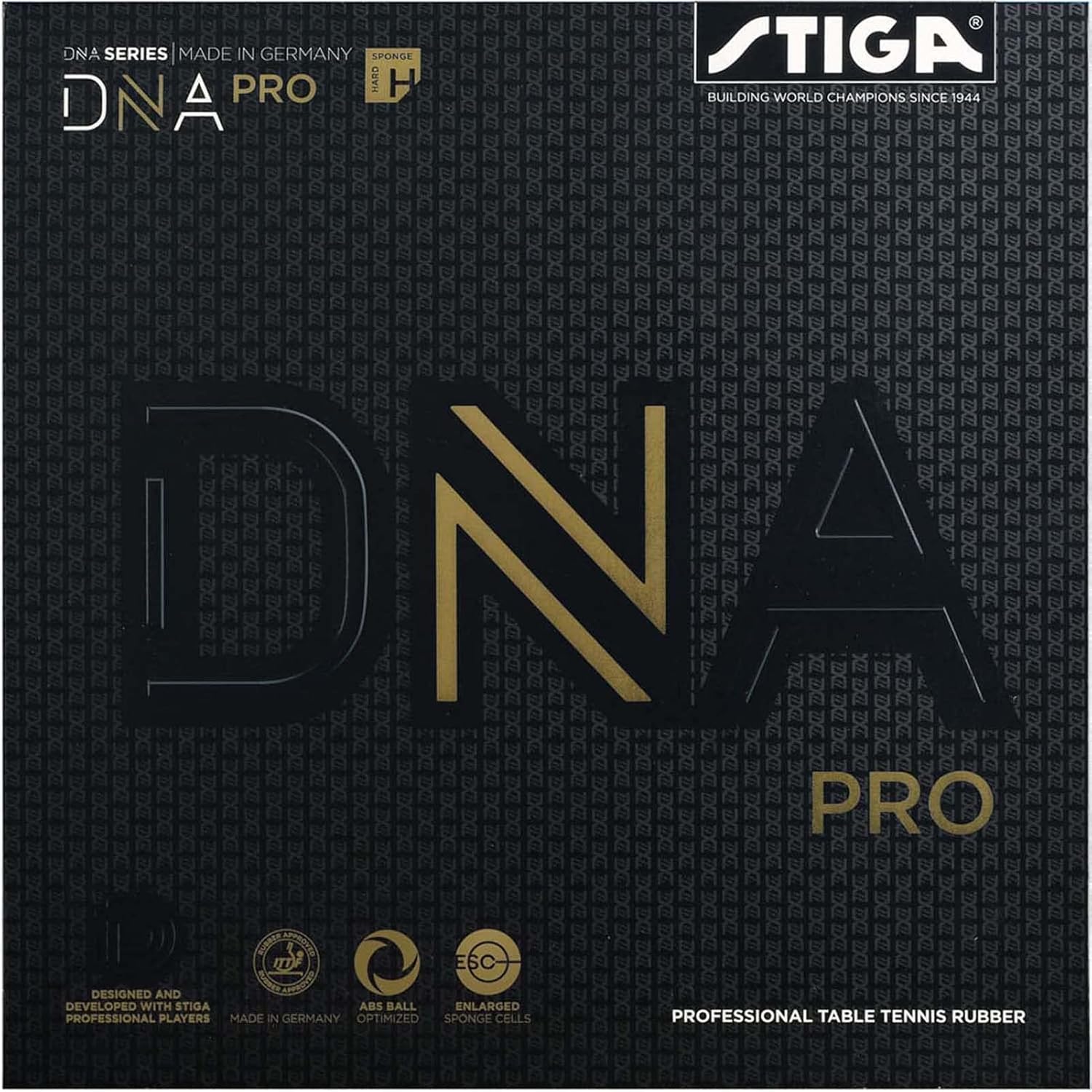
Andro NUZN 55 and Stiga DNA Pro H both carry an 8.8 rating, but the spec sheet hides a genuinely large practical difference the radar chart does not fully capture: uncut weight. NUZN 55 weighs 77g uncut; DNA Pro H weighs around 54g. That is a 23-gram gap - enough to noticeably shift the balance and head-weight of a finished racket. If you are weight-sensitive, that single spec may matter more than any axis delta below.
Where the axis data diverges
Durability shows the largest gap at 1.1 points, favoring NUZN 55 (8.2 vs 7.1) - Andro’s own pros claim durability comparable to premium Dignics-tier rubbers, and the radar data is consistent with that claim. Speed and spin are tied for the next-largest gap, both at 0.8 points, and both favor NUZN 55 (9.6 vs 8.8 speed; 9.4 vs 8.6 spin). Those are meaningful, feel-it-in-play gaps, not rounding noise - NUZN 55 is genuinely the faster, spinnier rubber of the two by a real margin.
Two axes are close enough to treat as a wash. Control differs by only 0.3 points (8.7 vs 8.4), and throw actually favors DNA Pro H by a trivial 0.2 points (6.2 vs 6.0) - both differences small enough that stroke technique will matter far more than rubber choice on these two dimensions. Tackiness differs by 0.3 (2.2 vs 1.9), and both numbers are low regardless, so neither rubber should be picked for grip-dependent short game.
What reviewers say
Revspin.net’s community aggregate gives DNA Pro H a spin score of 9.03 out of 10 by its own pros claim, and Tabletennis11’s blog review, written comparing DNA Pro H against Andro R53, frames it explicitly as a value alternative: around 95 percent of Tenergy 80’s performance at a fraction of the price. That value framing matters here - DNA Pro H’s own cons list flags its control rating as lower than softer alternatives and notes it can feel too springy for consistent down-the-line loops, which lines up with reviewers describing it as a speed-first, direct-feel rubber rather than a control-first one.
Should you switch?
If you play DNA Pro H and are drawn to NUZN 55 for the durability and top-end spin, know what you are trading: NUZN 55 is markedly heavier (77g vs 54g uncut) and, per its own cons, has a very steep learning curve with an unresponsive short game. That is a real cost for players who value light, fast-handling equipment or who rely on touch play at the table. If your reason for considering NUZN 55 is chasing another 0.8 points of spin, ask whether your current technique is actually spin-limited by the rubber or by your stroke - DNA Pro H’s own pros already rate it excellent for grip and spin at a 9.03 community average.
If you play NUZN 55 and are considering DNA Pro H for the lighter feel, the trade is roughly symmetric: you give back 0.8 points each of speed and spin and 1.1 points of durability, but you gain 23 grams of racket speed and a rubber Tabletennis11 frames as easier to unlock without full commitment on every stroke.
Fit summary
NUZN 55 is forehand-only, aimed at advanced and elite players who can activate a hard 55-degree sponge and want speed and spin above all else. DNA Pro H is also forehand-focused but pitched at intermediate-to-advanced players who want a direct, speed-first attacking feel without NUZN 55’s weight penalty or its unforgiving short game - a meaningfully lighter path to comparable core numbers.
Short game and serves
NUZN 55’s own pros specifically credit it with generating strong spin on short pushes and serves and an enlarged sweet spot that rewards well-timed attacks even under time pressure - useful if your serve-and-loop game depends on spinny short serves as much as power topspin. DNA Pro H’s pros instead point to its ESC enlarged sponge cells, which the manufacturer credits with boosting the catapult effect and arc on topspin attacks, plus a crisp, direct feel with a distinctive clicking sound on contact that several reviewers mention as a tell for clean center-of-rubber contact. Both rubbers are pitched at offensive, forehand-first players rather than short-game specialists, so treat these as secondary considerations behind the larger speed, spin and durability gaps above.
Frequently asked questions
Is Stiga DNA Pro H lighter than Andro NUZN 55?
Yes, substantially. DNA Pro H is around 54g uncut versus NUZN 55's 77g, a 23-gram difference that will noticeably affect racket balance.
Which rubber has more spin, NUZN 55 or DNA Pro H?
NUZN 55, by 0.8 points (9.4 vs 8.6) - a real gap, though DNA Pro H's own community reviews still rate its spin at 9.03 out of 10.
Is DNA Pro H a good value alternative to premium rubbers?
Reviewers frame it that way - Tabletennis11's blog describes it as reaching around 95 percent of Tenergy 80's performance at a lower price.
Which is more durable?
NUZN 55, by 1.1 points (8.2 vs 7.1) - the largest gap in this comparison, and consistent with Andro's own claim of Dignics-tier durability.