Palio AK47 Review: The Budget Tensor in Blue, Yellow and Red
Pros
- Outstanding price-to-performance, near-tensor feel for a fraction of the cost
- Remarkably light across all colours, the hard Red is around 37 grams cut
- Three sponge hardnesses (Blue, Yellow, Red) to match your speed and control needs
- High spin with a grippy, non-tacky topsheet and good dwell time on the Blue
- Blue offers excellent control on pushes, blocks and the short game
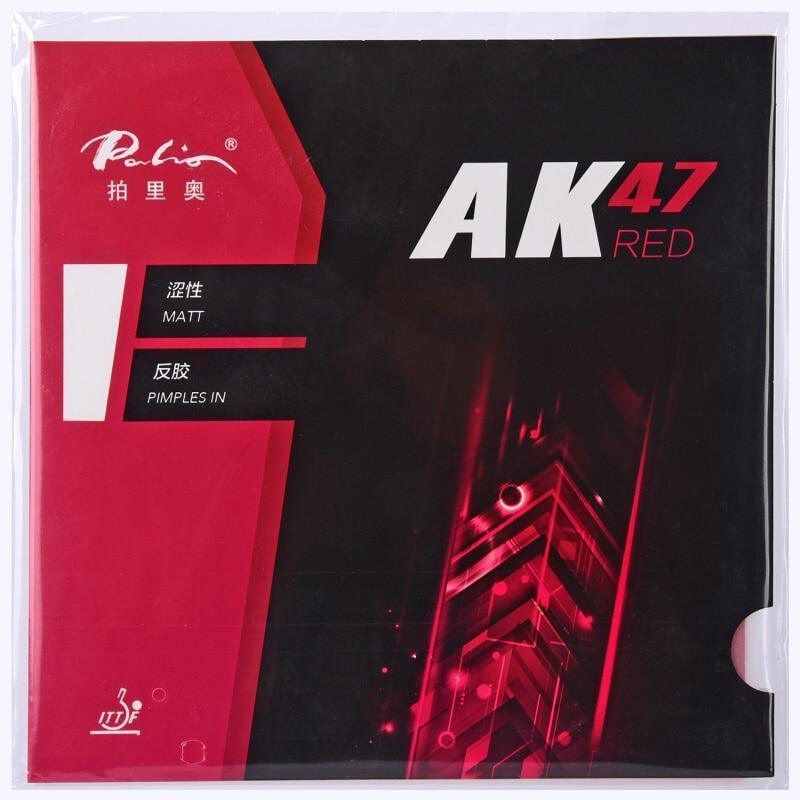
- Red is genuinely fast with a lower, aggressive arc for offensive players
Cons
- Less stable and refined than the premium tensors it imitates
- Noticeable sheet-to-sheet variation in sponge hardness and weight
- The harder Red can be difficult to open up against backspin
- Soft Blue can feel a bit airy and bouncy on faster blades
Ask around for a cheap rubber and the Palio AK47 comes up fast, with reason behind it. It’s a non-tacky, inverted tensor aimed at developing and intermediate players who want a real taste of modern springy-rubber performance without the premium tag. The twist is that it ships in three different sponges, sorted by colour: Blue the softest and most controllable, Yellow the middle, Red the hardest and fastest. This review pulls from real player threads on Reddit, the equipment community on TableTennisDaily, and a dedicated written review of the AK47 Blue to lay out how it plays, who each colour suits, and where it falls short of the tensors it imitates.
Performance
Three things define the AK47: spin, light weight, and how much the character swings across the colours. Every source calls it grippy and spinny even though it has zero tack. The dedicated Blue review scored spin a perfect five out of five and described loop rotation as deep, consistent and reliable, crediting the soft sponge for longer dwell and a higher arc. TableTennisDaily members go further, saying the AK47 hands you almost all the playing qualities of tensors that cost three times as much.
Weight is the other headline. This rubber is light, and not by a little. The hard Red weighs only around 37 grams after it’s cut, and the softer Yellow and Blue sponges come in under that, which helps on lighter blades and for anyone who can’t stand a head-heavy bat.
Speed lives and dies by the colour. Red is the fastest, clocked clearly quicker than a Yasaka Rakza 7 on full-body aggressive shots, with a lower, more attacking arc, and only a touch behind a Tibhar MX-P. Blue pulls the speed back a notch, swapping the catapult for more linear, predictable acceleration; the written review called it fast but not reckless and gave it four out of five. Control runs the opposite way. Soft Blue is the control champ, rated well ahead of Red on pushes, blocks and short-game exchanges, while Red rewards a committed offensive stroke but asks more of you to keep it on the table.
The weaknesses line up across every source. Red can be a handful to open against heavy backspin. Blue can feel airy and bouncy on faster blades. And the rubber as a whole doesn’t sit as stable or as polished as the premium sheets it copies. Quality control is the last worry, with a fair amount of sheet-to-sheet variation in sponge hardness and weight.
What Reviewers Agree (and Disagree) On
All three sources land on the same core picture: a non-tacky tensor with high spin, very low weight, and standout value, where the Blue, Yellow or Red choice shapes the character more than anything else. Softer sponge means more control and a higher arc; harder sponge means more speed and a lower, more aggressive trajectory. The split is over stability and how far it carries you. The dedicated Blue review treats it as a well-engineered, well-rounded sheet worth keeping. Some Reddit and TableTennisDaily users see it instead as a cheap learner that feels too bouncy or less stable than premium rubbers, and one player switched back to Rakza 7 to get his confidence back. The forums note the sheet-to-sheet variation; the focused Blue review barely mentions it.
Who Should Buy It
Buy the AK47 if you’re a developing or intermediate player building your first custom racket and you want a light, spinny, non-tacky tensor without premium money on the line. Go Blue for maximum control, a do-everything backhand rubber, or an all-round looping game where consistency counts as much as power. Go Yellow for the balanced middle. Go Red if you’re an offensive player chasing the most speed and a lower, more aggressive arc, and you already have the technique to open against backspin. Want a tacky Chinese forehand feel, maximum stability, or a true premium tensor? Look elsewhere. As a value-first stepping stone, though, the AK47 is hard to beat.
FAQ
What is the difference between the Blue, Yellow and Red AK47?
Same topsheet, different sponge hardness. Blue is the softest at roughly 38 to 40 degrees, with the most control and the highest arc. Yellow sits in the middle. Red is the hardest at roughly 45 to 47 degrees, the fastest, with a lower, more aggressive arc.
Is the Palio AK47 tacky?
No. It’s a non-tacky, inverted tensor with a grippy topsheet. The spin comes from grip and dwell rather than stickiness, so it plays more like a European or Japanese rubber than a tacky Chinese one.
Which colour is best for the backhand?
Blue is the usual backhand pick: soft, light, and easy to control on blocks, pushes and the short game. Some players run the Red Max on the backhand for more speed, often with a faster or tacky rubber on the forehand.
How heavy is the Palio AK47?
It’s one of the lightest rubbers in its class. Even the hard Red comes in at only around 37 grams after it’s cut, and the softer Yellow and Blue sponges weigh less still, which makes the AK47 a good match for lighter blades.
Is it good value compared with premium rubbers?
Yes. Community reviewers say it gives you almost all the playing qualities of tensors that cost three times as much, usually for under forty dollars. It won’t match a premium sheet for stability or polish, but at this price it’s one of the best value rubbers you can buy.