Palio AK47 vs Yinhe Mercury II: Which Should You Buy?
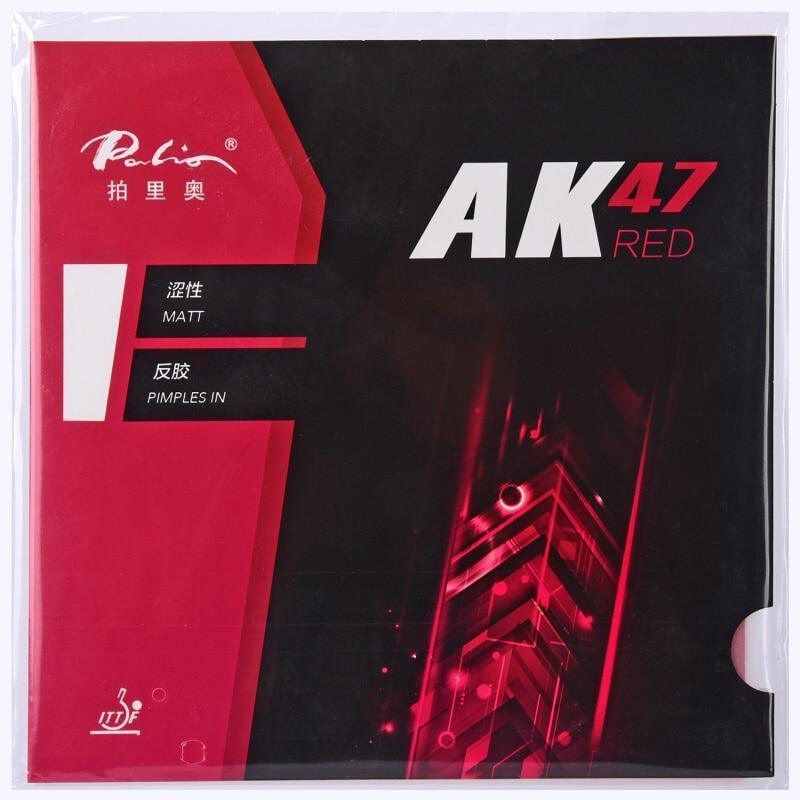
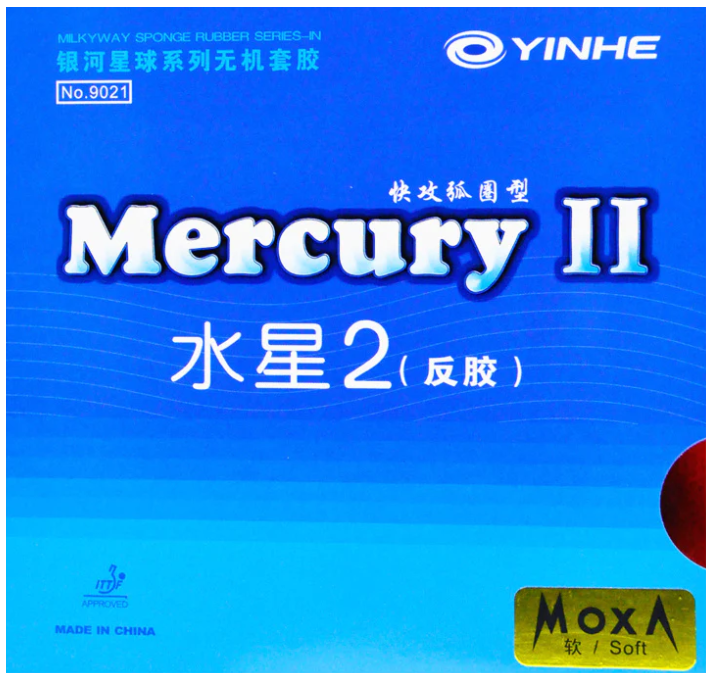
| Palio AK47 | Yinhe Mercury II | |
|---|---|---|
| Our rating | 7.8/10 | 8.2/10 |
| Best side | Both wings | Both wings |
| Control | high (best on the softer Blue) | very high |
| Speed | medium-high (Blue softer and more linear, Red fastest) | medium |
| Spin | high | high |
| Sponge hardness (different scales) | Blue around 38-40 deg, Yellow around 40-42 deg, Red around 45-47 deg (Euro scale) | medium to medium-soft (36-38 degrees Chinese scale) |
| Type | non-tacky inverted tensor (offered in Blue, Yellow and Red sponges) | tacky inverted (budget Chinese) |
| Uncut weight | 67 g | 60 g |
A row marked “different scales” puts two rating systems in one line. Those cells are not a single score you can subtract.
We may earn a commission from links on this page. Learn more.
The number that dwarfs everything else here
Every axis in this comparison is a modest gap except one. Tackiness runs 2.0 for the Palio AK47 against 6.1 for the Yinhe Mercury II, a 4.1-point swing, the single largest delta anywhere in this whole comparison set. That is not a rounding difference, it is the difference between a genuinely non-tacky, modern tensor topsheet and a genuinely tacky, grippier Chinese-style rubber. The Mercury II’s own pros describe it directly as having a “genuinely tacky topsheet that grips the ball and kills slippage,” while the AK47 is built and reviewed as a “non-tacky” sheet across the board. If you have ever wondered why some rubbers feel like they grab the ball on contact and others feel slicker and faster off the sheet, this is that difference, quantified.
The smaller gaps, and why they still matter a little
Beyond tackiness, the next largest gap is durability, 7.0 for the AK47 versus 6.2 for the Mercury II, a 0.8-point edge to the AK47. Control follows at 0.6 (9.3 versus 8.7), and throw at 0.4 (6.0 versus 5.6), both modest edges to the AK47. Spin differs by just 0.3 (9.1 versus 8.8), and speed is essentially tied at 0.1 (8.5 versus 8.4). So on every axis except tackiness, the AK47 holds a small, consistent edge, none of them individually dramatic, but they add up to the AK47 being the stronger all-round performer on raw numbers, while the Mercury II’s entire case rests on that single enormous tackiness gap.
Why tackiness is not just a number, it is a different game
A tacky topsheet changes how the ball behaves on contact in ways a spin or speed score does not fully capture. The Mercury II’s own pros list “high spin on serves, loops and chops” and note it suits “beginners and defenders,” while its cons flag that it is “slower than German tensor rubbers, especially at distance” and has a “medium throw” that “keeps the ball low” so “passive shots clip the net.” There is a real tension inside its own review data worth flagging: it is recommended for beginners on the strength of its high control score (8.7), but its cons also say it “rewards active strokes and can feel demanding for raw beginners.” Read together, this suggests the Mercury II suits a beginner who is already committed to an active, developing offensive or all-round game, or a chopper and defender who wants tacky-sheet spin variation on serves and pushes, more than it suits someone picking up a paddle for the first time with no stroke yet.
What each rubber is reviewed as being for
The AK47, reviewed on Reddit, TableTennisDaily and Table Tennis Data, comes in three sponge hardnesses (Blue, Yellow, Red) so you can match speed and control to your wing, and its own bestFor notes it suits “budget-minded developing and intermediate players building their first custom racket who want a light, spinny, non-tacky tensor.” The Mercury II, reviewed on Racket Insight, PpongSuper and Reddit, is explicitly aimed at “beginners and improvers… control and spin oriented all round players, choppers and defenders, and anyone who wants a serious tacky Chinese rubber on a tiny budget,” available in Soft and Medium sponges. It is also notably lighter, 60 grams uncut against the AK47’s 67 grams.
Should you switch
This is not really a lateral swap. Moving from the AK47 to the Mercury II is a change in rubber philosophy, from a non-tacky modern tensor feel to a tacky, grippier, more traditional Chinese-rubber feel, and it will change your service spin, your reception of backspin, and your chopping game if you have one. If you are an all-round attacking player happy with a non-tacky tensor, the AK47’s small edges in control, durability and throw give you no real reason to move to the Mercury II. The switch only makes sense if you specifically want the tacky-sheet character, for serve spin, chop variation, or a slower, more defensive game.
Bottom line
Ignore the small gaps in speed, spin and durability for a moment, because the 4.1-point tackiness delta is what this comparison is actually about. Choose the AK47 if you want a modern non-tacky tensor feel with a slight edge across nearly every other axis. Choose the Mercury II only if tackiness itself, for spin variation on serves and chops or a defensive game, is what you are after, since that is the one thing it clearly offers that the AK47 does not.
Frequently asked questions
What is the single biggest difference between the Palio AK47 and the Yinhe Mercury II?
Tackiness, by a wide margin. The Mercury II scores 6.1 against the AK47's 2.0, a 4.1-point gap, the largest axis difference in this entire comparison set.
Is the Yinhe Mercury II a good rubber for a complete beginner?
Its own review data is mixed on this. Its pros describe very high control suited to beginners and defenders, but its cons also note it rewards active strokes and can feel demanding for raw beginners, so it likely suits a beginner already developing an active stroke more than someone with no technique yet.
Which rubber has a small edge on raw performance, ignoring tackiness?
The Palio AK47, modestly, on durability (0.8), control (0.6), throw (0.4) and spin (0.3), with speed essentially tied. None of these gaps are large individually, but they are consistent across the board.
Is switching from the AK47 to the Mercury II a simple upgrade?
No, it is a change in rubber character rather than an upgrade. The Mercury II is a tacky, grippier sheet suited to chop and defensive games or serve-spin variation, while the AK47 is a non-tacky modern tensor; the two solve different problems rather than one simply beating the other.
Which rubber is lighter?
The Yinhe Mercury II, at 60 grams uncut against the Palio AK47's 67 grams.