Yinhe Mercury II Review: The Five Dollar Tacky Rubber That Punches Way Above Its Price
Pros
- Outstanding value for around five dollars a sheet
- Genuinely tacky topsheet that grips the ball and kills slippage
- High spin on serves, loops and chops
- Very high control that suits beginners and defenders
- Elastic, forgiving sponge that is easier than most Chinese rubbers
- Available in Soft and Medium sponges to tune forehand and backhand
Cons
- Slower than German tensor rubbers, especially at distance
- Rewards active strokes and can feel demanding for raw beginners
- Medium throw keeps the ball low so passive shots clip the net
- Mediocre at flat hits and fast counters near the table
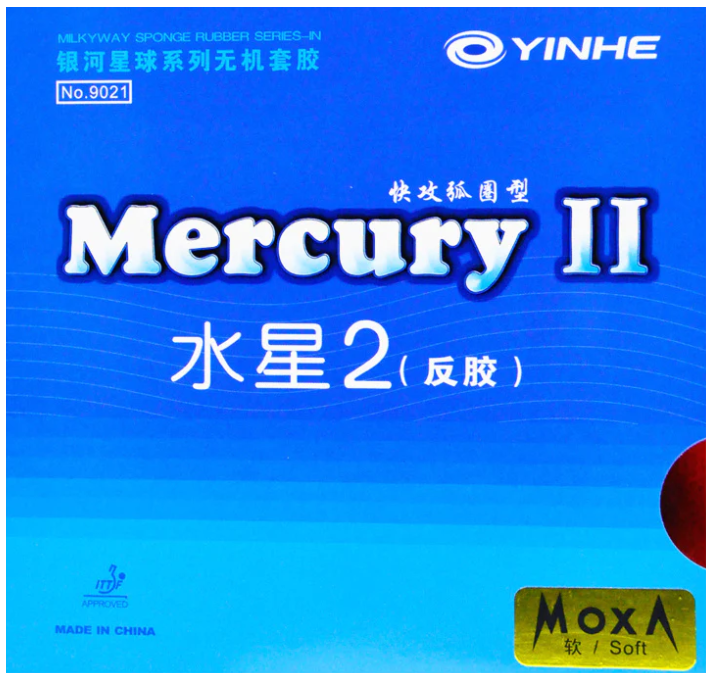
The Yinhe Mercury II, also branded as the Galaxy Mercury II, is one of the most recommended ultra budget rubbers in table tennis. Yinhe, sold under the Galaxy and Milkyway names too, built its name on cheap gear that plays far above its price, and the Mercury II is the poster child. A brand new sheet runs around five dollars, yet it pairs a tacky Chinese style topsheet with a softer, more elastic sponge the brand markets as a cream sponge. The pitch is simple: real Chinese spin and grip, with more forgiveness and control than the famously demanding professional Chinese rubbers. The picture here draws on a dedicated test from Racket Insight, a detailed breakdown from PpongSuper, and the lived experience of dozens of players on r/tabletennis, to see whether the Mercury II earns the hype.
Performance
Tackiness is the headline, and every source agrees on it. Racket Insight calls it extremely tacky and notes it can lift the ball off the table for several seconds, while PpongSuper goes further: tackier than a DHS Hurricane 3. That grip turns straight into spin. Both sites rate spin near the top of their scales, PpongSuper putting it at 9.5 out of 10, and both point to serving, looping close to the table and especially chopping as where it shines. Racket Insight calls it the best rubber the reviewer has ever used for chopping, and PpongSuper calls it nearly perfect for close to the table looping, thanks to a high success rate and the low, spinning shots that hang around net height. The sponge is what sets it apart from harsher Chinese rubbers. Rather than a hard, bouncy block that demands perfect technique, the Mercury II runs a medium to medium soft sponge around 36 to 38 degrees on the Chinese scale that soaks up incoming energy and forgives off center contact. Racket Insight credits this for making the rubber far easier to use than most Chinese options and rates control very high. PpongSuper lines its control up with a premium rubber like the Yasaka Mark V.
Speed is the cost. Both reviewers put the Mercury II at medium paced at best, short of the gears in German tensor rubbers. Distance is the bigger problem. The soft sponge gives less support at mid to long range, so clearing the net takes pronounced, active strokes, and because the throw angle is medium the ball stays low and clips the net if you go passive. Flat hits are mediocre and fast counters right at the table weaker. The Reddit reports track the lab tests neatly. Beginners who switch to a Mercury 2 setup suddenly start feeling their opponents spin because the rubber actually grips, and budget players keep saying it plays well above its cost while they build fundamentals. One self taught player who put it on a Yinhe T11 found it a little fast and demanding, with weak loops and chops sailing long, a reminder that the spin and grip reward proper strokes rather than replacing them.
What Reviewers Agree (and Disagree) On
Broad agreement that the Mercury II is tacky, spin heavy, highly controllable and absurdly cheap, and that it belongs close to the table for spin and the short game rather than as a power weapon. The split is mostly about feel and demand. PpongSuper reads the sponge as soft and absorbing, ideal for controlled and defensive play, while one Reddit player on a fast carbon blade found the same rubber a touch fast and unforgiving for a beginner. The blade and the player decide it. On a slow all wood blade the Mercury II feels controlled and easy; on a faster setup its spin and grip expose technical gaps. The other small split is durability, where PpongSuper raises no concerns but community lore around cheap Yinhe rubbers holds that the topsheet tackiness fades over a few months, especially on the black sheet.
Who Should Buy It
Reach for the Mercury II if you are assembling your first custom racket, if you want to learn or sharpen spin without spending money, or if you play a control, all round, chopping or defensive style. It is a superb backhand rubber for spin and blocking and an honest forehand option for developing loopers, especially on slower all wood blades. Pick a Soft sheet for the backhand and a Medium sheet for the forehand if you want a little more support. It is the wrong rubber for players chasing raw speed, flat hitting power or fast counter driving at the table, and advanced attackers chasing maximum quality will outgrow it. As a learning tool, a budget control rubber, or simply a way to try real Chinese tackiness for the price of a coffee, it is hard to beat.
FAQ
Is the Yinhe Mercury II tacky or non tacky?
Tacky. Every source agrees the topsheet grips the ball hard, and PpongSuper rates it tackier than a DHS Hurricane 3, enough to lift a still ball off the table for several seconds.
How much does the Yinhe Mercury II cost?
A brand new sheet usually sells for around five dollars or five euros, which is why it is one of the most recommended ultra budget rubbers in the sport.
Is the Mercury II good for beginners?
Yes, especially on a slower all wood blade. The very high control and forgiving sponge make it beginner friendly, though the spin and grip reward active strokes, so on a fast blade it turns demanding.
Forehand or backhand, and which sponge hardness?
It works on both sides. The common setup is a Medium sheet on the forehand for a bit more support and a Soft sheet on the backhand for control and spin on blocks and chops.
What are its main weaknesses?
Speed at distance and flat hitting. The soft sponge and medium throw keep the ball low and slow, so passive strokes from mid to long range clip the net, and it is no good for fast counters right at the table.