Yasaka Mark V vs Yinhe Mercury II: Which Should You Buy?
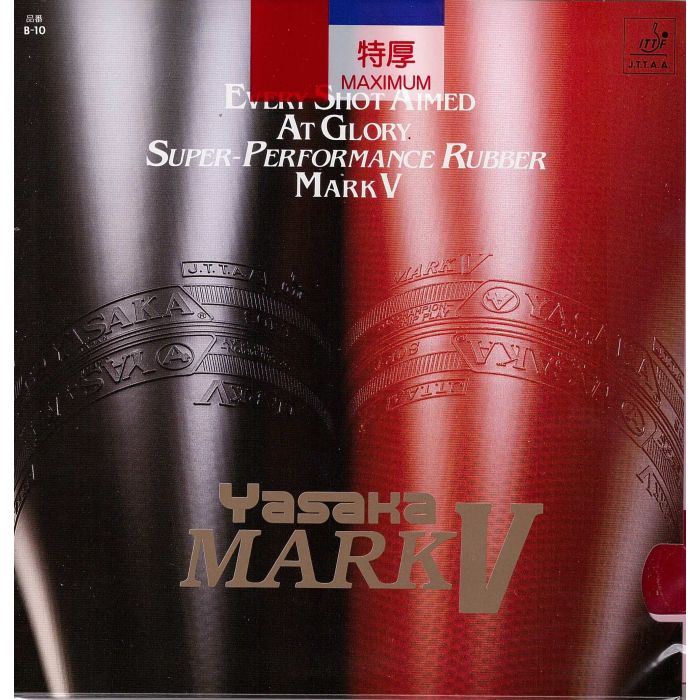
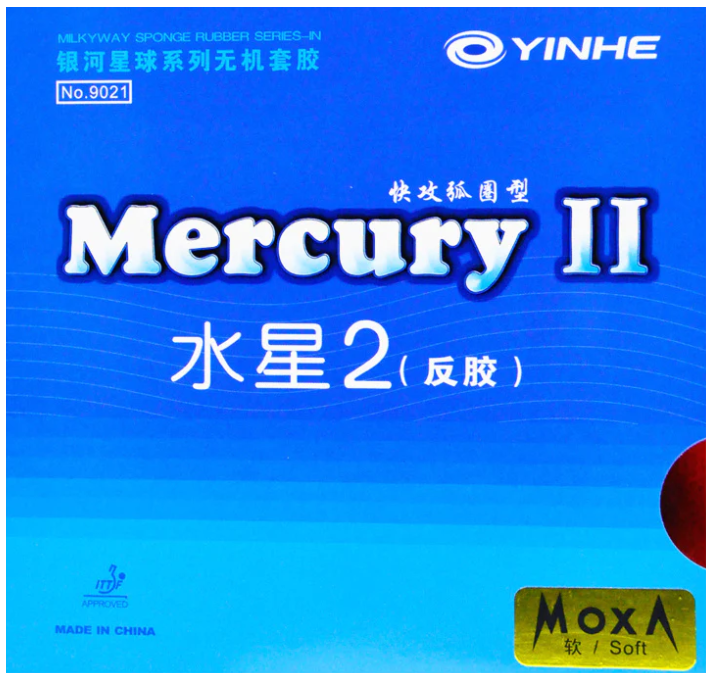
| Yasaka Mark V | Yinhe Mercury II | |
|---|---|---|
| Our rating | 8.0/10 | 8.2/10 |
| best_side | both | both |
| control | 9.5 | very high |
| speed | 8.4 | medium |
| spin | 8.5 | high |
| sponge_hardness | medium (around 43 degrees ESN) | medium to medium-soft (36-38 degrees Chinese scale) |
| type | inverted | tacky inverted (budget Chinese) |
| weight_uncut_g | 47 | 60 |
We may earn a commission from links on this page. Learn more.
Two very different rubbers that land close on control
Yasaka Mark V and Yinhe Mercury II rate within 0.2 points of each other overall, 8.0 versus 8.2, but that closeness hides one of the largest single-axis gaps in this batch of comparisons: a 3.5-point difference in tackiness. These are two different rubber philosophies wearing similar overall scores.
The axis that decides everything
Tackiness sits at 2.6 for the Mark V and 6.1 for the Mercury II. That is not a marginal spread, it is the difference between a smooth, low-grip German-style sheet and a genuinely tacky, ball-grabbing Chinese-style rubber. Reviewers describe the Mercury II’s topsheet in exactly those terms, Racket Insight and PpongSuper both call out a topsheet that grips the ball and kills slippage, the kind of language you only see attached to rubbers built around tack rather than sponge elasticity alone.
That single axis changes how you serve and how you generate spin on both sides of the ball. Tacky rubbers reward a slower, grabbier brushing motion and produce spin differently off short serves than a smooth sheet does; if your serve technique was built around the Mark V’s low-tack feel, the Mercury II will feel different from the first practice serve, not just faster or slower.
The axes that barely move
Control is identical, 8.7 for both, which is genuinely notable given how differently these two rubbers are built. Speed moves only 0.4 points, 8.0 versus 8.4, and spin only 0.6, 8.2 versus 8.8. If someone tells you the Mercury II is a dramatically spinnier rubber than the Mark V, the axis data says otherwise, the tackiness is the story, not raw spin output.
Throw opens up a bit more, 4.4 versus 5.6, a 1.2-point gap, meaning the Mercury II keeps the ball on a slightly higher, more generous arc, though its own cons note that same medium throw can let passive shots clip the net if you get lazy with your stroke.
Durability and value, in tension
Durability favors the Mark V by 2.5 points, 8.7 versus 6.2, and Revspin’s long-run reviews consistently mention sheet-to-sheet uniformity and a long lifespan for the Mark V as a selling point over modern tensors. But the Mercury II’s own pros lean hard into value: it is described as outstanding value at around five dollars a sheet, which changes the durability math considerably. A rubber that wears faster but costs a fraction of the price is not automatically the worse long-term buy; it depends on how often you are willing to replace sheets versus how much you mind the process.
The plastic ball question, again
As with the Rakza 7 comparison, the Mark V’s own cons flag that it is designed for celluloid balls and performs noticeably worse with modern plastic balls. Nothing in the Mercury II’s listed cons raises a similar flag. For anyone playing exclusively with today’s plastic ball, that is a real strike against the Mark V regardless of how the other axes compare.
Migration advice
If you are on the Mark V and considering the Mercury II, the switch makes the most sense if you want meaningfully more tack and are playing plastic balls, since both factors favor the newer rubber, and control will not suffer, the axis is tied. If you are happy with a smooth, low-tack feel, prize long sheet life above a five-dollar price tag, or occasionally still play with celluloid balls, there is no numerical case for moving. Choppers and defenders leaning on tack for backspin lifts, per the Mercury II’s own bestFor note, get the clearest benefit from switching.
One more practical point worth weighing: the Mercury II ships in Soft and Medium sponge options, so you can tune each wing separately, a Soft sheet on the backhand for extra dwell and a Medium on the forehand for more pop, something the single-sponge Mark V does not offer. If you already own two sheets of Mark V and are happy splitting your racket that way, matching sponge grades across both wings, the Mercury II’s flexibility is a genuine upgrade in customization even before you weigh the tackiness gap.
Frequently asked questions
What is the biggest difference between Yasaka Mark V and Yinhe Mercury II?
Tackiness, by far. Mercury II rates 6.1 against Mark V's 2.6, a 3.5-point gap, the largest single-axis difference in this comparison, reflecting Mercury II's genuinely tacky, grip-focused topsheet.
Is Mercury II spinnier than Mark V?
Only modestly by the aggregated axis, 8.8 versus 8.2, a 0.6-point gap; the tackiness difference, not raw spin output, is what actually changes how each rubber behaves on serves and backspin.
Which rubber lasts longer?
Mark V, by 2.5 points on the durability axis, 8.7 versus 6.2, though Mercury II's roughly five-dollar-a-sheet price changes the value calculation considerably.
Does the plastic ball issue affect Mercury II too?
No caveat like that appears in Mercury II's listed cons; the celluloid-versus-plastic-ball performance gap is specific to Mark V.