Loki RXTON 1 vs Yinhe Mercury II: Which Should You Buy?
| Loki RXTON 1 | Yinhe Mercury II | |
|---|---|---|
| Our rating | 8.0/10 | 8.2/10 |
| Best side | Both wings | Both wings |
| Control | very high | very high |
| Speed | low to medium | medium |
| Spin | high | high |
| Sponge hardness (different scales) | medium (around 38-39 degrees Chinese scale, roughly 50-52 ESN) | medium to medium-soft (36-38 degrees Chinese scale) |
| Type | tacky inverted (budget) | tacky inverted (budget Chinese) |
| Uncut weight | 64 g | 60 g |
A row marked “different scales” puts two rating systems in one line. Those cells are not a single score you can subtract.
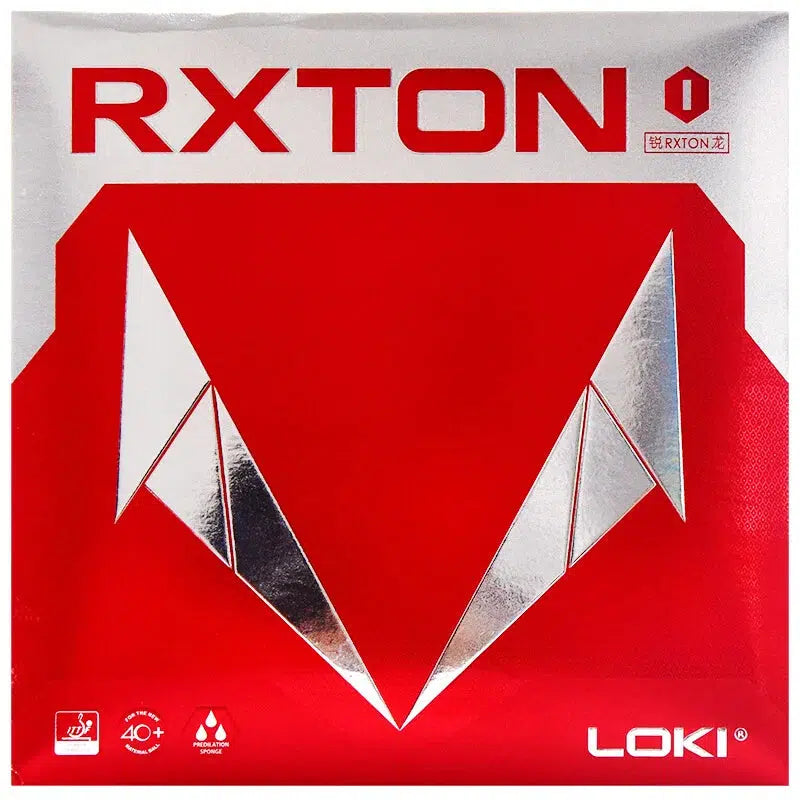
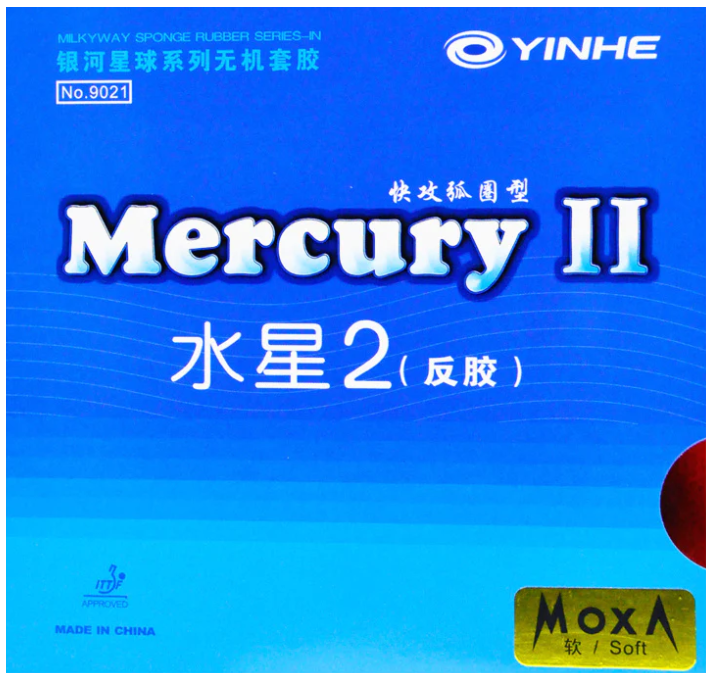
We may earn a commission from links on this page. Learn more.
The short answer
This is the most lopsided comparison in this batch: Yinhe Mercury II costs roughly a third of what Loki RXTON 1 does — around five dollars a sheet against RXTON 1’s roughly fifteen — and still out-performs it on speed, spin, tackiness, and durability, while matching it almost exactly on control. If you’re choosing between these two purely on value, Mercury II is the harder rubber to justify skipping.
What the axis numbers say
Speed: Mercury II leads by 2.4 points (8.4 vs 6.0). Its own review copy still calls it “slower than German tensor rubbers, especially at distance,” so this is a relative advantage within the budget-rubber tier, not a claim that Mercury II plays like a tensor sheet.
Spin: a 1.3-point gap in Mercury II’s favor (8.8 vs 7.5), driven by what reviewers describe as a “genuinely tacky topsheet that grips the ball and kills slippage” — a real point of differentiation from RXTON 1’s milder, control-oriented tack.
Control: virtually tied, a 0.2-point gap (8.5 for RXTON 1, 8.7 for Mercury II). This is the clearest signal in the whole comparison: Mercury II is not just a spin-and-speed upgrade, it holds RXTON 1’s own strongest suit just as well, described as “very high control that suits beginners and defenders.”
Tackiness: the largest gap in this comparison, 2.6 points (6.1 vs 3.5). This single axis explains most of Mercury II’s spin advantage and also broadens who it suits — reviewers specifically call out choppers and defenders as a good fit for Mercury II, a use case RXTON 1’s milder tack doesn’t serve as well.
Durability: Mercury II leads by 1.2 points (6.2 vs 5), a smaller gap than some of the other rubbers in this batch, but still in Mercury II’s favor despite its much lower price.
Where these numbers come from
RXTON 1 draws on Revspin, a TableTennisDaily forum thread on Loki’s rubber lineup, and r/tabletennis discussion. Mercury II is covered by a dedicated Racket Insight review, a PpongSuper write-up that explicitly frames it as “the cheapest rubber” worth reviewing, and an active r/tabletennis search thread — worth reading if you want first-hand accounts of how it performs at that price point.
Is it worth switching
Moving from RXTON 1 to Mercury II is close to a strict upgrade at a lower price: you gain 2.4 points of speed, 1.3 points of spin, 2.6 points of tackiness, and 1.2 points of durability, while losing essentially nothing on control. The one real caveat, per Mercury II’s own cons, is that it “rewards active strokes and can feel demanding for raw beginners” and its “medium throw keeps the ball low so passive shots clip the net” — so if your game is currently built around passive blocking rather than active strokes, the transition may take some adjustment even though the rubber is objectively stronger on paper.
Going from Mercury II to RXTON 1 is hard to justify on performance grounds alone; the main reason to do it would be wanting an even milder, more passive-friendly control sheet, or simply preferring RXTON 1’s specific feel, since personal feel doesn’t always track the aggregated axis numbers.
Who each rubber actually fits
RXTON 1 fits beginners and returning players building an inexpensive first custom racket who want a cheap, reliable, swap-often rubber. Mercury II fits an even broader range — beginners and improvers building a first custom racket, control-and-spin-oriented all-round players, choppers and defenders, and anyone who wants a serious tacky Chinese rubber on a genuinely tiny budget. It even comes in Soft and Medium sponge options so you can tune forehand and backhand separately, a flexibility RXTON 1 doesn’t offer.
For players specifically comparing these two before a purchase: unless you have a specific reason to prefer RXTON 1’s slightly milder tack or you’ve simply already got RXTON 1 and see no problem with it, Mercury II is the rubber to buy new, at less than half the price.
Frequently asked questions
Is Yinhe Mercury II better than Loki RXTON 1?
On the numbers, yes, and it costs less. Mercury II leads on speed (+2.4), spin (+1.3), tackiness (+2.6), and durability (+1.2), while control is essentially tied (0.2-point gap).
How much does Yinhe Mercury II cost compared to Loki RXTON 1?
Mercury II runs around five dollars a sheet against RXTON 1's roughly fifteen, making the performance edge even more notable given the lower price.
Is Yinhe Mercury II good for defenders and choppers?
Yes -- its genuinely tacky topsheet and control-friendly profile are specifically called out as suiting choppers and defenders, a use case RXTON 1 doesn't emphasize.
Is Yinhe Mercury II beginner friendly?
Mostly, but its own review notes say it can feel demanding for raw beginners since it rewards active strokes over passive blocking -- budget some adjustment time if you're used to a purely passive game.