Loki RXTON 1 vs Palio AK47: Which Should You Buy?
| Loki RXTON 1 | Palio AK47 | |
|---|---|---|
| Our rating | 8.0/10 | 7.8/10 |
| Best side | Both wings | Both wings |
| Control | very high | high (best on the softer Blue) |
| Speed | low to medium | medium-high (Blue softer and more linear, Red fastest) |
| Spin | high | high |
| Sponge hardness (different scales) | medium (around 38-39 degrees Chinese scale, roughly 50-52 ESN) | Blue around 38-40 deg, Yellow around 40-42 deg, Red around 45-47 deg (Euro scale) |
| Type | tacky inverted (budget) | non-tacky inverted tensor (offered in Blue, Yellow and Red sponges) |
| Uncut weight | 64 g | 67 g |
A row marked “different scales” puts two rating systems in one line. Those cells are not a single score you can subtract.
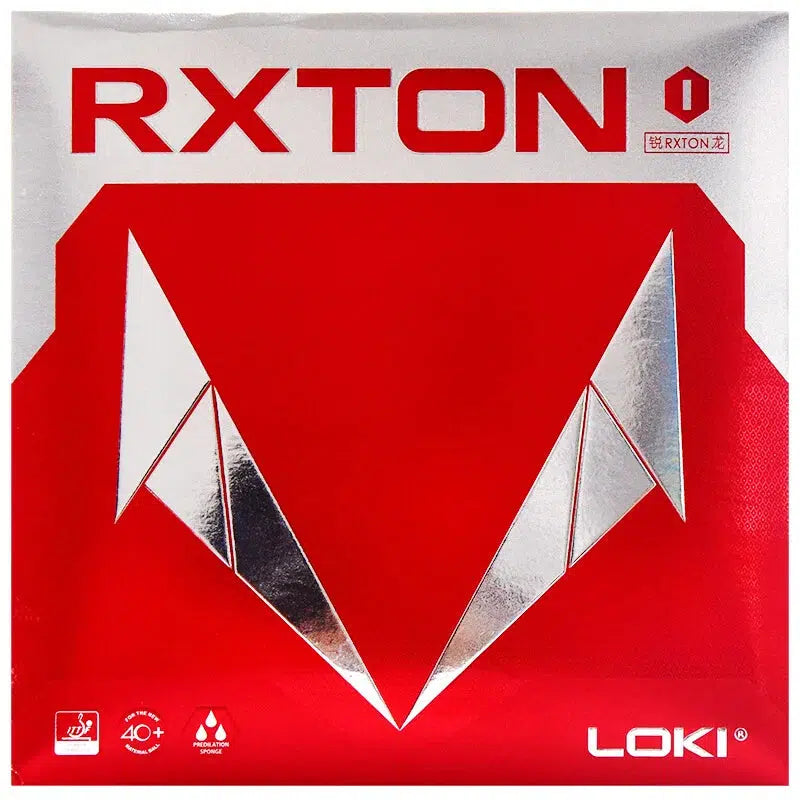
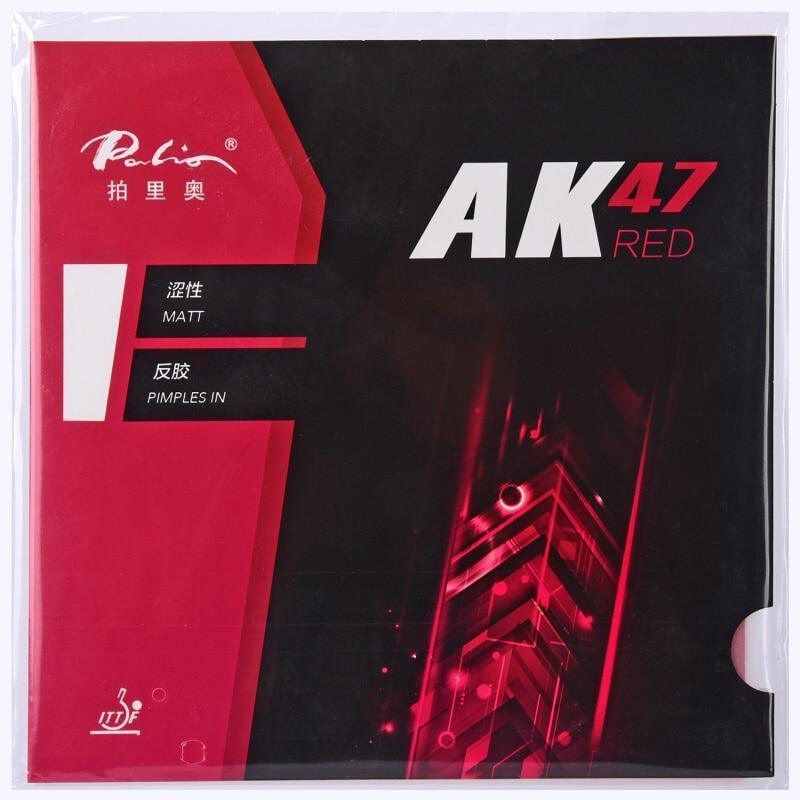
We may earn a commission from links on this page. Learn more.
The short answer
Loki RXTON 1 and Palio AK47 are both budget rubbers built for players assembling a first custom racket on a tight budget, but the axis data tells a clear story: AK47 outperforms RXTON 1 on speed, spin, and control by real, feelable margins. RXTON 1’s slightly higher overall rating (8.0 versus 7.8) reflects consistency and reliability rather than raw performance — if you want the faster, spinnier sheet and can tolerate a bit more sheet-to-sheet variance, AK47 is the better rubber for most attacking styles.
What the axis numbers say
Speed: this is the single biggest gap in the comparison, 2.5 points (RXTON 1 at 6.0, AK47 at 8.5). That is not a marginal difference — it’s the gap between a rubber explicitly built for control-first play and one described as having “near-tensor feel.” If you’re losing points because you can’t finish, AK47 solves that specific problem; RXTON 1 does not try to.
Spin: AK47 leads by 1.6 points (9.1 vs 7.5), another meaningful, feelable gap. AK47’s review copy calls out “high spin with a grippy, non-tacky topsheet and good dwell time on the Blue” sponge specifically — the grip comes from the topsheet compound, not from tackiness, which matters for the next axis.
Control: AK47 actually wins this too, 9.3 against 8.5, a 0.8-point edge — somewhat counterintuitive given RXTON 1 markets itself around control. The takeaway: RXTON 1’s control is “very high” in absolute terms, but AK47’s Blue sponge specifically is rated even higher for pushes, blocks, and the short game.
Tackiness: RXTON 1 is tackier, 3.5 against AK47’s 2.0, a 1.5-point gap. This is the one axis where RXTON 1 genuinely differs in character rather than just underperforming — if your serve and receive game depends on tacky grip rather than a grippy-but-non-tacky topsheet, this is a real style difference, not just a quality gap.
Durability: AK47 wins by 2 points (7 vs 5). Combined with AK47’s own con list noting “noticeable sheet-to-sheet variation in sponge hardness and weight,” the durability edge is real but comes with a quality-control caveat RXTON 1 doesn’t carry to the same degree.
Where these numbers come from
RXTON 1’s review record spans Revspin, a TableTennisDaily forum thread specifically about Loki’s rubber lineup, and ongoing r/tabletennis discussion. AK47 draws on r/tabletennis search results, a dedicated TableTennisDaily forum thread, and an independent write-up on Table Tennis Data. Both rubbers are frequently discussed in the same “best budget rubber” community threads, which is exactly why this pairing gets searched together.
Is it worth switching
If you’re currently on RXTON 1 and finding your rallies too passive or you’re not converting easy balls into points, AK47 is a low-cost, low-risk upgrade — pick the Blue sponge if you want to keep RXTON 1’s control-first character with more spin, or Red if you specifically want to add pace and are willing to accept a more aggressive, lower arc that’s “difficult to open up against backspin” per AK47’s own cons. Going the other way, from AK47 to RXTON 1, only makes sense if you specifically want more tack for serve variation or you’ve been bothered by AK47’s sheet-to-sheet inconsistency and want something reviewers describe as more uniform.
Who each rubber actually fits
RXTON 1 fits beginners and returning players building an inexpensive first custom racket, club players who prioritize control and placement over raw speed, and coaches kitting out juniors on a budget who want a rubber cheap enough to replace monthly. AK47 fits budget-minded developing and intermediate players who want a light, spinny, non-tacky tensor-style rubber — the review copy specifically recommends Blue for a controllable backhand or all-round game, Yellow for balance, and Red for a faster offensive sheet.
At roughly 15 dollars a sheet for RXTON 1 against AK47’s comparable budget pricing, cost is not the deciding factor here — performance ceiling is, and on nearly every measurable axis, AK47 sits ahead.
Frequently asked questions
Is Palio AK47 better than Loki RXTON 1?
On raw performance, yes -- AK47 leads on speed (+2.5), spin (+1.6), control (+0.8), and durability (+2). RXTON 1's higher overall rating reflects consistency rather than a performance edge.
Which Palio AK47 sponge should I pick if I currently use Loki RXTON 1?
Blue keeps RXTON 1's control-first character with added spin and dwell time. Red adds real pace but is harder to open against backspin, per AK47's own review notes.
Does Loki RXTON 1 have any advantage over AK47?
Tackiness. RXTON 1 is tackier (3.5 vs 2.0), which matters if your serve and receive game depends on grip rather than a smooth, grippy topsheet.
Is Palio AK47 consistent from sheet to sheet?
Less so than RXTON 1. AK47's own con list flags noticeable sheet-to-sheet variation in sponge hardness and weight, which is part of why its overall rating (7.8) sits slightly below RXTON 1's (8.0) despite winning most performance axes.