DHS Gold Arc 8 vs Palio AK47: Which Should You Buy?
| DHS Gold Arc 8 | Palio AK47 | |
|---|---|---|
| Our rating | 8.4/10 | 7.8/10 |
| Best side | forehand or backhand | Both wings |
| Control | medium-high | high (best on the softer Blue) |
| Speed | high | medium-high (Blue softer and more linear, Red fastest) |
| Spin | high | high |
| Sponge hardness (different scales) | 47.5 deg (also a 50 deg version), ESN scale | Blue around 38-40 deg, Yellow around 40-42 deg, Red around 45-47 deg (Euro scale) |
| Type | non-tacky high-elastic ESN tensor, inverted | non-tacky inverted tensor (offered in Blue, Yellow and Red sponges) |
| Uncut weight | 69 g | 67 g |
A row marked “different scales” puts two rating systems in one line. Those cells are not a single score you can subtract.
We may earn a commission from links on this page. Learn more.
The value-vs-value matchup: two budget-friendly tensors, one clear durability gap
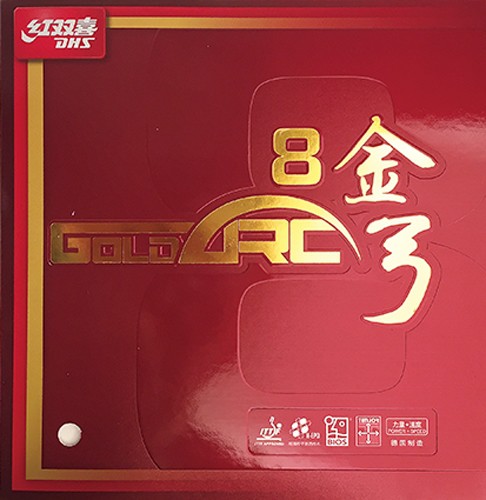
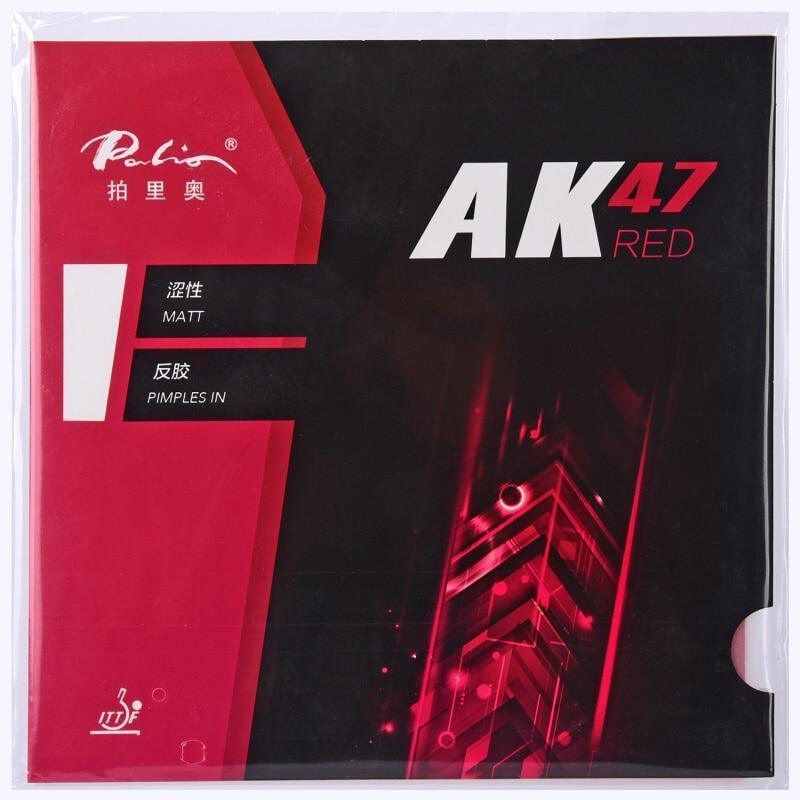
DHS Gold Arc 8 and Palio AK47 both get pitched as affordable alternatives to Tenergy-tier rubber, but they’re not interchangeable. The standout number here is durability: 8.3 for Gold Arc 8 versus 7.0 for the AK47, a 1.3-point gap, the largest delta in this pair. If you’re buying either rubber specifically to save money, durability is exactly where that saving can quietly evaporate, since a rubber that wears out sooner needs replacing more often.
Speed favors Gold Arc 8 clearly; control and throw favor AK47 slightly
Speed shows a real 0.9-point gap in Gold Arc 8’s favor (9.4 vs 8.5), which lines up with the AK47’s own sourced description as medium-high speed with the Red sponge being the fastest of its three hardness options — even at its fastest, the AK47 variant doesn’t match Gold Arc 8’s ceiling. Control runs the other way by 0.2 points (AK47 9.3 vs Gold Arc 8 9.1) and throw by 0.3 (6.0 vs 5.7) — both small but real, and both consistent with the AK47’s sourced strength on pushes, blocks and the short game, especially on its softer Blue sponge. These are not dramatic gaps; a 0.2 to 0.3 point control edge is unlikely to change your results on its own, but it does confirm the AK47 isn’t simply a worse rubber across the board — it trades a little top-end speed and durability for marginally easier touch play.
Tackiness and spin: essentially a wash
Tackiness ties exactly at 2.0 for both — both are non-tacky rubbers, so neither will grip serves the way a tacky Chinese sheet does. Spin sits close too, 9.3 vs 9.1, a 0.2-point gap inside normal stroke-to-stroke variance.
The real differentiator the sources reveal: consistency between individual sheets
Beyond the axis numbers, the sourced reviews flag something the radar doesn’t fully capture: TableTennisDaily’s forum thread and Table Tennis Data’s review both mention noticeable sheet-to-sheet variation in sponge hardness and weight for the AK47, meaning two AK47 sheets of the same color can play slightly differently. Gold Arc 8’s reviewers, by contrast, describe mixed durability reports for heavy users but don’t raise the same sheet-to-sheet consistency concern. If you want predictable, repeatable performance every time you order a new sheet, that’s a point in Gold Arc 8’s favor that the six-axis radar alone doesn’t show.
Matching each rubber to a blade
Because both are non-tacky tensors with similar spin numbers, the blade you pair them with matters almost as much as the rubber choice itself. Gold Arc 8’s sourced pros note it is “not sensitive to incoming topspin, allowing stable counter-attacks,” which makes it forgiving on a medium-speed all-wood or light-carbon blade where you want the rubber, not the blade, doing most of the spin work. The AK47’s three-hardness lineup gives you more room to tune the pairing yourself: Blue on a slower, control-oriented blade for an all-round game, Red on a faster OFF blade if you want its “genuinely fast, lower, aggressive arc” without buying a second, pricier rubber to test that combination.
Should you switch?
If you’re using the AK47 and finding it wears out faster than you’d like or want a bit more raw speed at the cost of a slightly harder short game, Gold Arc 8 is the logical step up — it’s still well below Tenergy or Dignics pricing per its own sourced pros. If you’re on Gold Arc 8 already and building a second, cheaper racket or want marginally more forgiving control on the softer end, AK47’s Blue sponge is the more budget-friendly lateral move, not really an upgrade. Neither move should be read as “the other rubber is bad” — the axis gaps here are the smallest of any pair in this set outside durability, so this is genuinely a coin-flip decision for many club players, best settled by which single number (speed versus control) matters more to your specific game.
Bottom line by player type
Developing-to-advanced attackers who loop more than they flat-hit and want durability plus a stable, predictable sheet without paying Tenergy money: DHS Gold Arc 8. Budget-minded players building their first custom racket who want a light (the hard Red variant runs around 37g cut), spinny, non-tacky tensor with a choice of three hardness levels to dial in control versus speed: Palio AK47.
Frequently asked questions
Which rubber lasts longer?
DHS Gold Arc 8, by a real 1.3-point durability margin (8.3 vs 7.0) — the largest gap in this comparison.
Is the Palio AK47 really that close to Tenergy in feel?
Sourced reviews call it near-tensor feel for a fraction of the cost, and its control axis (9.3) actually edges out Gold Arc 8 (9.1), but it trails clearly on speed (8.5 vs 9.4) and durability.
Which AK47 color sponge should I pick?
Per its sourced pros, Blue suits a controllable backhand or all-round game, Yellow is a balanced middle option, and Red is the fastest, most aggressive offensive choice.
Do these rubbers feel the same from sheet to sheet?
Not necessarily for the AK47 — sources note noticeable sheet-to-sheet variation in sponge hardness and weight, something not flagged for Gold Arc 8.