Butterfly Korbel Review: The Classic 5-Ply All-Wood Blade That Still Teaches You to Loop
Pros
- Long dwell and a flexible all-wood build give strong feel, control and consistency
- High throw and spinny serves make it excellent for looping and short-game touch
- Works on both wings and across the gears — gentle for touch, capable on offense
- Ideal for learning to loop and develop feeling before moving to carbon
- Strong value — cheaper than comparable Butterfly all-wood blades
- Pairs well with European and Japanese tensors and tacky Chinese rubbers alike
Cons
- Only medium speed — you must supply your own power for far-table attack
- Head can feel heavy once thick 2.1mm rubbers are mounted
- The slim flared handle is small or thin for players with large hands
- Widely counterfeited, so buyers should verify weight and holograms
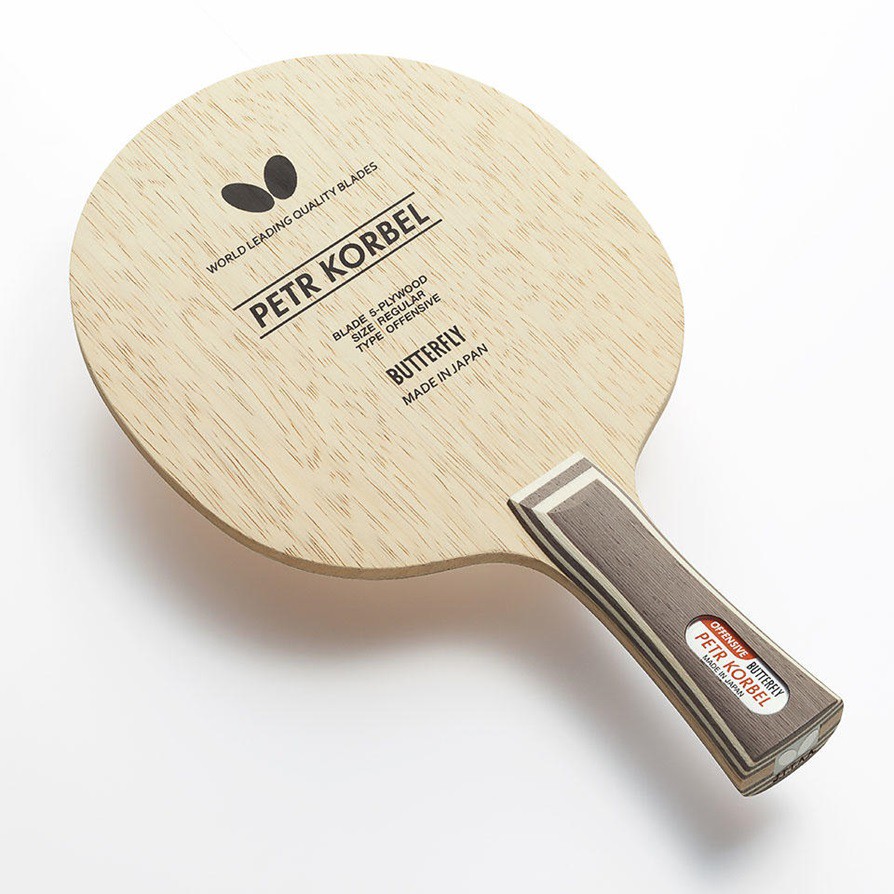
The Butterfly Korbel has aged better than almost any blade of its generation. It carries the full name Petr Korbel, after the Czech star who used it, and it is a classic 5-ply all-wood offensive blade: limba-limba-ayous-limba-limba, around 6mm thick, roughly 88g. For years it has been one of the first boards coaches hand to a player learning to attack. This review pulls together three independent sources, the long-running community reviews on Revspin, the ongoing threads in r/tabletennis, and the roughly 79 buyer reviews collected on the retailer Megaspin, to lay out what the Korbel still does well, where its limits actually are, and who should keep it on a shortlist now that carbon blades dominate.
Performance
Feel is the whole point of this blade. It is medium-speed, soft, and flexible, and every source reaches for the same vocabulary: long dwell, lovely touch, and a high throw that makes spin come easily. Revspin reviewers report very spinny serves whether you load backspin, sidespin, or topspin, plus consistent forehand and backhand looping with a throw angle higher than they expected. What you pay for that is power. The blade is honestly only medium-paced, and several owners note that looping far from the table means supplying your own power instead of letting the wood do it for you. That is the design talking, not a flaw. One Revspin owner puts it well: the dwell beats a comparable harder blade, with better control and a bit more stability, in exchange for slightly less speed.
Megaspin buyers say almost the same thing in their own words. They talk about exceptional feel, the confidence to go for loops and heavy topspins, and a board that lets them feel every ball; one flatly calls it OFF-minus by today’s standards. The recurring physical gripe across all three sources is balance. The head runs a touch larger than average and turns head-heavy once thick 2.1mm rubbers go on, so weight-conscious players reach for thinner sponge, with one reviewer recommending 1.9mm Tenergy to hold the total weight down. Version matters as well: the European build is lighter, usually cited around 85 to 88g, while Reddit describes the Japan version as heavier and faster thanks to different wood layering and thickness, with some examples hitting 91g or more. Strip away the detail and the verdict is the same everywhere. This is a high-control, high-feel offensive wood blade that rewards good technique and takes euro and Japanese tensors as happily as tacky Chinese rubbers like Hurricane, DHS, and 729.
What Reviewers Agree (and Disagree) On
The agreement here is strong. Revspin, Reddit, and Megaspin all describe the Korbel the same way: a classic, controllable, high-feel all-wood blade that excels at spin and the short game and makes the ideal board for learning to loop without carbon. Buyers and reviewers single out the dwell, the throw, and the touch, and several long-time players say it ended a multi-year search for the right blade. The arguments are about ceiling and fit, not character. Power is the clearest split. Most users take the medium pace as a feature, but the aggressive far-table crowd finds it short on punch and eyes a 7-ply like the Stiga Clipper. Handle and balance is the next recurring debate: plenty love the slim flared handle, while larger-handed players find it too thin and flag the head as heavy with thick rubbers. Authenticity rounds it out on Reddit, where owners compare weight and holograms because the blade gets counterfeited so often.
Who Should Buy It
Buy the Korbel if you are a control-first offensive or allround player who values feel, spin, and a forgiving long dwell over raw carbon-fueled speed. It is one of the most recommended blades for beginners and improvers for a reason: it rewards developing technique, makes learning to loop and play the short game easier, and stays affordable next to other Butterfly wood blades. It takes a huge range of rubbers, so it drops into almost any setup. Think twice if you are an aggressive far-table looper who needs the blade to supply power, since a faster 7-ply or a carbon blade will serve you better there, or if you have large hands and dislike a slim handle, though grip tape fixes that easily. For a single classic all-wood blade to learn the modern spin game on, the Korbel is hard to beat.
FAQ
Is the Butterfly Korbel good for beginners?
Yes. It is one of the most recommended wood blades for beginners and improvers because it is controllable, forgiving, and spin-friendly, and it is widely cited as an ideal board for learning to loop and build feeling before moving to carbon.
How fast is the Korbel?
Medium-speed, OFF-minus, all wood. Most users treat the medium pace as a control feature, but looping far from the table means supplying your own power instead of leaning on the blade.
What is the Korbel made of?
A 5-ply all-wood blade, limba-limba-ayous-limba-limba, around 6mm thick and roughly 88g, with no carbon or composite layers.
Is there a difference between the European and Japan versions?
Yes. The European build runs lighter; the Japan version is heavier and faster thanks to different wood layering and thickness. Real examples range from about 80g up to 91g or more.
What rubbers pair well with the Korbel?
It is forgiving on rubber choice. Owners report good results with European and Japanese tensors such as Rozena, Tibhar Evolution, and Rakza, plus tacky Chinese rubbers like Hurricane, DHS, and 729. To offset the slightly head-heavy balance, some players run thinner sponge.