Butterfly Korbel vs Nittaku Acoustic Carbon Inner: Which Should You Buy?
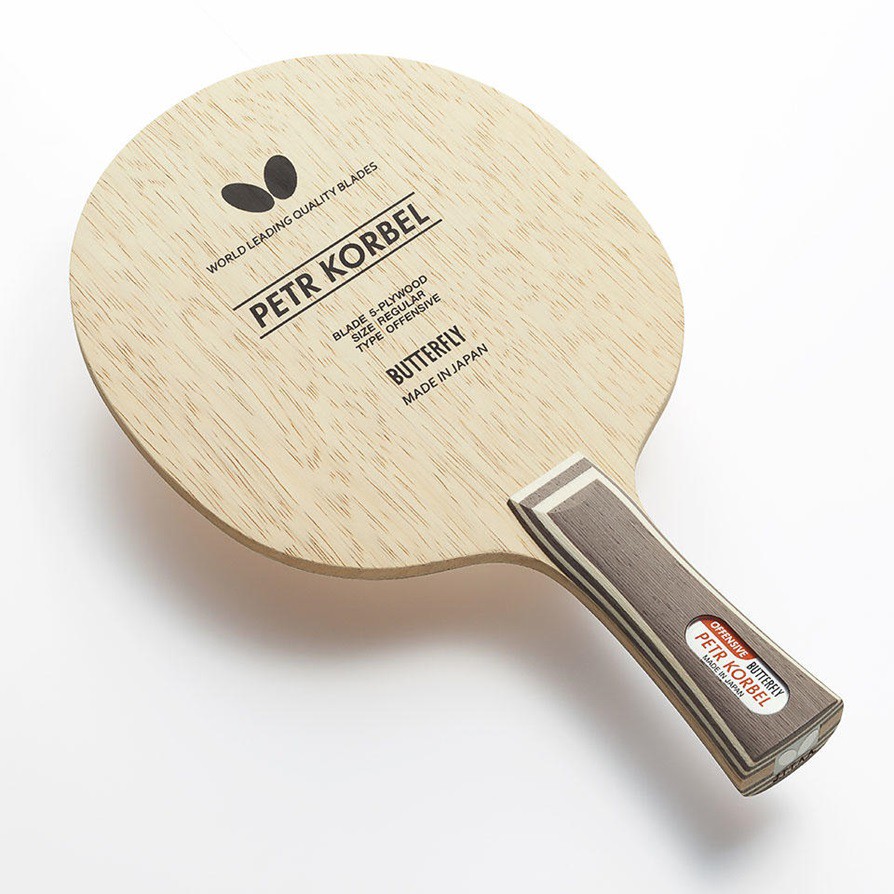
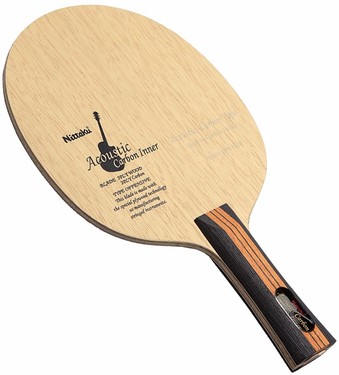
| Butterfly Korbel | Nittaku Acoustic Carbon Inner | |
|---|---|---|
| Our rating | 8.6/10 | 8.2/10 |
| feel | medium, soft and flexible all-wood with long dwell | Medium |
| handle | FL/ST | FL|ST |
| plies | 5W (all wood) — limba-limba-ayous-limba-limba | 5 wood + 2 carbon (inner FE carbon) |
| speed | OFF- | OFF |
| thickness_mm | 6 | 5.5 |
| weight_g | 88 | 90 |
We may earn a commission from links on this page. Learn more.
The Carbon Layer Buys Real Performance, Not Just Marketing
This is not a close call on paper. Revspin’s aggregated ratings show the Acoustic Carbon Inner ahead of the plain Korbel on every performance axis reported: speed 9.0 versus 8.3 (a 0.7-point gap), control 9.3 versus 8.8 (0.5), stiffness 5.7 versus 4.8 (0.9), hardness 5.6 versus 5.3 (0.3), and consistency 9.3 versus 9.0 (0.3). The two biggest gaps — speed and stiffness — line up with what the inner arylate-carbon layer is supposed to do: add pace and a firmer platform for drives without turning the blade harsh. Reviewers corroborate this directly, describing the Carbon Inner as adding power on drives “without stiffening the feel” and noting it “retains a natural, woody ball sensation unique in the carbon blade category” — in other words, the stiffness number goes up, but the blade doesn’t play like a typical hard carbon board.
The smaller gaps — hardness at 0.3 and consistency at 0.3 — matter less. Both blades are rated highly consistent (9.0 and 9.3), and neither is notably hard-hitting on paper; don’t let those two numbers drive your decision.
Why the Overall Rating Doesn’t Match the Radar
Here’s a genuine oddity worth flagging rather than hiding: despite scoring higher on every individual axis above, the Acoustic Carbon Inner’s overall rating (8.2) is lower than Korbel’s (8.6). The cons list explains the gap. The Carbon Inner runs a premium price around 180 US dollars, which is a lot for a blade in this category. It also “amplifies rubber catapult effect,” meaning it rewards careful rubber pairing and punishes careless ones — a variable the plain, more forgiving Korbel doesn’t introduce nearly as much. And reviewers note it’s “noticeably slower than outer-carbon alternatives,” a complaint that only makes sense relative to other carbon blades, not relative to Korbel. Read together, the overall score likely reflects value-for-money and fit-for-purpose as much as raw performance: it’s an excellent blade for the right player, but a narrower, pricier tool than the Korbel’s do-everything reputation.
Should You Upgrade From Korbel To The Carbon Inner?
If you’re an attacking player who has already built solid technique on a wood blade like the Korbel and want more pace on your drives while keeping a wood-like feel and strong control, the Carbon Inner is a legitimate step up — the 0.7-point speed gain and 0.5-point control gain are both large enough to notice, and reviewers back this with real endorsement history, including use by Mima Ito early in her career. This is a blade to grow into, not away from.
If you’re still a beginner or improver working on consistent contact, stay on the Korbel. The Carbon Inner’s rubber-catapult sensitivity means mistakes get amplified rather than absorbed, which is the opposite of what a developing player needs. Korbel’s own bestFor language — “control-first offensive and allround players, including beginners and improvers” — is a better description of what you want at that stage, and it costs meaningfully less.
Fit and Practical Notes
Handle-wise, both are offered in FL/ST, but the Carbon Inner’s original-version handle is narrow and can feel cramped for medium-to-large hands — the G-Revision variant addresses this with a bigger grip if you need it. Weight is close: Korbel at 88 grams versus the Carbon Inner at 90, with the Carbon Inner running slightly thinner at 5.5mm against Korbel’s 6mm. Both take a broad range of rubbers, from tacky Chinese sheets to high-tension European tensors, so rubber choice won’t paper over the underlying speed and stiffness gap between the two blades — if anything, the Carbon Inner’s catapult sensitivity means rubber choice matters more on this blade than on the Korbel. Budget for that extra care when pairing rubbers, not just for the higher sticker price.
Frequently asked questions
Does the Nittaku Acoustic Carbon Inner actually feel like a carbon blade?
Not in the usual sense. Reviewers specifically praise it for retaining a natural, woody ball sensation unique in the carbon blade category even though its stiffness rating (5.7) is a full 0.9 points above the all-wood Korbel's (4.8).
Why is the Carbon Inner's overall rating lower than Korbel's if it scores higher on every axis?
Its premium price (around 180 US dollars), its sensitivity to rubber choice (it amplifies catapult effect), and being noticeably slower than outer-carbon alternatives all weigh down the overall score even though its measured speed, control, stiffness, and consistency all beat the Korbel.
Is the Carbon Inner a good first blade for a beginner?
No. Its rubber-catapult sensitivity rewards technique that beginners typically haven't built yet. The Korbel's more forgiving, mistake-absorbing feel is the better starting point.
Do these two blades need different rubbers?
Both accept a broad range from tacky Chinese sheets to high-tension European rubber, but the Carbon Inner's amplified catapult effect means rubber pairing matters more — mismatched rubber will show up more obviously on the Carbon Inner than on the Korbel.