Butterfly Korbel vs Nittaku Acoustic: Which Should You Buy?
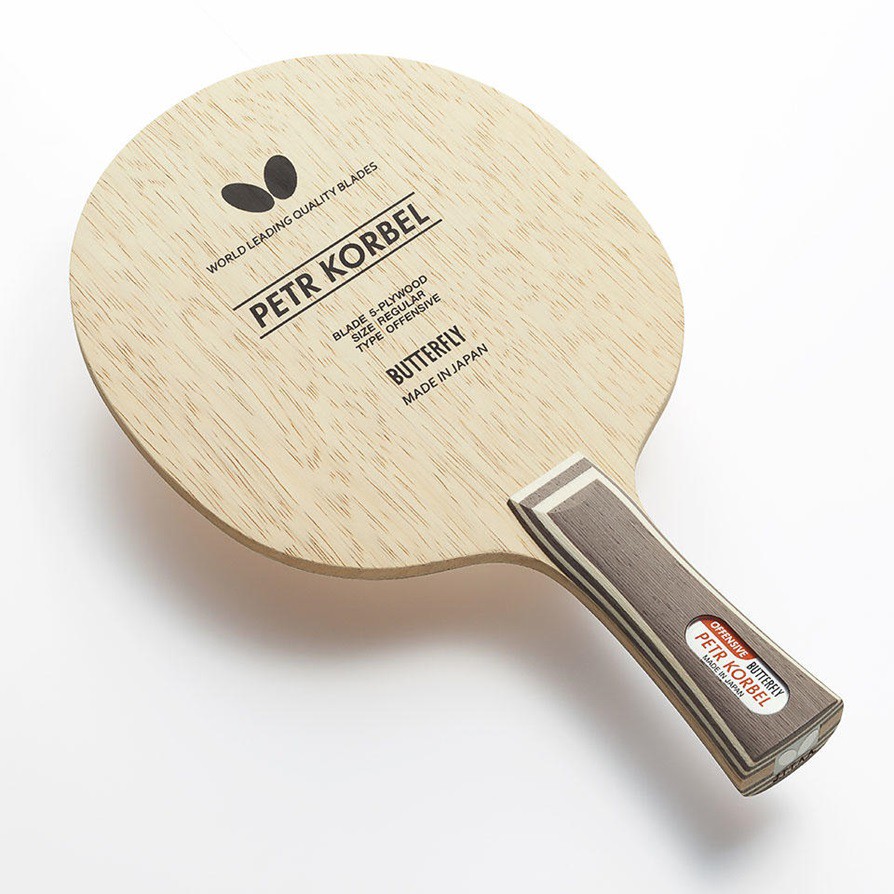
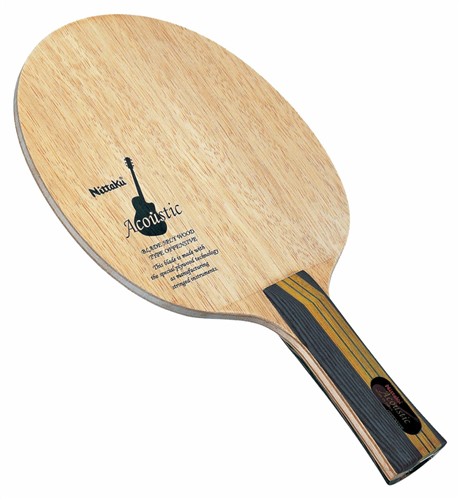
| Butterfly Korbel | Nittaku Acoustic | |
|---|---|---|
| Our rating | 8.6/10 | 8.7/10 |
| Feel | medium, soft and flexible all-wood with long dwell | Crisp all-wood feel with a large sweet spot, long dwell and a signature acoustic sound |
| Handle | FL/ST | FL/ST |
| Plies | 5W (all wood) — limba-limba-ayous-limba-limba | 5-ply all wood (Limba outer veneers over a tung and ayous core) |
| Speed | OFF- | OFF- |
| Sponge thickness | 6 mm | 5.7 mm |
| Weight | 88 g | 88 g |
We may earn a commission from links on this page. Learn more.
Where the Numbers Actually Diverge
Both blades sit in the same neighborhood — OFF-rated, 5-ply all-wood, FL/ST handles, roughly 88 grams stock — but Revspin’s aggregated player ratings put real daylight between them on two axes: control (Korbel 8.8, Acoustic 9.3, a 0.5-point gap) and consistency (Korbel 9.0, Acoustic 9.5, also 0.5). On a 10-point scale built from dozens of independent reviewers, plus corroborating write-ups on Megaspin and Table Tennis Spot, a 0.5 swing on both control and consistency usually shows up as a genuinely different in-hand feeling: the Acoustic keeps the ball on the wood a fraction longer and forgives a mistimed contact a fraction more often. If you’ve ever pushed a ball long or watched a loop sail wide because the blade let go of the ball too early, that is exactly the kind of miss the Acoustic’s extra control and consistency headroom is built to reduce.
Speed tells the opposite story. Korbel scores 8.3, Acoustic 8.6 — a 0.3 gap that sits close to the noise floor of user-aggregated ratings. Don’t choose between these two blades because you think the Acoustic is meaningfully faster; in a real rally most players will not feel a 0.3-point difference. The same goes for stiffness (Korbel 4.8, Acoustic 4.3) and hardness (Korbel 5.3, Acoustic 4.9): Korbel reads marginally stiffer and harder, the Acoustic marginally softer and more flexible, but both blades are described by their own reviewers as flexible, dwell-heavy, soft-contact all-wood platforms. On these two axes you are choosing between two shades of the same family, not two different tools. Weight is a dead heat — both rated 7.5 — so there’s no hidden power reserve in either one.
Should You Switch From Korbel To Acoustic?
If you already own a Korbel and are comfortable with it, the honest answer is usually no. A 0.5-point bump on two axes doesn’t justify a step up to a premium-priced blade on its own. Look at the bestFor language each blade’s reviewers settled on: the Acoustic is aimed at intermediate-to-advanced mid-distance loopers, one tier above Korbel’s control-first beginners-and-improvers profile. That’s the real signal — the Acoustic isn’t a strict upgrade so much as a blade built for a player who has already outgrown the parts of Korbel that make it forgiving for newer players, namely its big sweet spot and gentle, easy-throw feel. If your looping technique is still developing and you’re leaning on Korbel’s forgiveness to cover inconsistent contact, moving to the Acoustic will not fix that. Better technique will, and Korbel is arguably the better tool to build it on because it’s cheaper to write off if you ding it while learning.
Where switching does make sense: you’ve plateaued on Korbel specifically because shots feel like they’re skidding off the wood a fraction early on medium-distance loops, and you’ve already ruled out rubber choice or technique as the cause. The Acoustic’s control and consistency edges are aimed exactly at that complaint, and reviewers single out its short-game touch and blocking as standout strengths.
Price, Fit, and a Real Buying Risk
Korbel’s own reviewers flag a genuine problem the Acoustic doesn’t share: it is widely counterfeited. Verify weight and holograms before buying, especially from third-party marketplaces, because a fake Korbel will not deliver any of the control or consistency numbers quoted here — you’d effectively be comparing a real Acoustic against an unknown product. The Acoustic’s own weak point is the stock flared handle, which reviewers describe as small and thin; larger-handed players often add grip tape or step up to the LG or G-Revision version. Korbel’s flared handle draws the identical complaint from large-handed players, so neither blade solves that problem for you automatically — check the handle regardless of which you pick.
Both take a wide range of rubbers, from tacky Chinese sheets to European and Japanese tensors, so a rubber swap won’t manufacture a difference the blade itself doesn’t have. Weight is identical at 88 grams stock, so there’s no hidden gain there either. This comparison genuinely comes down to control and consistency at a 0.5-point margin, weighed against a real price premium and, for the Korbel, a genuine authenticity risk you need to manage at purchase time.
Frequently asked questions
Is the Nittaku Acoustic worth the extra cost over the Butterfly Korbel?
Only if you've specifically hit a control or consistency ceiling on the Korbel — the measured gap is 0.5 points on each axis, real but moderate. If you're still developing your looping technique, that money is better spent on more table time with the cheaper Korbel.
Which blade is better for a beginner just learning to loop?
The Korbel. Its bestFor profile explicitly targets beginners and improvers, it's cheaper, and its bigger margin for error means a mishit costs you less money as well as less confidence.
Do Korbel and Acoustic play noticeably differently in speed?
Not really — the speed gap is only 0.3 points on Revspin's aggregated scale, which is inside the range you'd expect from ratings noise. Pick based on control and consistency, not speed.
How do I make sure I'm buying a genuine Korbel?
Reviewers explicitly warn that the Korbel is widely counterfeited. Buy from an authorized retailer where possible, and check the blade's weight and holograms against Butterfly's published specs on arrival.