Everything About Rubber Hardness: What the Numbers Actually Mean
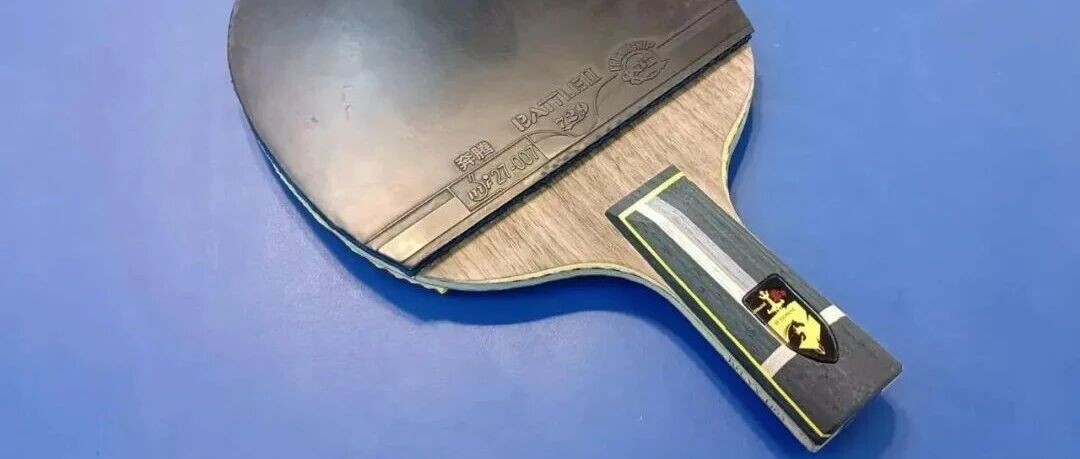
When choosing a rubber, players typically rely on the official hardness rating listed by the manufacturer. But in reality, the matter is a bit more complicated than it seems.
Today we’re focusing primarily on tensor rubbers, especially the German rubbers made by ESN.
The Same Hardness Can Feel Different
A rubber is made up of a topsheet bonded to a sponge. The official hardness rating you see from the manufacturer refers only to sponge hardness. In practice, the topsheet’s thickness, pip geometry and size, and manufacturing method all affect the overall feel.
Within the Butterfly lineup, T64 and T05 are both rated at 36 degrees, yet their contact feel and perceived hardness are very different. T64 generally plays noticeably softer than T05.
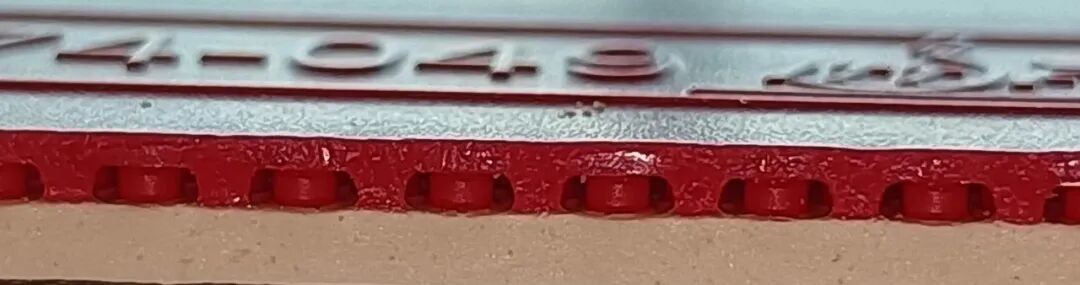
When the pips are relatively thin and elongated, and the topsheet itself is thin, even light pressure produces visible deformation — the contact feels soft. Rubbers like this are very forgiving and produce a crisp, lively sensation, like Butterfly’s Bryce Highspeed or Donic’s F2. They’re easy to play, but because the topsheet is thin, they’re also more prone to cracking.
On the other hand, when the pips are short and thick with a thicker topsheet, the feel is harder. The DHS Hurricane series is a good example — especially Hurricane 2 and Skyline 2. These rubbers generate heavy topspin more easily. If the rubber compound itself has high density, it feels hard and is generally heavier. The ratio of natural rubber to synthetic rubber, plus any added compounds, also shapes how hard or soft the rubber feels.
So even with identical sponge hardness ratings, you may notice that the red side of a rubber feels harder than the black, or that a blue version feels grippier than the red. All of that is real.
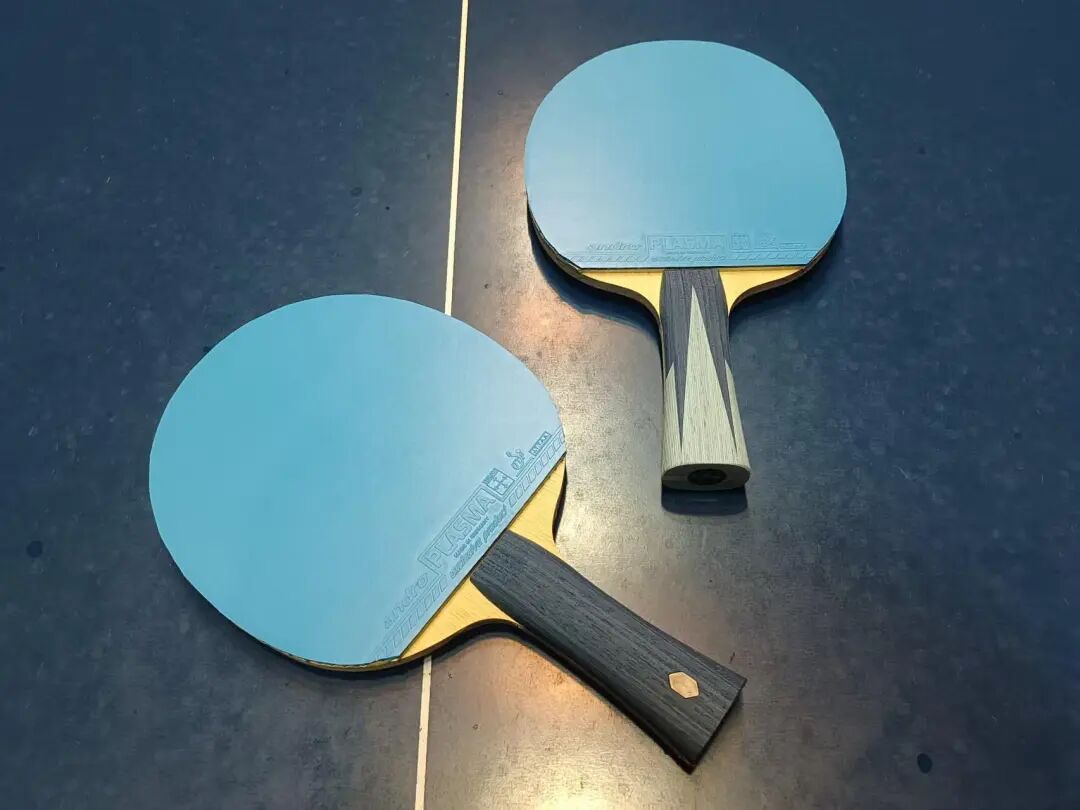
In the past, a 47.5-degree German rubber was perfectly usable as a forehand rubber. These days, it often ends up on the backhand, and hardness levels above 50 degrees have become mainstream.
The New Plastic Ball Era
Rubbers have genuinely gotten harder since the switch to plastic balls. Under the old celluloid ball era, the ball itself was relatively soft and deformed easily. If you raised the rubber hardness but didn’t increase your swing speed, the ball’s speed and spin didn’t improve much — you just lost control. Now, in the plastic ball era, the ball deforms less. Especially with seamless balls, many players feel the ball is heavier. The old rubber hardness simply isn’t enough to move the ball effectively, which forces players toward harder rubbers.
In the European market, 47.5 degrees used to be the most popular choice. Now the preference has shifted toward 50 to 52.5 degrees. But even for professional players, adapting to higher hardness takes time. For intermediate to recreational players, anything below 50 degrees is usually sufficient.
As hardness has generally increased, ball quality has improved — but the rubber gets heavier and harder to control. Donic C1, for instance, is easy enough to use and has that inner-energy Hurricane feel, but it’s really hard on the wrist. T05 Hard produces stunning ball quality, but it’s both stiff and heavy, which challenges your ability to sustain multi-ball rallies.
Personally, I tend to recommend rubbers at a hardness level where you feel in control and the swing feels free. The power ceiling might not be quite as high, but you can swing faster, which indirectly boosts both speed and your margin for error.
Some brands are working on this balance — like Stiga’s DNA Platinum series, which has pushed hardness up in some variants while consistently trying to keep weight down.
The Effect of Swing Speed
The harder and heavier the rubber, the more skill and physical ability it demands. For most top pros, the custom rubbers made specifically for them by their sponsors — like Butterfly’s white-shell tokuchu, or the hardened special versions from Tibhar and Victas — tend to run two to three grams heavier than retail versions.
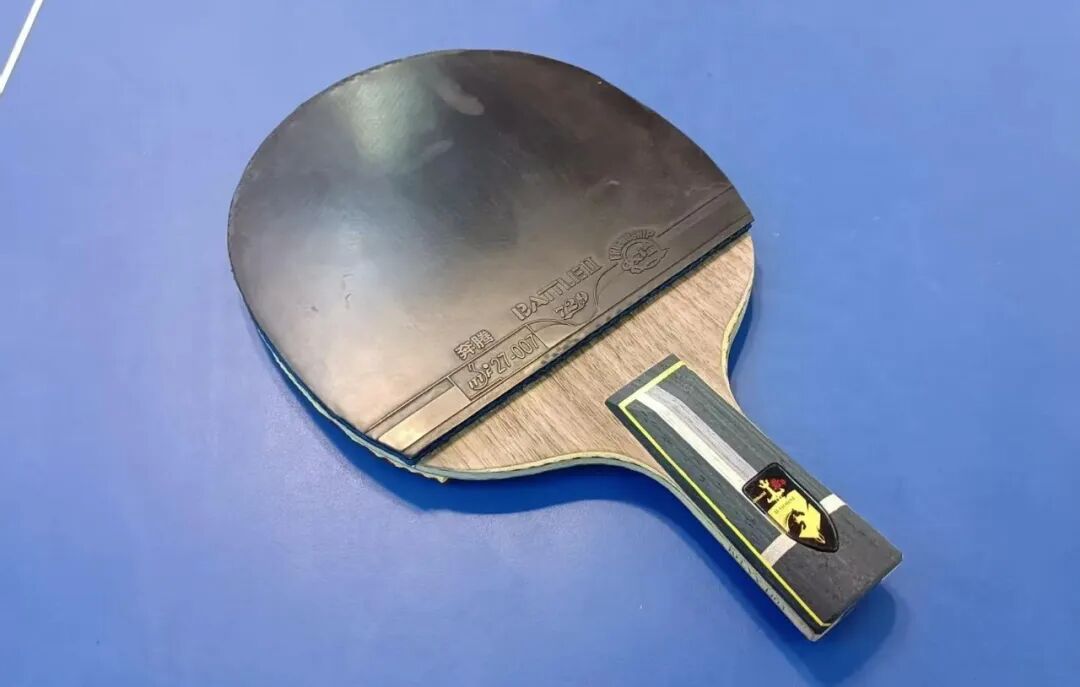
Harder and heavier means more raw punch, but also a higher skill bar to clear. Softer and lighter reduces errors and produces better arc. Ma Long, for example, uses a backhand rubber that is softer than many of his national team peers. He consistently emphasizes the importance of a good arc.
Softer, lighter rubbers also allow for a faster swing. So this is genuinely personal — there is no single right answer.
Temperature and Humidity
In general, a blade that has been heavily used or absorbed moisture will start to feel “mushy” — less crisp, with reduced elasticity. Keeping a desiccant packet in your bag is a simple and effective solution.
Natural rubber is similarly affected by environment. That’s why rubber production facilities typically maintain tightly controlled temperature and humidity.
And even a rubber that is inherently soft will feel noticeably harder in very cold weather. This is completely normal. The environment we play in genuinely affects how a rubber feels.