Weekly Gear Watch #249: These Are the Latest Trends
1. Carbon Fiber Is Getting Denser — Including in Shoes
Carbon fiber densification is a trend showing up not just in blades, but also in table tennis shoes.
We talked about this before: Moregard’s shoes have a secret. Unlike the retail version, his pair is a custom build.
The sole has a carbon plate (carbon fiber insole). The purpose is to stiffen the sole, reduce flex and torsion, and increase forward propulsion. This makes footwork snappier — especially when recovering defensively — and reduces fatigue. In basketball and high-speed running, carbon plates are also used for joint protection. That said, some argue that for players with weaker arches or less stable ankles, the carbon plate can actually increase injury risk.
Tibhar now has a custom shoe made for the Lebrun brothers that also incorporates a carbon plate.
Li-Ning’s Zhanlong, Qilin, and a few other shoe lines have used it too. But carbon plate table tennis shoes are still rare. In the recreational market, will this become an important trend going forward — the way BOA lacing systems seem to pop up everywhere now?
2. Scorning Spin — or Even Giving It Up — Just to Be One Step Faster
“We look down on spin. We can even afford to let spin go — all for the sake of being one step ahead.” — a tagline written for the ZYRE-03.
Butterfly, of course, would disagree. After all, they rated the Z03’s spin at an unprecedented 100 (top tier). Isn’t that a direct contradiction?
But here’s the interesting part: the day after the ZYRE-03 launched in October last year, I wrote a review — and now most people have adopted my framing. This rubber isn’t designed to generate heavier spin; it’s designed to better neutralize spin, letting you accelerate and redirect freely — that’s what it’s actually built for.
One of the defining trends right now is that many players have bought into this philosophy: topspin rallies and high-speed transitions matter more. Using spin to control your opponent? That’s an old formula. Different from the traditional Chinese technical-tactical philosophy, many non-Chinese top players now believe that ramping up speed is more important — and that it’s acceptable to sacrifice some spin to do it. Hence the mass migration to the ZYRE-03.
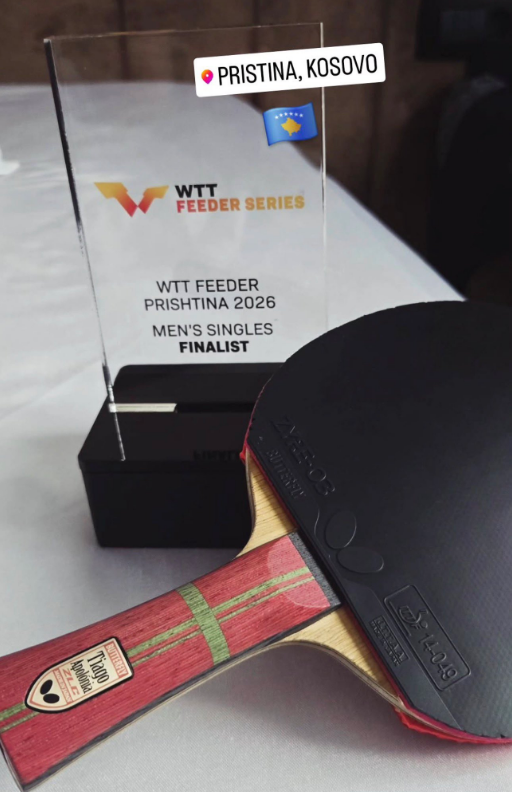
It’s not just the Japanese men’s team, where nearly the entire squad has switched to ZYRE-03 on the backhand. Players from many other associations have followed. Veterans like Ovtcharov and Karlsson have both switched their backhand to Z03 (forehand still on Dignics 09C), while Apolonia runs Z03 on both sides.
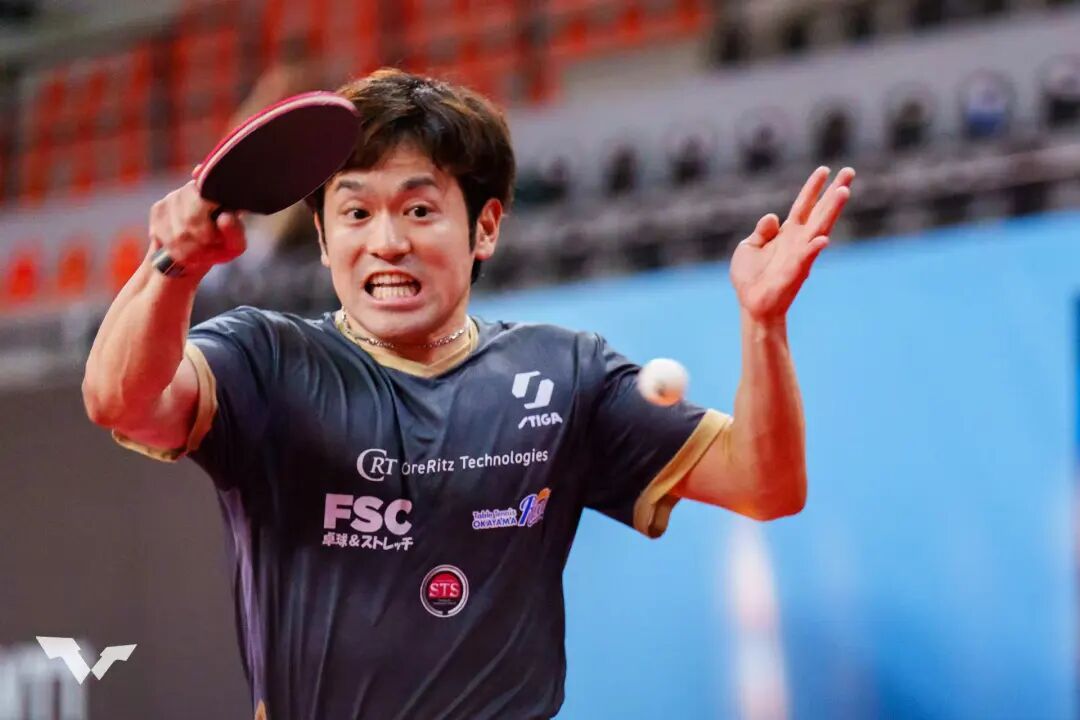
Oikawa Mizuki, who left Butterfly for Stiga and seems to have since left Stiga as well, is back on Butterfly equipment: Fan Zhendong SALC blade, Z03 on both sides.
3. Softer Outer Carbon, and Denser Fiber in Inner Carbon
Softer outer carbon with better dwell time — we’ve been discussing this trend for a few years now. It genuinely is one of the defining trends of the new plastic ball era. The representative outer carbon SALC setups (Super Viscaria, Fan Zhendong SALC) have gotten denser and thicker fiber, which might seem harder to play through — but at the same time they’ve become more dwelling and easier to generate spin with.
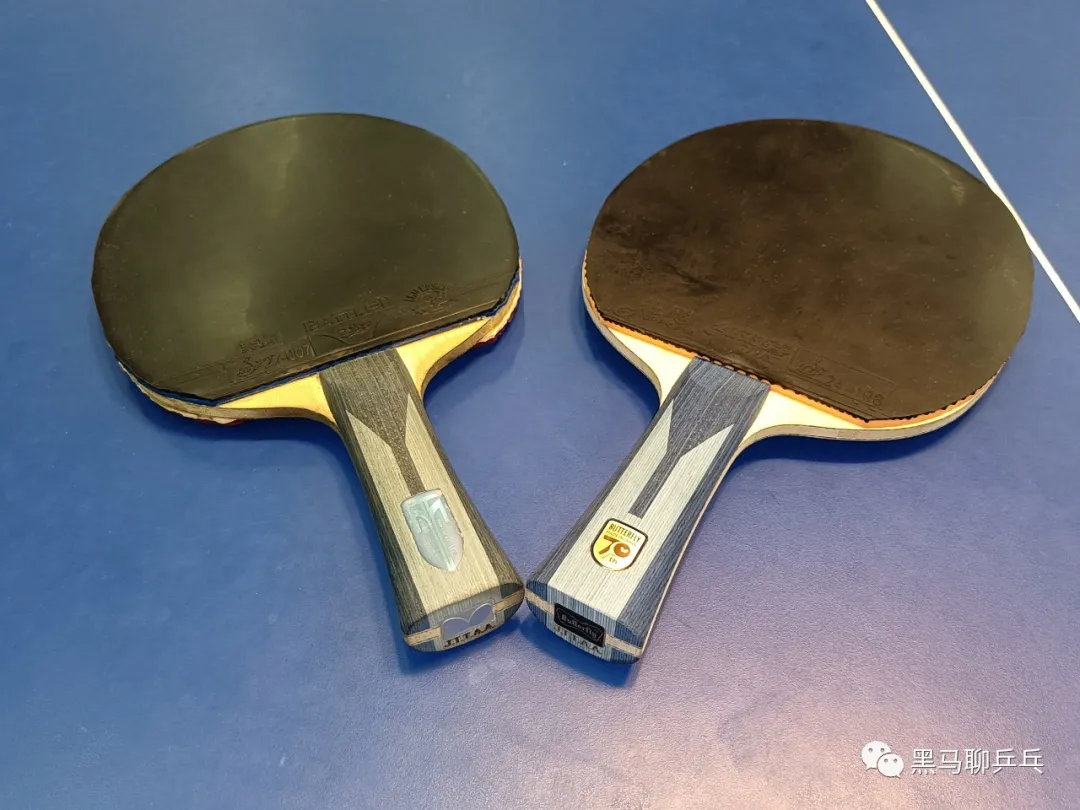
And the outer carbon blades that were already naturally softer — like the Boll ALC — have been further refined through manufacturing improvements to become even more elastically forgiving, with better energy buildup. A good example is the Boll 70th Anniversary Special Edition. The prices are wild though. Earlier today someone in my group was saying Liang Jingkun ARC plays like the Boll 70th — no idea if that’s true, I’ll try to test it sometime.
On the inner carbon side, clearly the old slow-paced approach just doesn’t cut it anymore. Raising stiffness, speed, and support is necessary. Can the Innerforce Layer ZLC still perform? Absolutely. But to get real damage output, you need to really swing through it. It still leans toward the softer side and requires frequent full-force strokes.
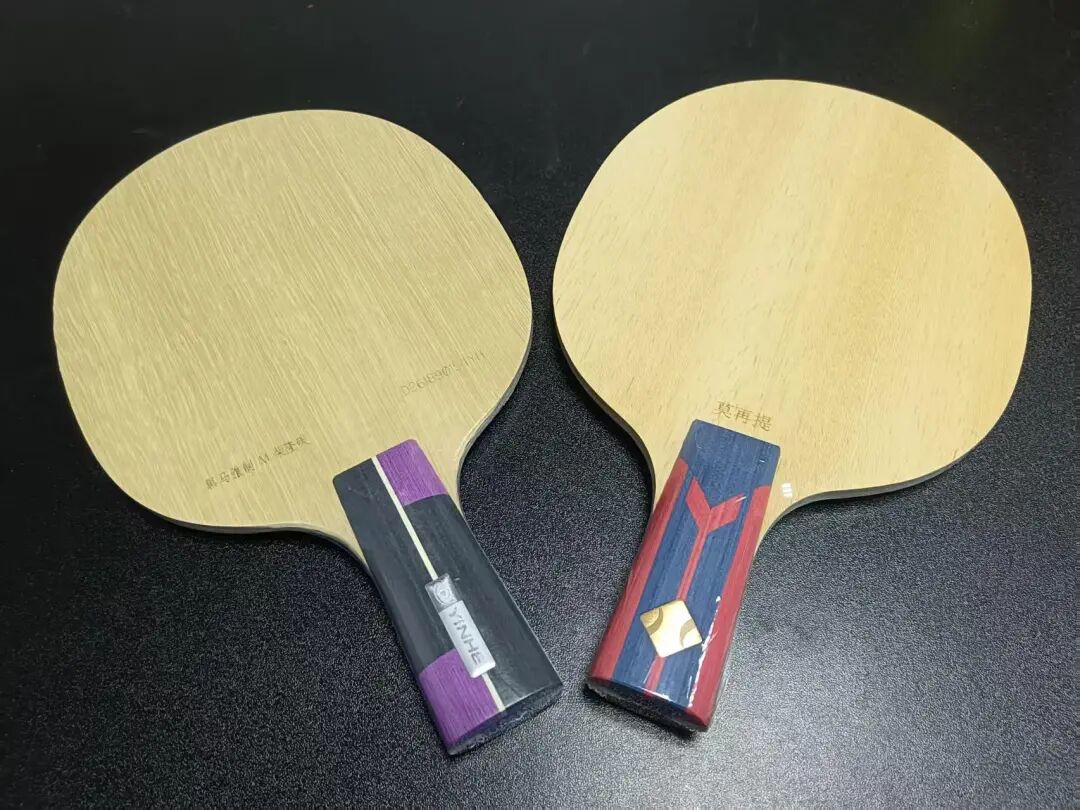
Some of Butterfly’s inner ZLC player-spec models are actually SUPER ZLC (thicker, tougher fiber). That’s also why we had Yinhe make the Blackhorse Yazhi MAX ZFC — following the approach of the thick-fiber Butterfly player-spec Liu Shiwen used to play with, to increase support and backhand speed. Even with an Ayous core, if you configure it right, playing through it is definitely not a problem.
On the retail Butterfly side, the Harimoto Tomokazu SALC is also seeing wider adoption. Kiri (paulownia) as the core is a bit more playable, but at the same time speed is still a priority — hence the Super ALC carbon. That’s one of today’s trends as well.