Thick vs. Thin: The Philosophy of Blade Thickness (Part 1)
1
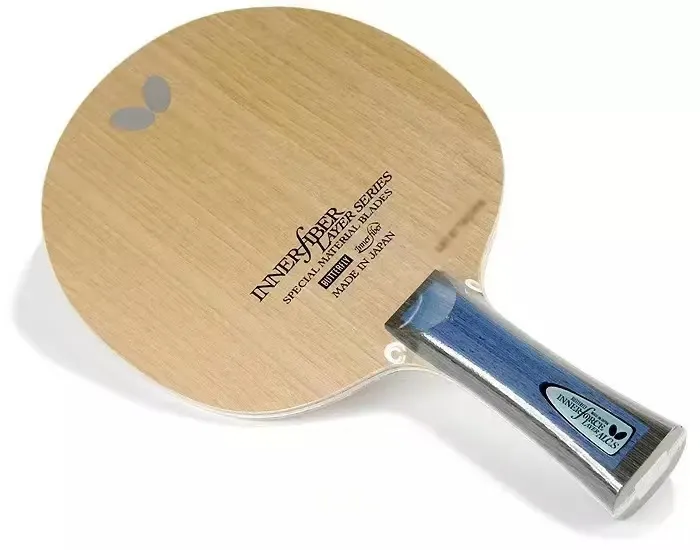
That backhand is sharp, authoritative — easily among the best amateur backhands I’ve ever seen. It isn’t always lightning-fast, but those long, loaded loops with their imposing, pressuring spin are simply impossible to handle. And it all comes off a shakehand single-hinoki blade.
The first time we played, I actually won. After that, a single win has been hard to come by. Studying his setup carefully, I see it’s a Butterfly iron-badge special-edition — the thousand-yuan Wuguang Master version. Around 10mm thick. The overall character is still in the soft-elastic family. But because it’s so thick, when I tried it, I found the forehand lacked clarity at low power, and the backhand felt a touch springy. Thin blades generally give cleaner feedback than thick ones, while thick blades provide stronger support.
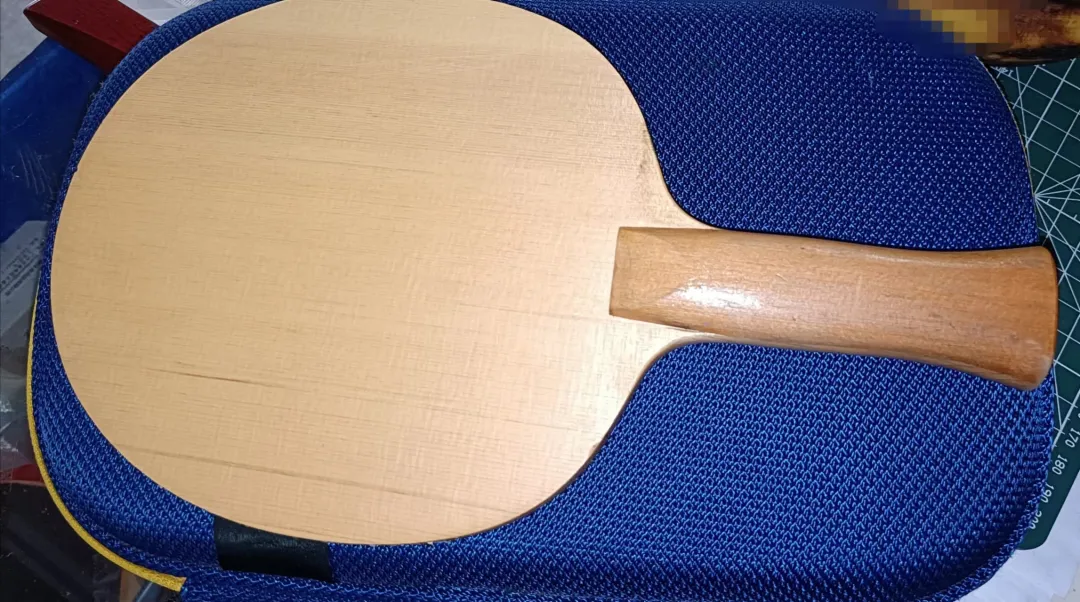
In the hands of a player skilled enough to drive through the blade, that stronger support translates into heavier ball quality and much more dangerous power.
2
More than ten years ago, a Stiga CL at 6.4mm or below might have been called “top-shelf.” Generating spin was easier, and short-game footwork could flow more freely — the only problem was finding one.
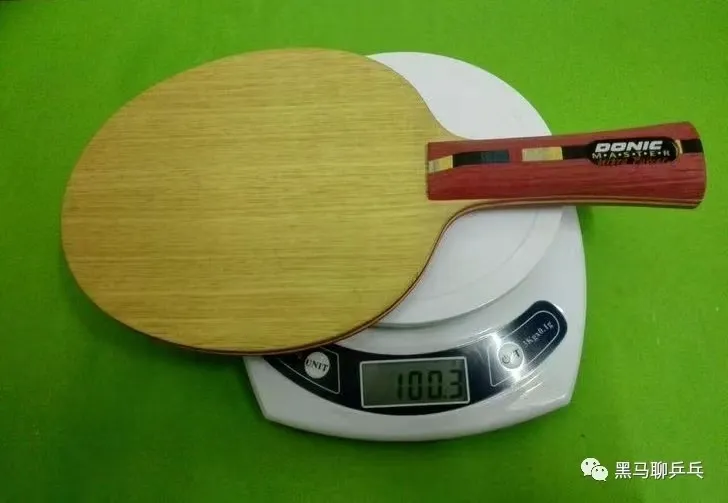
So I turned my eye to Donic’s Ultra Power. Also a classic Swedish-made seven-ply all-wood, the thinned-down UP doesn’t sacrifice solidity — it just loses a bit of weight. The thinner blade makes spin generation more accessible. If you love the authentic feel of seven-ply all-wood but want more spin autonomy than the CL offers, the slimmer UP is worth considering.
3
Butterfly’s Chen Jian-an Limited Edition arcs more than the Stiga CL — it has better tension. After full strokes, the rebound is livelier and more “catapult-like.” This soft-elastic feel, where power amplifies on hard shots and ball weight increases, shares a great deal with the special-edition Viscaria. That’s what the “special-edition” formula is all about.
For me, though — accustomed to thin fiber blades — the 6.7mm Chen Jian-an Limited is still a touch thick. It gets a little blurry when handling balls that barely clear the table. And that overly bouncy character demands technically cleaner strokes; there’s no room for sloppy free movement.
4
If freedom and ease are what you want, here it is: Butterfly’s Innerforce Layer ALC.S. Distinct from the 6.0mm Innerforce Layer ALC and the 5.7mm Innerforce Layer ZLC, this Innerforce Layer ALC.S measures only 5.5mm by actual testing. No wonder Butterfly describes it as: a blade designed for spin-enhanced hitting.

Its backhand feel is genuinely accommodating — generating spin is effortless, and the consistency is very high. As a rule, thinner blades produce spin more easily and give better arc control.
Looking at the three Innerforce blades together, we see thickness decreasing in steps. ZLC is more flexible than ALC, so thinner makes sense — go too thick and the feel turns muddy.
The Innerforce Layer ALC.S uses spruce for the force layer. Spruce has always had a slingshot effect; it’s harder and springier than ayous. So trimming the ALC.S down to 5.5mm is actually quite logical.