Key Factors in Choosing a Blade and Matching Rubbers for Amateur Players
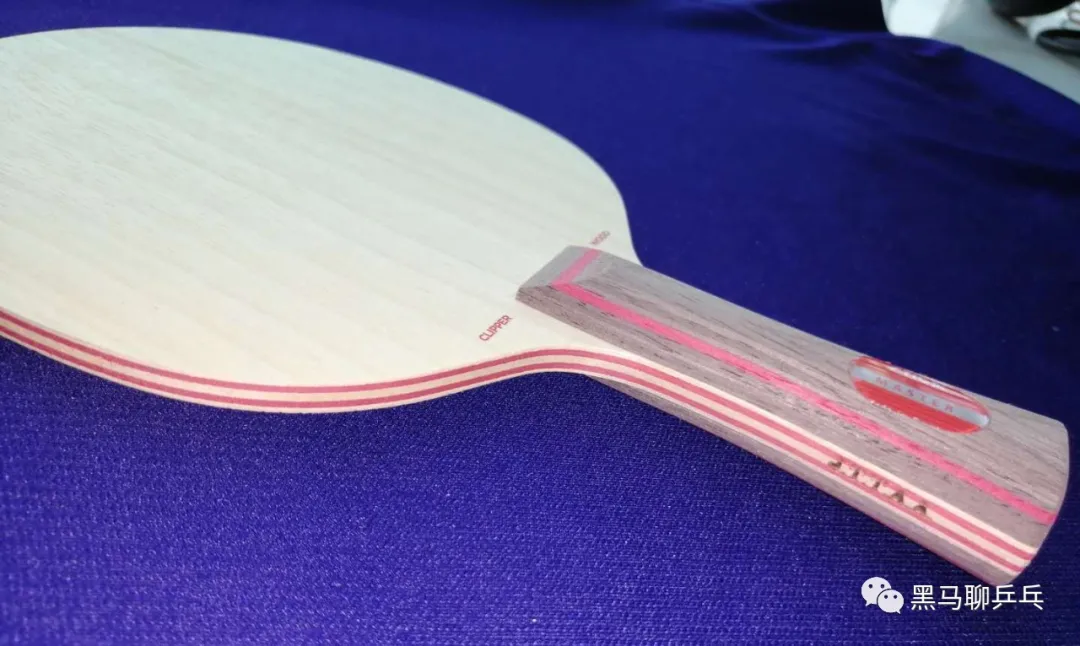
Compared with amateurs, professionals have more time, more systematic training and more planned development. They can treat blade choice as a long-term project, even accepting a temporary dip in form while they adapt, and brands tailor gear to them. For amateurs, what matters is something suitable, easy to adapt to, and quick to play to your strengths — we do not have the time to adjust, the coaches to plan for us, or the custom perks; and even a pro’s gear may not suit us.
Here I take four key words — hardness, elasticity, thickness, weight — and look at how each shapes blade choice and rubber pairing for amateurs.
Blade hardness
Blade hardness ties first to your style. Hitting and fast-attack players suit a harder blade; loopers and back-table defenders suit something softer. Liu Guoliang and Mu Zi both chose the crisp, hard Stiga CL; Chen Jing’s Butterfly was harder and springier still. Small-ball-era players liked soft five-ply woods like the Stiga OC and Yasaka YE, while the chopper Joo Sae-hyuk used a pure-wood five-ply.
There are exceptions: Gao Jun used a handle-shortened Matsushita Koji, and Sweden’s Falck, a short-pips hitter, once used the Yasaka Ma Lin Soft Carbon — neither blade is hard. Why? Because that let them strike more consistently and use their own power better. When choosing, gauge whether you can handle the hardness. Some people just cannot manage a hard-faced blade — they fail to make spin or a good arc and miss constantly; a limba-faced blade may suit them, and if aramid-carbon is too much, a softer all-wood is the answer.
Rubber hardness
Harder is not always better. Some players believe a harder rubber is faster and more powerful, but it depends on whether you can handle it. A 41-degree Hurricane 3, when you can fully compress it, hits harder than a 39-degree. But most of us can only compress 39 degrees. Ideally you feel the sponge bottom out at seventy or eighty percent power, so you borrow the blade’s power and strike more consistently.
Junzo Niwa once used V-greater-15 Extra both sides. But that hardness on the backhand is too much for a beginning amateur to compress. Some chose the softer V-greater-15 Limber instead and found it far more comfortable, able to both flick and loop. Even on the national team, players in under-trained phases often use softer rubbers, moving to harder ones only once their training load and form come up.
Blade elasticity
A springier blade can threaten more, but demands more technique. The custom Butterfly Innerforce Layer ZLC, for example, is reported by some to be no easier to control than the retail version, because the retail one releases power more linearly. The custom is soft yet springy and needs a lower arc, or you overshoot. Why do some love the custom Boll and others not? The custom’s supple, springy feel gives better ball-eating and stronger spin, but lacks the firm, crisp pop of the retail version. Crisp-and-hard favors hitting, supple favors looping. Do you want more brushing dwell or more flicking and driving? Different tastes, different choices.
Pips players, by contrast, often should avoid an overly springy blade. A long-pips penholder who once used a Butterfly Boll and suddenly switched to a Boll ZLC gained speed, but the sudden extra bounce made the long pips hard to rein in on defense. That is why many two-color blades on the market are hard-and-springy on one side and softer, less springy on the other — the weaker side carries the long pips. Even now, many short-pips attackers prefer pure seven-ply wood, because wood’s elasticity is more linear than aramid-carbon and transitions power more naturally.
Rubber elasticity
Same for rubbers. A springy, high-rebound sheet saves effort, but also means a faster throw off the bat. Many amateurs first follow the crowd to the famous backhand sheet Tenergy 05, thinking the fastest must be best. In practice T05’s release speed exceeds what an average player can handle. Even some strong amateurs settle for the softer Tenergy 05FX, or pick lower-bounce, more neutral options like Vega Pro or the platinum J.O. Look at Butterfly’s own move: Rozena is marketed for non-elite players, with more compatibility and stability, less springy than the T series and easier to manage.
A springier rubber works on the backhand, where many strokes borrow rebound. The forehand suits a less springy sheet. Chinese players tend to run a tensor on the backhand and a tacky sheet on the forehand — the more linear tacky rubber makes it easier to generate your own power, with more consistency.
Blade thickness
Before buying you often sort through stock, including by thickness. The Stiga CL comes in light and heavy, thin and thick. A thinner body makes spin more easily; a thicker one strikes a heavier ball. If you like the CL build but want it thin, consider the 6.2mm Donic UP — similar construction but easier to open backspin. Why is the gold-label custom Viscaria so chased? Partly quality and scarcity; partly that for some holding a Boll Tricarbon, the 7.0mm body is too thick for the modern penhold-backhand game, while the Viscaria under 6.0mm is ideal for two-sided looping.
A reader who likes the Hinoki-ZLF blade asked if there is a same-construction upgrade. That is hard — its late power is tied to the three hinoki plies, two ZLF layers and the 7.0mm thickness. Swap in a thinner, similar build and feel and power shift, needing time to adapt.
Rubber thickness
In Japan’s market, Japanese tensors still come in 1.9, 1.8 and 1.7mm. Some Chinese players buy thinner Tenergy 05 from abroad for the backhand, especially penholders. A thinner sheet lightens the blade and plays quicker and easier to compress for the backhand flick. When the Donic F1 and F2 go on a shakehand backhand, those who like flicking and a crisp feel may find 2.0mm nicer than MAX. For V-greater-15 Extra, if Extra feels too hard and heavy on the backhand but you prefer it to Limber, choose the 2.0mm — easier to compress.
A thinner rubber is easier to compress and use the blade’s power, a real plus for fast attackers. A thick sponge suits brushing and looping; a thin one suits flicking and fast attack.
Blade weight
A 95g Viscaria of course hits heavier than an 85g one — but can you carry it? I once swung a 97g Innerforce Layer ALC, felt my power was good and never thought the weight hurt my game. Then I switched to a lighter one and the sky cleared — my swing speed improved and my hitting got more consistent. The same model, at different weights, plays a slightly different ball but keeps its basic character. Two-winged players need a light blade for swing speed; defensive styles, especially long pips, want enough mass to hold firm.
There is a rumored Shang Kun Boll Spirit floating around the amateur market that changed hands several times because it weighed over 100g. It shows that, especially for amateurs, a good blade also needs a suitable weight. Since some Stiga blades vary noticeably in thickness and weight, players of different styles can pick what fits.
Rubber weight
Some egg-sponge rubbers play a fine ball and offer balanced all-round performance on the backhand, yet get dropped simply for being heavy. Near 50g may be fine for a pro but too much for some penholders, who can only run it on the forehand. In the plastic-ball era, an egg-sponge tensor needs a solid sponge to play a good ball, so it is rarely light. That heaviness is one more reason Butterfly’s Tenergy and Dignics are so loved — they are still several grams lighter than many heavy tensors, which earned them the “good on both wings” reputation.
Picking from hardness, elasticity, thickness and weight to match yourself looks like small detail, but pull one thread and the whole thing moves. Only by getting the small details right can you see the big picture and gain the edge.