Thick vs. Thin: The Philosophy of Blade Thickness (Part 2)
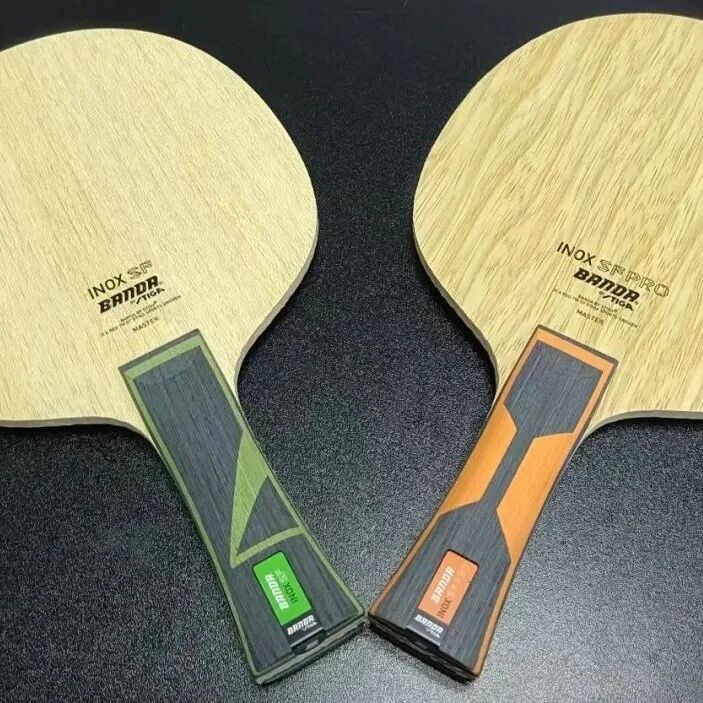
5
Thin blades make backhand play feel easy and natural; thick blades can make the backhand feel sluggish — unless you have exceptional technique, like the player mentioned at the start of Part 1.
My penhold sparring partner used to play with a Guangwei blade at 7.0mm — plenty of grunt in the head. But thick blades have a weakness: when you don’t have full room to load, the loops you produce tend to be high-arc and weak on spin. So I’d often feed a long ball into his backhand and then counter-loop.
Since he switched to the Super Lin Yun-ju at 5.6mm, his backhand has taken a significant step up — his loops are faster, his blocks more precise. Thin blades also make backhand play more consistent.
If you use a thick blade and want a threatening backhand, the best approach is to create ample room and swing big.
6
By going thinner, you gain more flexibility in how you hit the ball and can generate spin more easily.
But if you want to pick up pace — especially against the new plastic ball — and want more power than before, thickening the blade is an option. For example, going from the Innerforce Layer ALC at 6.0mm up to the Ovtcharov ALC at 6.2mm.
A thicker blade rebounds more readily, giving faster and more effortless return speed when borrowing an opponent’s pace. For example, during the last Olympic cycle, injury-hampered Boll switched from the Boll ALC to a 7mm plain-carbon blade that gave quicker return speed, and immediately won the European Championships men’s singles in 2021. The women’s singles champion at that event was Solja, playing a Joola Nobilis — also a hinoki-faced, 3+2 structure thick blade.
Adding thickness raises a blade’s rigidity, and rigidity means faster speed sensation and more efficient, powerful rallying.
7
Between thick and thin lies a spectrum of different demands: spin vs. speed, taking the initiative vs. absorbing the opponent’s pace. Butterfly’s upcoming chopper blades have been getting thinner and thinner — easier to use, but less capable of absorbing heavy topspin.
Thickness also reflects the maker’s philosophy — ease of use versus higher ceiling. My own custom blade started at 6.0mm and was eventually tuned down to 5.7mm, and through that process I came to understand what I actually wanted: a blade made for more recreational players. It doesn’t need to maximize the lower limit of feel, because that might mean a higher barrier to generating power — and playing with it could get tiring.
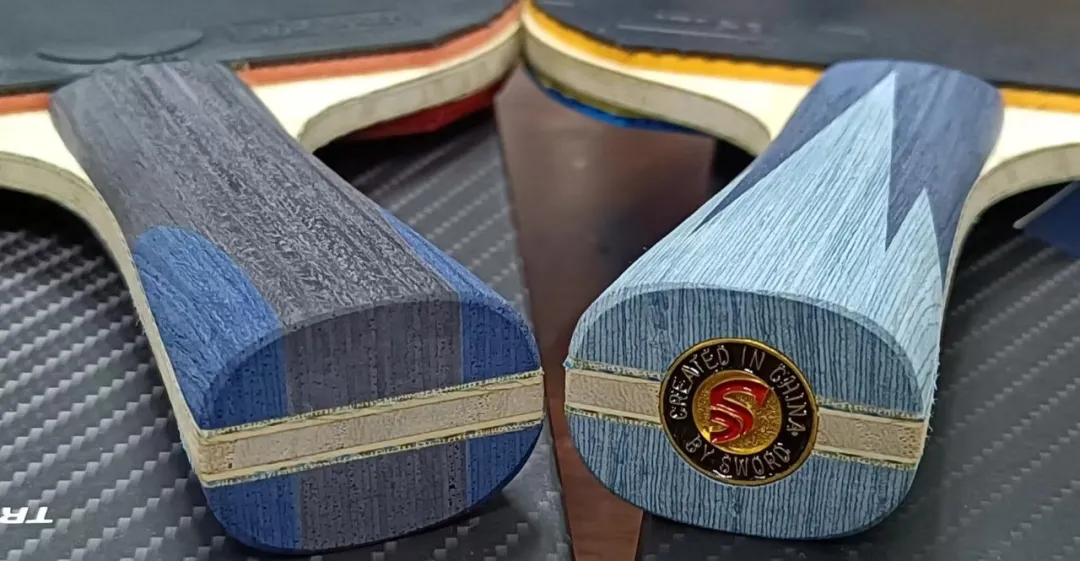
8
When Alloy Carbon and Alloy Carbon Pro coincidentally landed around 5.6mm, it was perhaps because Stiga trusted the strength of that alloy-carbon fiber. The tougher the fiber, the thinner you can make the blade. So “Alloy Carbon” is, in essence, Kevlar carbon.
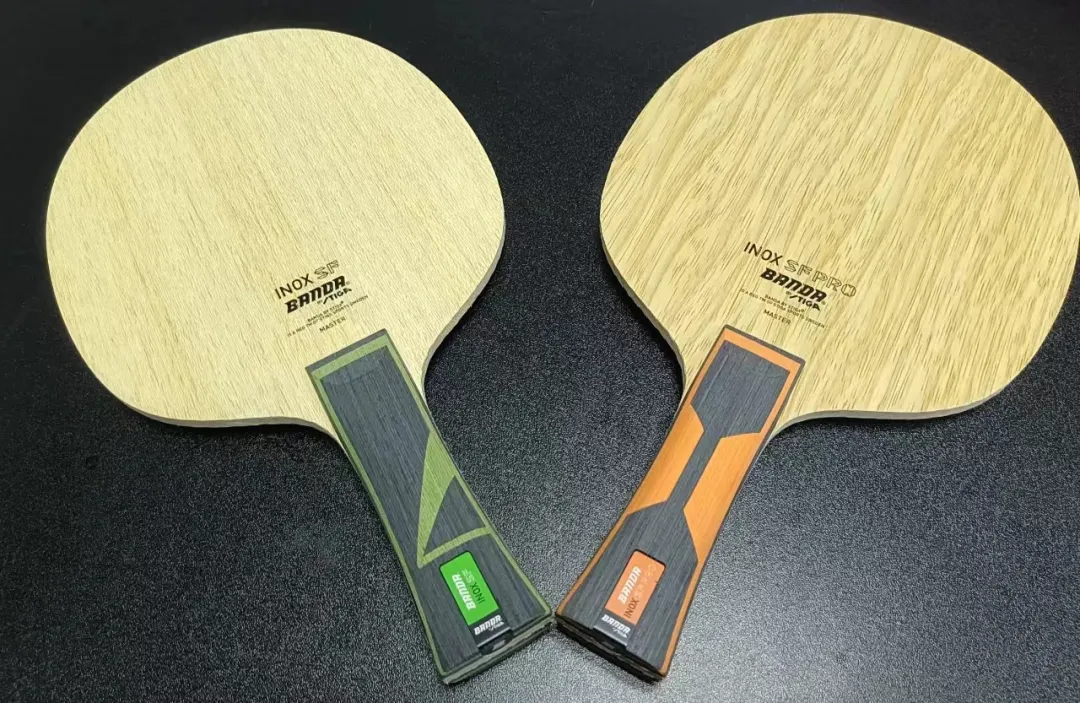
We see the Viscaria and Boll ALC at 5.8mm, and the Super Zhang Jike and Super Lin Yun-ju at 5.6mm.
Of course, a “5.8mm” blade sometimes comes in at 5.7mm in practice, and a “5.6mm” blade sometimes runs a hair thicker — all human, none intentional. Butterfly has said the Viscaria’s thickness has never actually changed; writing 5.7 or 5.8 was just a clerical error…
Originally listed as 5.7, now listed as 5.8 — every “clerical error,” in the eyes of enthusiasts, looks like a deliberate tweak or a masterstroke of design.
9
A couple of years ago, when players asked me how to choose the 968’s thickness, I always said: aim for around 6mm. At the time, the 968’s craft meant the backhand support wasn’t quite solid enough, while the forehand still had a good ball-gripping feel. Choosing slightly thicker helped reinforce rigidity and backhand support.
But improvements in craftsmanship may mean we need to revisit that old advice.