Equipment Durability in Table Tennis: What Lasts Longest and Why
1. The Answer Depends on the Angle
Ask whether Hurricane 3 is durable and you will get mixed answers. Under normal use, plenty of players get a year or more out of it — that tacky surface really is hard-wearing. That saves money.
But boost it with oil a few times and the sponge collapses. If you use glue-based boosting instead, the sponge holds up better — though each application does not last long and you have to boost repeatedly. The upside is the sponge stays intact.
Either way, both oil and glue boosting carry the risk of bubbling on Hurricane 3 — and whether that happens is partly luck. Sometimes it bubbles after only a few sessions and has to be thrown out. So from a pure convenience-and-durability standpoint, for average-level players it may actually be worth considering more durable options like Tibhar K2, Yinhe Big Dipper 5 (a springier, tougher version of Jupiter 3), or Sanwei Target National.
2. Shoes
I have worn Li-Ning table tennis shoes rarely. Of the other brands I have tried, ASICS and Mizuno outsoles are noticeably more durable — especially for a high-movement player like me.
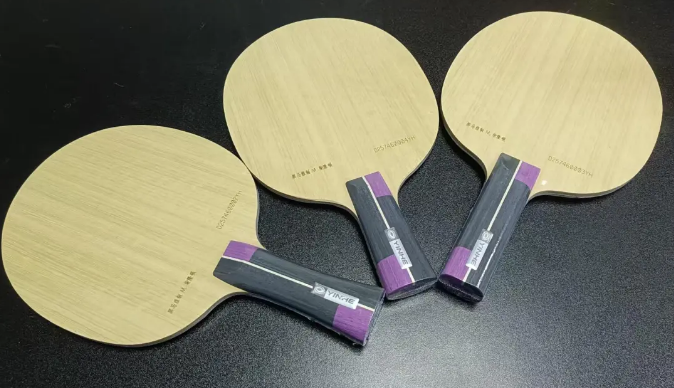
Apart from the typical floor-flooring courts in the city, a few friends and I also have a setup at a rural venue with a concrete floor. That kind of surface is the ultimate outsole stress test. With ASICS or Mizuno, even budget models last a year without issues and resist cracking. With other brands on concrete, some started slipping or showing micro-cracks in the outsole after just a dozen sessions.
3. Blade Durability — Custom vs. Retail
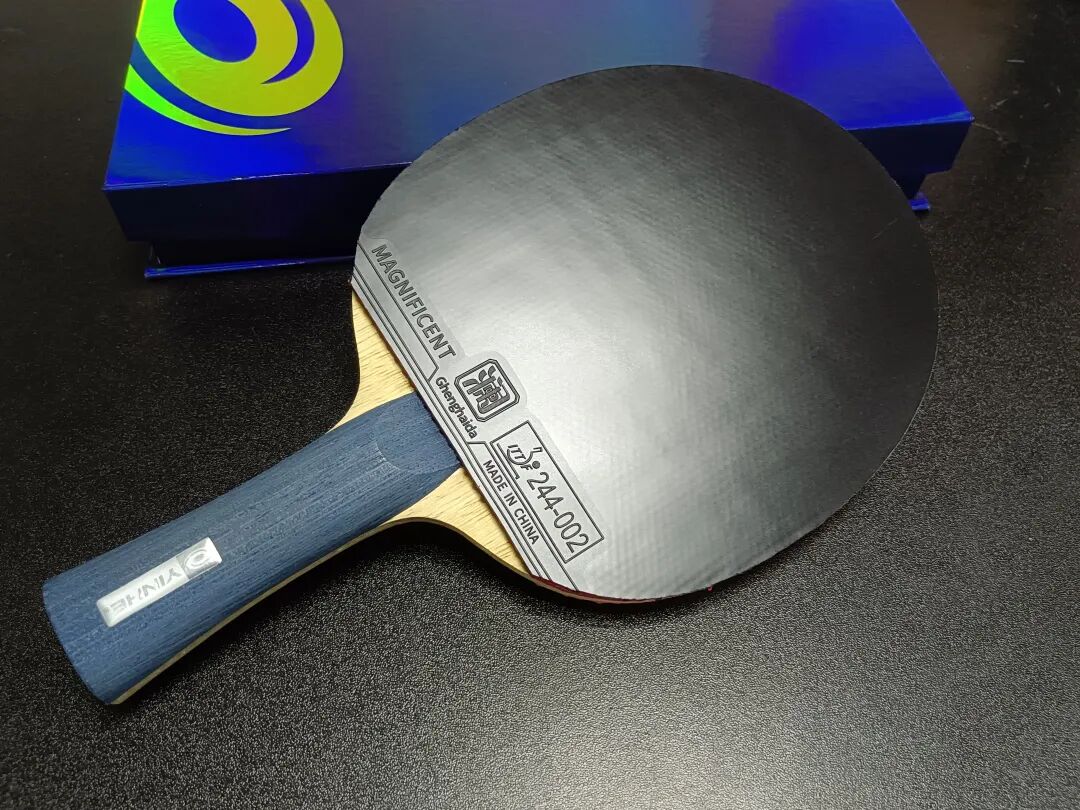
When I first started promoting the Yinhe B-Horse custom blades, some players worried about Galaxy blades not being durable enough. But I have been playing the B-Horse KLC sample since March without noticing any meaningful degradation. If anything, it seems to me that special-production blades from the Blue-Gold Workshop tend to be more tightly compressed — which is probably why they are generally a touch heavier — and that may also be why they hold up better than retail versions.
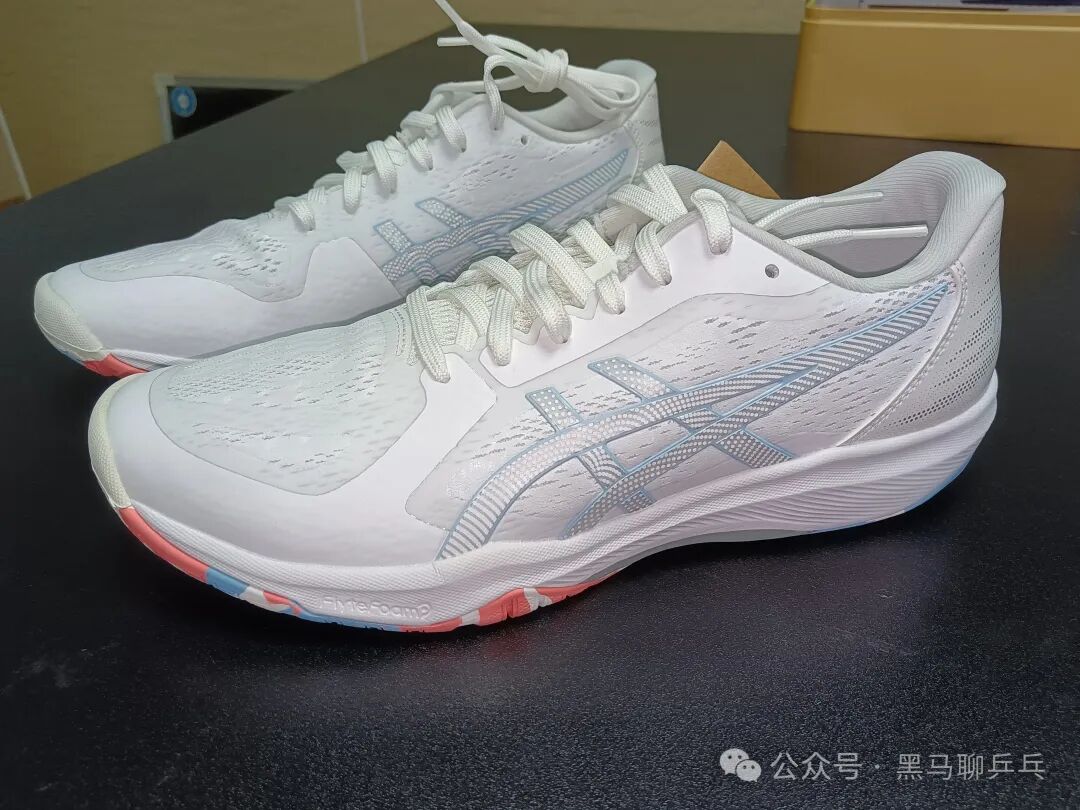
In general, you can read a blade’s likely durability through its feel. If a blade has a large overall flex, a very soft-and-springy character, and a highly transparent feel, you cannot expect a long lifespan. The W968 and Carbon Dynasty are in this category. Under a player who generates more power, they wear out faster.
Beyond that, special-order and limited-edition Butterfly blades quite possibly degrade faster than retail versions — that is my conclusion after playing dozens of specials and limiteds. At least two reasons. First, as I just mentioned, a thin blade with large overall flex naturally wears faster. Special editions genuinely have higher flex tension than retail. Second, the degree to which the fiber layers are cured affects blade hardness. The fiber in retail versions is more fully cured, resulting in a firmer feel. The softer, springier specials are correspondingly less durable.
You can certainly keep playing one past its prime, but you will feel the bounce declining, ball exit shortening, arcs flattening, and it all requires more effort. At that point, bumping up your rubber hardness slightly can partially compensate.
4. Thin Blades Generally Wear Faster Than Thick Ones
Also, Kiri-core outer carbon blades hold up better than Ayous-core inner carbon blades. The Ayous-core construction is all about absolute penetration — once it starts softening, the bounce drop is dramatic and you feel it immediately. It stops playing well.
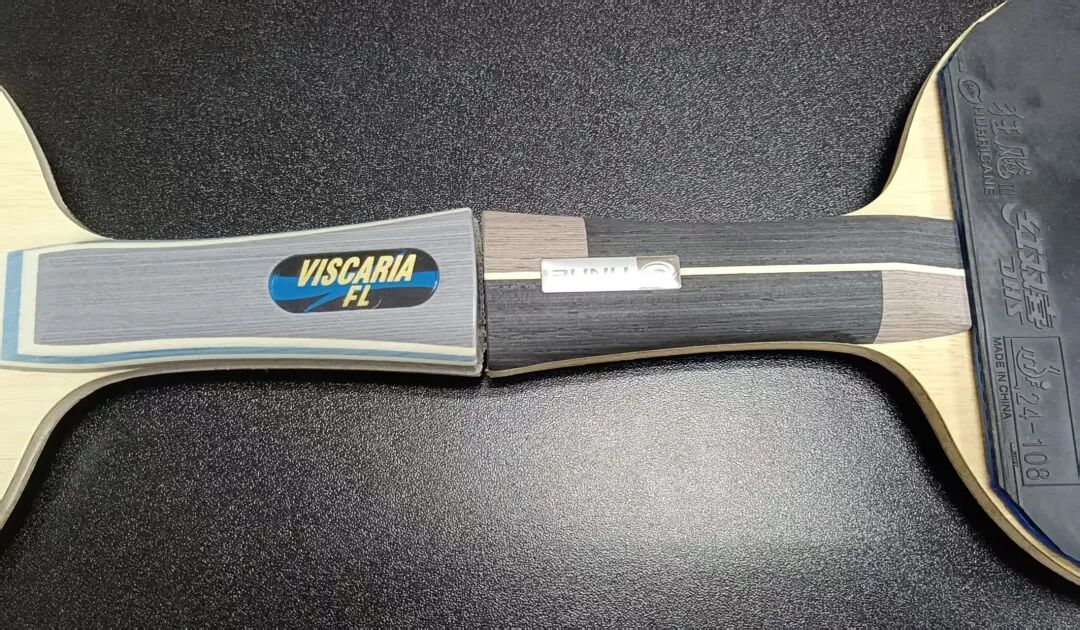
Kiri-core blades, on the other hand, were never about dwell and power in the first place — they are about exit speed and forehand-backhand balance. Sometimes a Kiri-core outer carbon like the Viscaria played for a long time actually starts to feel more ball-dwelling as reflectivity drops. Perceptually, you do not feel like it is wearing out. So the Kiri 9-ply (or even 12-ply) Viscaria genuinely outlasts the Ayous-core 968 — the former emphasizes local flex, the latter overall flex.
Different brands also use different adhesives — some more rigid for structural support, others optimized for penetrating adhesion.