The Best Lightly-Tacky Power Rubber: Final Verdict (Part 2)
After Part 1 was published, many readers pointed out that any discussion of powerful lightly-tacky rubbers must include the Donic Grip D1. I haven’t personally tried that one. From online reviews, almost everyone uses it boosted — which runs counter to the premise of this article, where everything is discussed without boosting.
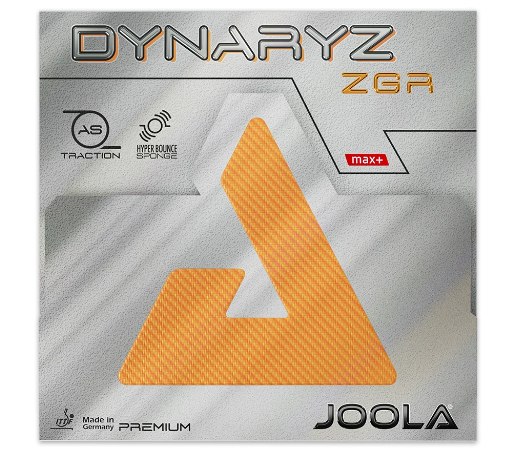
Yula Dynasty ZGR
Measured weight: 52.5g.
The combination of a slightly-tacky topsheet and a tight high-hardness sponge is genuinely formidable. At low force the ball-dwell feel is decent, but at medium force a crisp snap emerges — fast off the bat and full of pressure. At full force it holds up completely: rigid, powerful, and lethal. Even on a Viscaria I found the Dynasty ZGR slightly on the stiff side.
This rubber is unquestionably more aggressive than D09C because it tends toward springy snap, with less of D09C’s warm, enveloping feel. To get the best out of it, you need to maintain active force and leave yourself plenty of room to swing. When you do, its ferocity ranks at the very top among lightly-tacky options.
Stiga DNA Hybrid XH
Measured weight: 49.3g.
First impression: this feels quite similar to the Dynasty ZGR — both a bit muted at medium force, then solid and snappy under full power. But after extended play you realize the overall power level sits somewhere between the Dynasty ZGX and ZGR. More punch than the ZGX, but without the ZGR’s super-tight sponge — it gives you a little breathing room. Even when position and timing aren’t ideal, you can still muddle through. In short, it’s not as stiff as the ZGR.
It’s still faster and more aggressive than D09C. As for the newer Hybrid 55 degrees, I haven’t tried it yet. Looking at the pros, more Stiga athletes seem to favor the XH hardness over 55 degrees, which may suggest that going too rigid isn’t always better.
Yula Hugo Trinity Charged
Measured weight: 54g.
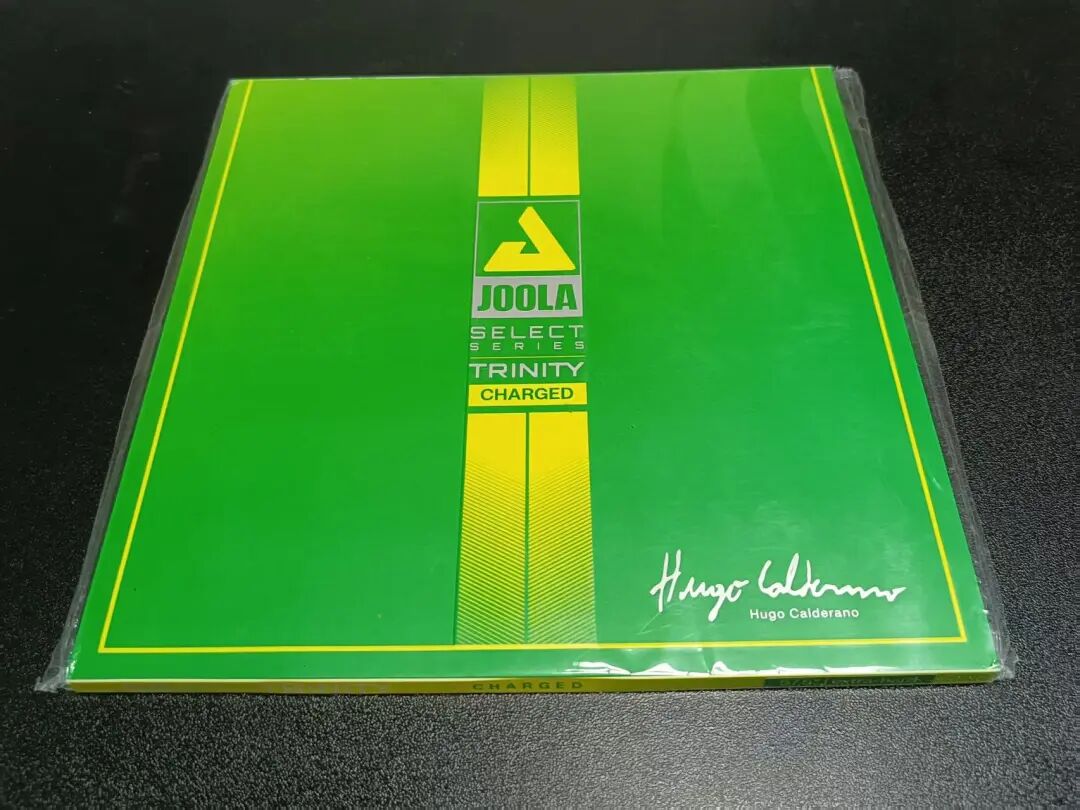
Just mounted it, planning to test this week. It’s noticeably heavy. It should be an adjusted version of the Dynasty ZGR — the playing style is similar, both fairly aggressive. When bouncing the ball it feels slightly softer and more absorbent than the ZGR, with a more pronounced dwell and slightly longer loading time.
The Dynasty ZGR is more springy and explosive, ideal when you have room to wind up and finish in one shot. The slightly-tacky topsheet maintains high speed, and hits are solid and crisp. The adjusted Hugo at 57.5 degrees should preserve the aggressive character while feeling more composed, giving you a bit more adjustment room. Stay tuned for a detailed review.
Jiaomeng Jinghai C55.0
Measured weight: 53g.
With that comparison in mind, the Hugo Trinity Charged doesn’t feel quite so heavy anymore. Accept it: if you want a powerful inner-energy tacky rubber, you’ll live with some extra weight. Honestly, other tacky rubbers that need boosting aren’t going to be much lighter.
As the companion rubber to last year’s Hugo lineup, the Jinghai C55.0 has earned very strong reviews. Because beyond raw power, it can also be stable. In my view, its balance between consistency and aggression is the closest among these imported lightly-tacky rubbers to boosted Hurricane 3. It has been thoroughly treated with inner-energy processing at the factory, giving it a noticeably coiled look. The hitting rhythm resembles blue-sponge Hurricane — a pause, a build-up, then an explosive release.
Of course, since the slightly-tacky topsheet differs from Hurricane 3’s high-tack surface, thin-brush shots don’t quite produce the same gripping sensation. But spin is still respectable, with topsheet friction and sponge working together. And on first-speed, it comes off the blade faster than Hurricane 3.
This is a rubber you can loop, power-loop, and drive with for high speed. More than its raw power, what leaves the biggest impression is its all-around capability. Put simply, even intermediate-level players can pick it up relatively quickly.