Donic Waldner Black Devil Carbon Balsa Blade Review: Explosive Speed, Demanding Control
Pros
- Exceptional power output on flat drives and smashes
- Ultra-lightweight construction around 84g reduces arm fatigue
- First DONIC blade to combine balsa core with carbon fiber
- Enlarged sweet spot relative to earlier DONIC composites
- Distinctive crisp sound and premium aesthetics
- Good value at its price point for a carbon composite blade
Cons
- Near-zero dwell time makes heavy topspin and loop play difficult
- Smaller head than standard blades increases edge mishit frequency
- Fragile koto and balsa veneers chip easily without edge tape
- Too demanding for intermediate or loop-style players
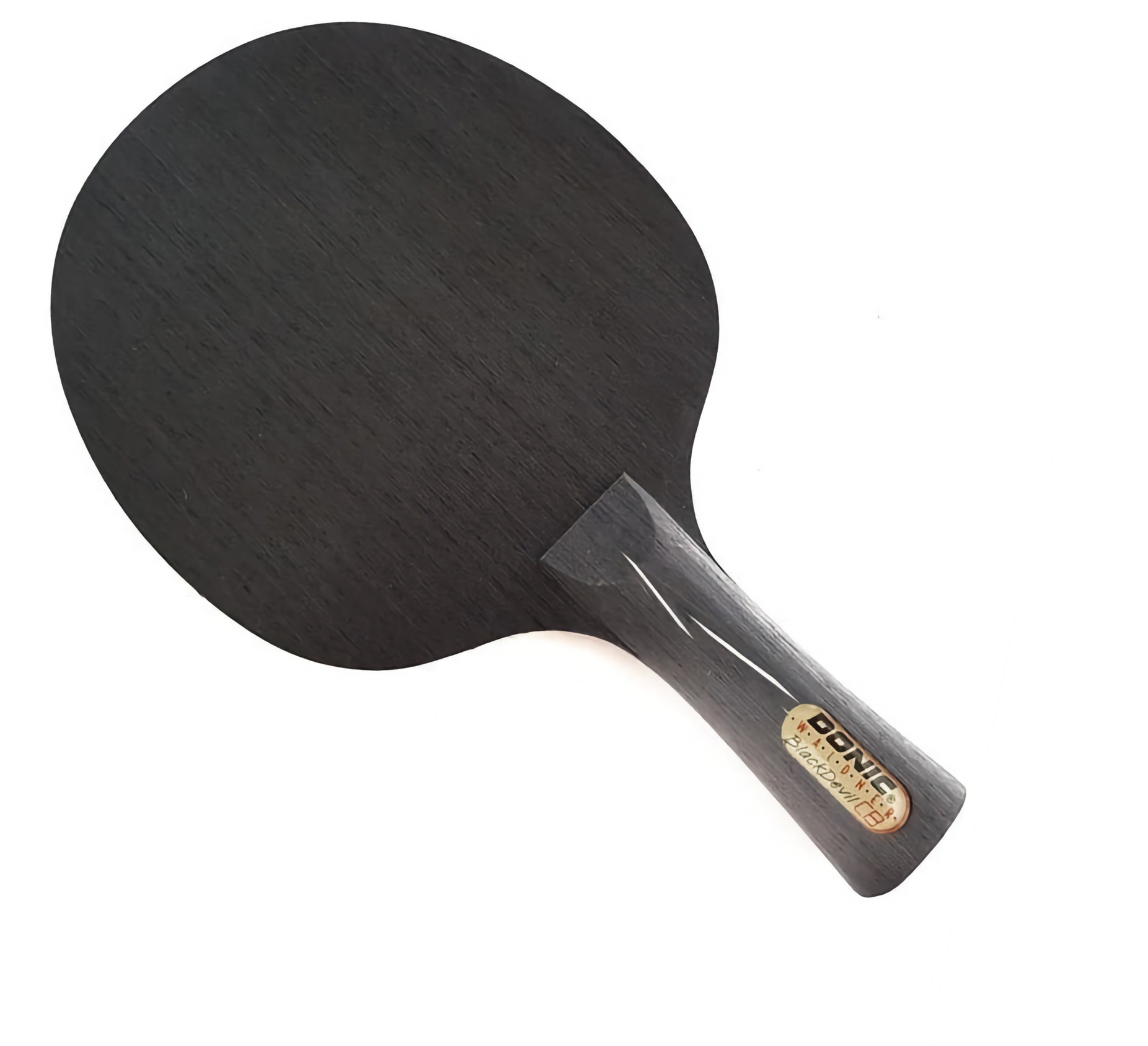
DONIC built this one to mate a soft balsa core with carbon fiber for the first time in the brand’s history. It belongs to the Waldner signature series, and the brief was simple: hand modern attackers an ultra-light, high-speed weapon while keeping some of the touch Waldner played with. Seven plies do the work — Fineline koto outers, ayous intermediate plies, two carbon layers, and a balsa core down the middle. The package lands at roughly 84g and plays faster than almost anything else in its class.
Performance
Speed defines the Black Devil. Megaspin lists it at 95 out of 100, and player testimony backs the number up: this blade accelerates the ball faster than most intermediate players can keep up with. Flat shots and smashes are where it pays off. The carbon layers amplify swing force into the ball and waste little vibration through the handle, so winners land with less effort than they would off an all-wood blade of the same thickness.
Control is the more interesting story. The soft balsa core dampens more than a pure carbon build would, and several reviewers were caught off guard by how manageable the blade felt on passive strokes — short pushes, blocks, gentle touch returns — where the balsa soaks up excess speed. Active strokes are where it bites. Loops and heavy topspins live on dwell time, the split second the ball sits against the rubber before it launches. The Black Devil’s stiff carbon build squeezes that window to almost nothing. Brush the ball and you get less spin than you would expect off all-wood or a softer composite.
So rubber choice makes or breaks the setup. Megaspin, TableTennisDaily, and Revspin all land in the same place: soft to medium-soft rubbers are essential. Sheets like Tenergy 05 FX, Donic JO Platin, Nimbus Sound, or Yasaka Mark V supply the cushioning and grip the blade does not. Bolt on a hard tensor and the already aggressive speed climbs past anything you can manage.
The head also runs smaller than standard, roughly 2mm shorter than a typical all-wood blade, and that catches players who lean on wide forehand loops or cross-court angle attacks. Several reviewers reported clipping the edge on those strokes. Play flat and direct and the head size barely registers. Durability is the other worry. The koto and balsa outer veneers are fragile, so nearly every reviewer tells you to put edge tape on from day one.
What Reviewers Agree (and Disagree) On
Everyone agrees the Black Devil is fast, light, and demanding. The split comes down to taste: some players love the direct-attack personality, others miss the loop-spin they got from softer composites or all-wood. Feedback divides opinion too. One camp finds the ultra-light weight pleasant and easy on the arm; the other says the handle tells them too little to fine-tune mid-rally. Durability draws a smaller split — some report a solid blade with care and edge tape, others chipped the koto veneers after moderate use.
Who Should Buy It
This blade is for advanced attackers whose main weapon is the flat drive or power smash and who are stepping up from all-wood to their first carbon composite. Lighter players, or anyone nursing an arm, gain from a sub-85g frame. It is the wrong blade for beginners, intermediate loop-style players, or anyone who relies on the blade to generate heavy topspin. A soft rubber is non-negotiable if you want to get the most from it.
FAQ
What is the official ply construction of the Waldner Black Devil Carbon Balsa?
It is a 7-ply blade: Fineline koto outer veneers, ayous intermediate plies, two carbon fiber layers, and a soft balsa core at the center.
What rubbers work best with this blade?
Stick to soft or medium-soft rubbers: Tenergy 05 FX at 1.9mm, Donic JO Platin, Nimbus Sound, or Yasaka Mark V. Hard tensors push the setup past the point of reliable control.
Is the Waldner Black Devil Carbon Balsa suitable for beginners?
No. Every major review source warns beginners off it. Build control and consistent stroke mechanics on an all-wood blade first.
Why is spin generation difficult with this blade?
The stiff carbon build shortens dwell time, the brief contact window when the ball grips the rubber. With almost no dwell, brush-heavy loop strokes throw off less spin than they would on softer or all-wood blades.
How does the weight compare to similar carbon blades?
It undercuts most carbon blades in its speed class. Real-world units usually land around 82-88g, while the official spec lists it under 80g, which makes it a featherweight for an OFF+ composite.
Does the smaller head size cause problems during play?
Some players catch the edge on wide-angle topspin strokes, since the head sits roughly 2mm shorter than a standard blade. For flat-attack players the smaller head barely matters.
Sourced From
This review synthesizes opinions from 4 independent community sources:
- Megaspin (ecommerce)
- Revspin (forum)
- DONIC Official (ecommerce)
- TableTennisDaily (forum)