Donic Waldner Black Devil Carbon Balsa vs Nittaku Septear: Which Should You Buy?
| Donic Waldner Black Devil Carbon Balsa | Nittaku Septear | |
|---|---|---|
| Our rating | 7.8/10 | 8.2/10 |
| feel | stiff, minimal dwell | Soft with high dwell time |
| handle | Anatomic / Flared / Straight | Straight or Concave (flared) |
| plies | 7-ply: Koto outer + carbon + balsa core | 7-ply all wood (Kiso Hinoki) |
| speed | OFF+ | ALL+ |
| thickness_mm | approx 6.0mm | 6.7 |
| weight_g | around 84g | 85 |
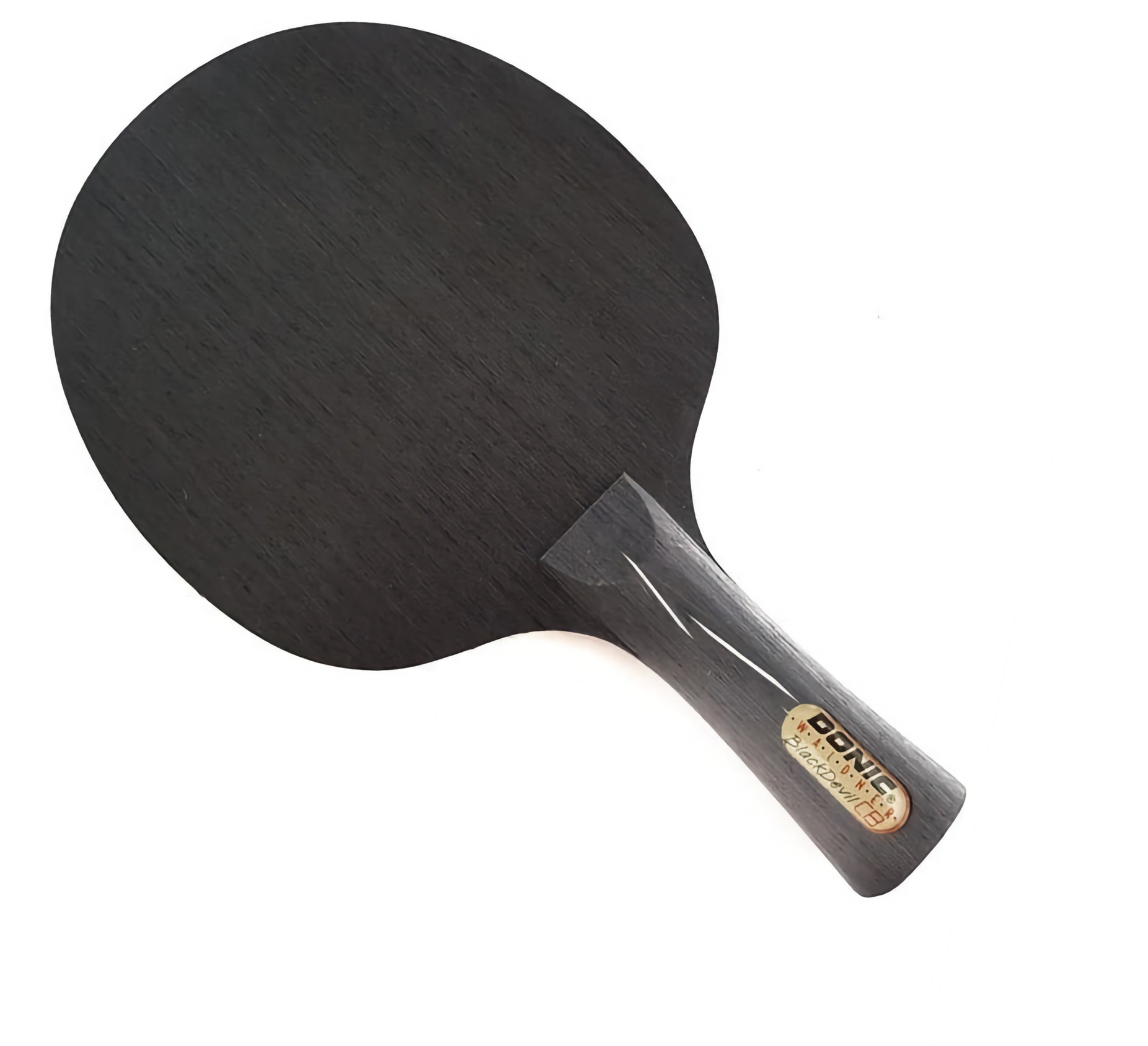
Donic Waldner Black Devil Carbon Balsa
Check price on AmazonRead the full Donic Waldner Black Devil Carbon Balsa review →
We may earn a commission from links on this page. Learn more.
The short answer
This comparison is really “stiff carbon speed blade” against “soft all-wood control blade,” and the axis data confirms it in numbers most comparison pages never show you. The hardness gap between these two blades is 3.5 points (BDCB 7.4, Septear 3.9) and the stiffness gap is 2.7 points (7.4 vs 4.7) — both are among the largest single-axis gaps in this whole batch of blade matchups. If you’re choosing between these two, you are not picking “the better blade,” you are picking a fundamentally different playing style.
What the axis numbers say
Speed: BDCB 9.4 vs Septear 8.6, a 0.8 gap in BDCB’s favor. This is a real, feelable difference — BDCB is built around balsa-carbon pace, while Septear’s Kiso Hinoki wood construction with high dwell time trades some outright speed for touch.
Control: Septear actually wins here, 8.7 against BDCB’s 8.0, a 0.7-point edge. Combined with Septear’s forgiving sweet spot (explicitly called out as supporting “players still developing consistent technique”), this is the blade for players who want to feel the ball rather than just drive through it.
Stiffness and hardness: this is the headline gap. BDCB’s carbon-balsa build is dramatically stiffer (7.4 vs 4.7) and harder (7.4 vs 3.9) than Septear’s soft, high-dwell hinoki construction. In practical terms, Septear holds the ball on the blade noticeably longer before it leaves, which is exactly why reviewers describe it as excelling at “loops, blocks, pushes, flicks and smashes without a weak stroke” — the wood is doing the work of giving you time, not the sponge.
Consistency: Septear edges ahead, 9.8 against 9.1, a 0.7-point gap. Septear’s reputation for premium Japanese craftsmanship and long-lasting construction shows up here as a genuinely more reliable, uniform blade sheet to sheet.
Where these numbers come from
BDCB’s review record spans Megaspin, Revspin, Donic’s own product listing, and a TableTennisDaily forum thread on the blade’s flex behavior. Septear draws on Revspin, Megaspin, BladeRubber’s dedicated blade review section, and ongoing community discussion on r/tabletennis. Reviewers across those sources are consistent on one thing that matters for a buying decision: Septear “performs poorly with soft rubbers” and needs medium-hard to hard sponges to come alive, while BDCB is explicitly recommended with soft-to-medium-soft rubber to tame its stiffness.
Is it worth switching
Moving from BDCB to Septear only makes sense if your game has shifted away from flat hitting toward all-round looping and touch play, and you’re willing to re-tune your rubber choice — Septear needs harder sponge than BDCB does, so a straight rubber swap onto the new blade will likely underperform. This is not a small adjustment; it is close to building a different racket from scratch.
Moving from Septear to BDCB only makes sense if you’ve specifically identified that you want more raw pace and are willing to give up loop consistency and short-game touch to get it. Septear’s own con list notes it “lacks explosive finishing power compared to carbon or composite blades” — that is precisely the gap BDCB is built to close, at the cost of Septear’s forgiving all-round game.
Who each blade actually fits
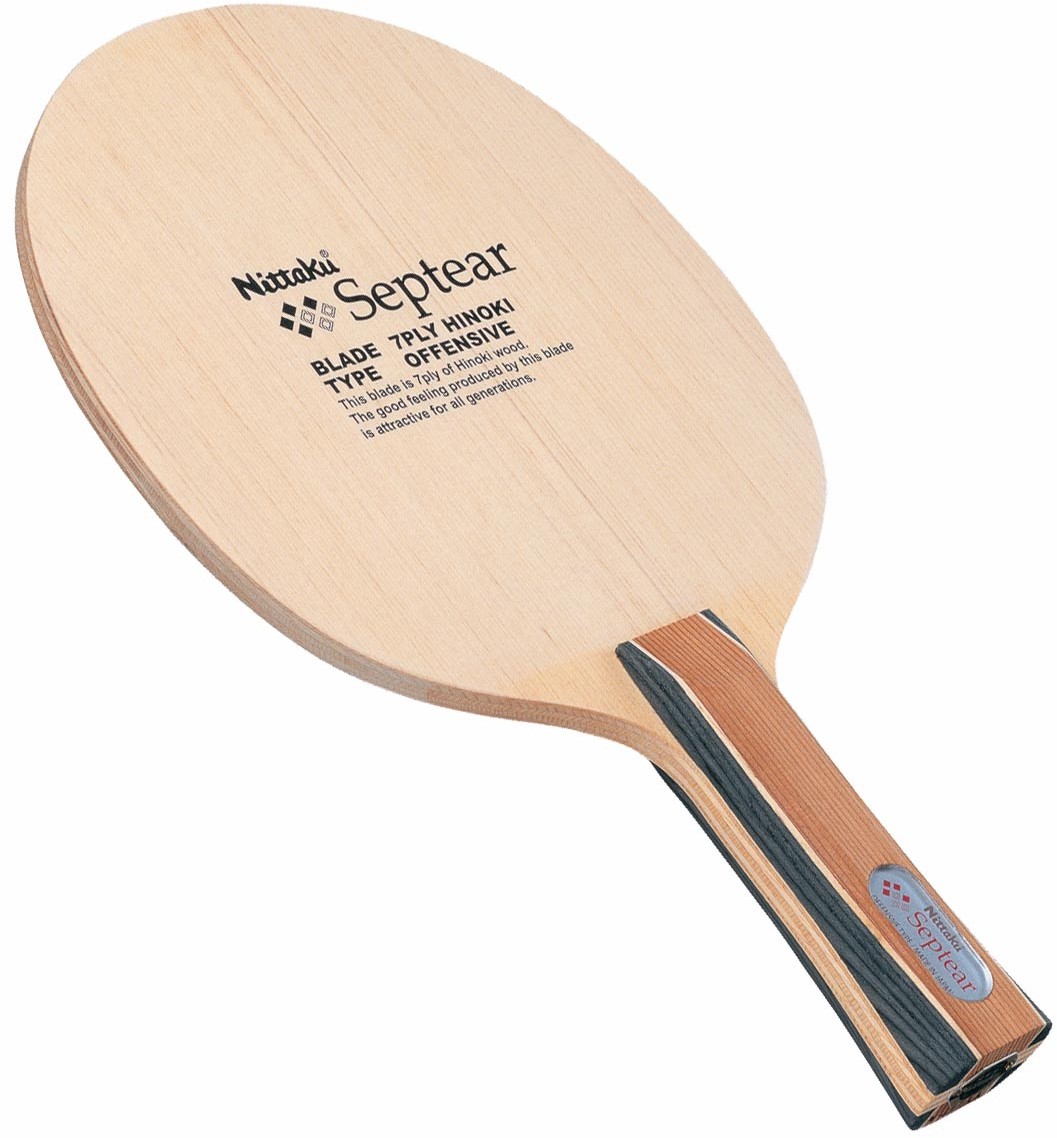
BDCB fits advanced attackers with a flat-hit, smash-dominant game who want to stay light (around 84g) without sacrificing pace — soft-to-medium rubbers like Tenergy 05 FX are the recommended way to balance the stiff character. Septear fits developing and intermediate all-round players who win points with control, touch, and placement rather than raw speed, particularly those looping close to mid-distance from the table, provided they pair it with a medium-hard or harder rubber rather than something soft.
One practical note worth flagging: Septear’s thin handle is called out as potentially uncomfortable for players with larger hands, while BDCB’s fragile koto and balsa veneers chip easily without edge tape — both blades carry a maintenance or ergonomic caveat that’s easy to miss if you only read the star rating.
For most players, the honest recommendation is to let your playing style pick the blade rather than the aggregate rating: Septear rates slightly higher overall (8.2 vs 7.8), but that reflects broader review consensus on craftsmanship and consistency, not a claim that it beats BDCB at BDCB’s own game of flat power hitting.
Frequently asked questions
Which blade is better for beginners, Black Devil Carbon Balsa or Nittaku Septear?
Septear, by a clear margin. Its 8.7 control score and forgiving sweet spot are built for developing technique, while BDCB's near-zero dwell time is explicitly flagged as too demanding for intermediate or loop-style players.
Can I put soft rubber on the Nittaku Septear?
Reviewers advise against it -- Septear performs poorly with soft rubbers and needs medium-hard to hard sponges to reach its control and consistency potential.
Is the speed difference between these two blades noticeable?
Yes. The 0.8-point speed gap (9.4 vs 8.6) comes on top of a 2.7-point stiffness gap and 3.5-point hardness gap, so BDCB's extra pace arrives with a much harder, less forgiving feel overall.
Which blade has better build quality?
Septear's premium Japanese craftsmanship is repeatedly cited across Revspin, Megaspin, and BladeRubber reviews for durability, though its soft hinoki surface is still prone to denting over time. BDCB's koto and balsa veneers are more fragile and need edge tape.