DHS Power G7 Review: Forgiving 7-Ply All-Wood Blade for Powerful All-Round Play
Pros
- Exceptional value for price — one of the best budget OFF blades available
- Forgiving, flexible feel rewards developing looping technique
- Good spin generation and dwell time on topspin and push shots
- Well-balanced for all-round aggressive play
- Pairs with a wide range of rubbers, from Hurricane III to mid tensors
Cons
- Noticeable vibration on contact gives imprecise tactile feedback
- Slower than comparable carbon-composite 7-ply blades
- Smaller sweet spot demands consistent ball contact
- Quality control variability between individual units
- Close-to-table optimized — less effective at mid and far distance
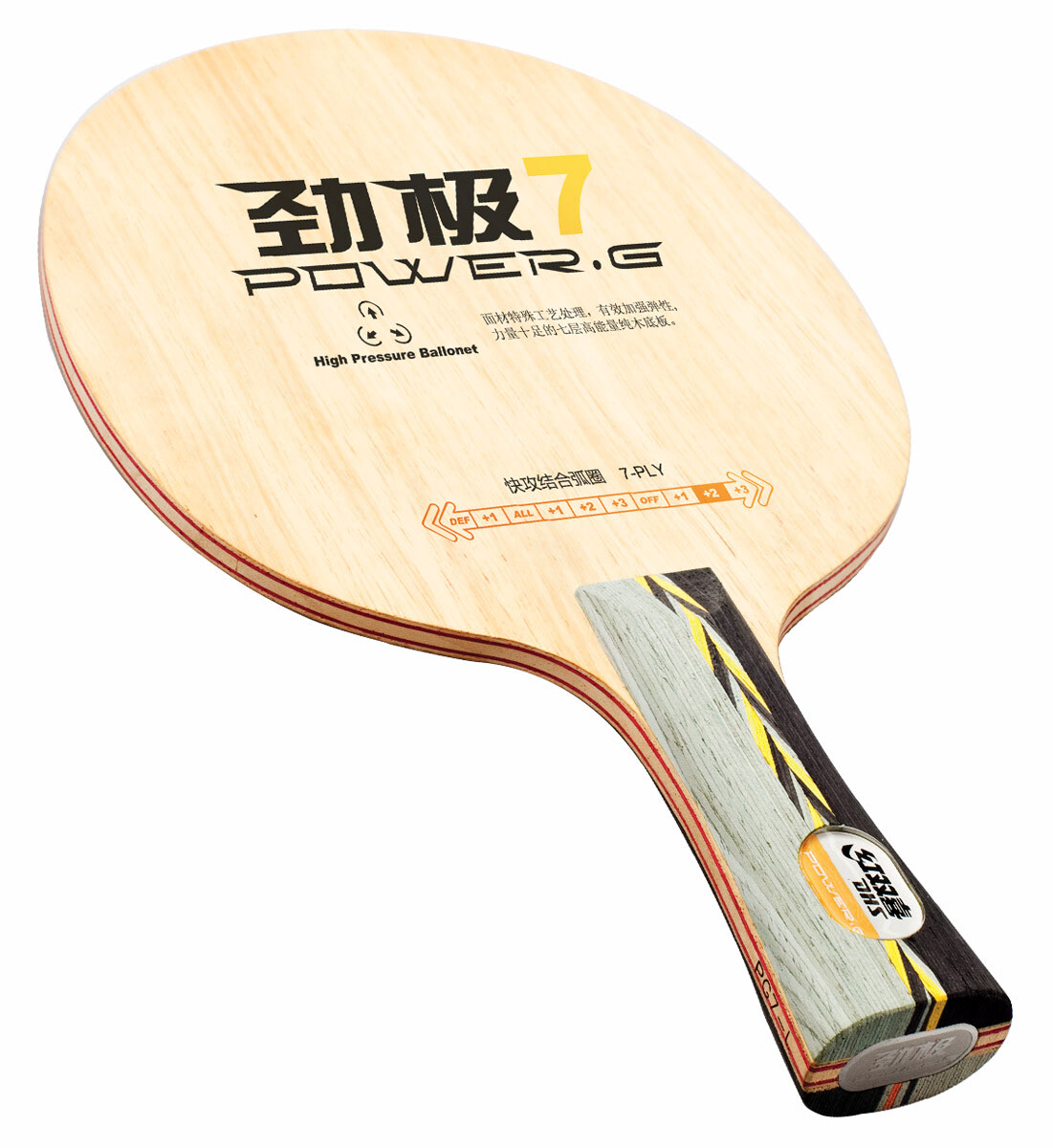
The DHS Power G7 is a 7-ply all-wood blade from Double Happiness Shanghai: limba outers over a five-ply ayous core, 158 by 152 mm, 6.3 mm thick, about 89 grams. DHS rates it OFF (speed 88, control 65) and credits a high-pressure ballonet treatment on the inner five plies for the rebound. The marketing is beside the point. What put this blade on the map is price — it was Tabletennis11’s third best-selling blade in 2016, and it still sells to the same crowd: players who want real 7-ply all-wood pop without paying premium-brand money.
Performance
It hits hard enough for all-wood, but don’t mistake it for carbon. The seven plies give a moderate snap on big strokes, and the flexible build adds a whippy kick on flat drives. Reviewers agree it lands a step slower than rival 7-plies, though, and anyone coming down from a carbon-composite frame feels it on the first ball. Call it OFF-minus, not true OFF; that’s exactly what makes it forgiving.
Spin is where the G7 earns its keep. The flexible plies hold the ball a beat longer, and that extra dwell does real work on loops: forehand and backhand both come off stable and connected, rewarding a wrist-forward stroke. The short game follows suit, with pushes that stay tight, low, and heavy.
Control sits at 65, and the number is honest. Drives are moderately fast, blocks go where you aim them, and the blade pays off placement over muscle. The catch is vibration. Every source flags the hollow, buzzy feedback as the G7’s biggest weakness — it muddies your read on the ball and can throw off timing at pace. The sweet spot runs small for a 7-ply, so clean contact matters more here than on a stiffer carbon frame. One practical note on build: the limba face is soft and wants a coat of lacquer before you mount rubber, or it can separate when you peel sheets off. Unit-to-unit quality wanders too, with some blades arriving lighter or slower than spec, so buy from a retailer you trust.
What Reviewers Agree (and Disagree) On
Megaspin, Revspin, and Tabletennis11 line up on the core profile: a forgiving, spin-friendly, well-balanced all-wood blade with OFF-category bite at a price well under the competition. Value is the attribute everyone keeps coming back to, across skill levels and styles. The vibration shows up just as consistently, and reviewers read it as baked into the design rather than a quality-control fluke. The disagreement is about who it’s for. Some stronger players write it off as a beginner-to-intermediate blade that lacks the stiffness for serious match play; the Tabletennis11 reviewer takes the other side, rating it a capable tool for technically sound players who value feel and spin over speed. Range is contested too — Megaspin says it holds up mid-table with a spin game, while Tabletennis11 lands on close-to-table as its real home.
Who Should Buy It
Buy the Power G7 if you have a basic loop and want to step from 5-ply to 7-ply all-wood without the premium-brand sticker shock. It’s also an easy call for coaches kitting out juniors who need a real offensive blade that won’t strain a budget. If you build your game on spin and dwell rather than top-end speed, the flexible construction pays you back. Where it falls down: advanced players who drive hard from mid-distance, or who want stiff, crisp feedback, will find it too slow and too buzzy for higher-level match play. Carbon or Arylate-Carbon blades in the same price range serve that game better.
FAQ
What speed category does the DHS Power G7 fall into?
DHS rates the Power G7 as OFF with a numeric speed score of 88. Independent reviewers, including the Tabletennis11 professional analysis, place it closer to OFF-minus in real-world performance — meaning it’s quick for an all-wood blade, but clearly down on carbon-composite blades in the same price bracket.
Is the DHS Power G7 suitable for beginners?
It depends on the skill level and goal. The forgiving flex and generous dwell time make the blade accessible to players still developing their looping form, and the price point eliminates financial risk. However, the vibration on contact and smaller sweet spot reward players who already have consistent ball contact, so true beginners may benefit from starting with a standard 5-ply blade first.
How many plies does the DHS Power G7 have and what wood is used?
The Power G7 uses 7 plies, all wood — no carbon or fiber layers. The construction is Limba on the outer surfaces with five Ayous plies in the core. This pure wood composition is what gives the blade its characteristic dwell time, forgiving flex, and natural feedback, and it qualifies the blade for all-wood category rankings.
Does the DHS Power G7 need any special preparation before use?
Yes. Multiple reviewers recommend lacquering the surface before mounting rubbers. The outer limba layer is relatively soft and can peel or splinter at the edges when rubbers are removed, particularly if the blade is used without any protective coating. A thin application of blade sealer or commercial lacquer before first use prevents this issue and extends the life of the blade.
Which rubbers pair best with the DHS Power G7?
The flexible, medium-speed construction pairs well with tensor and mid-tacky rubbers. DHS Hurricane III on the forehand is a popular combination that complements the blade’s natural dwell with additional spin. On the backhand, reviewers report good results with Yasaka Mark V, DHS Hurricane, and mid-range tensor options. The blade is compatible with a wide range of rubber types and does not demand highly specialized pairings.
How does the DHS Power G7 compare to carbon blades at a similar price?
Carbon and fiber-composite blades at a comparable price point will typically offer more top-end speed, a firmer feel, and direct, crisp feedback on contact. The Power G7 trades those attributes for a softer, more forgiving character with better natural dwell and a higher throw angle on loops. Players who want maximum pace and stiffness should look at carbon alternatives. Players who prioritize spin, touch, and a more tactile connection with the ball will prefer the all-wood construction of the Power G7.
Sourced From
This review synthesizes opinions from 3 independent community sources:
- Megaspin (ecommerce)
- TableTennis11 (forum)
- Revspin (forum)