Donic Epox Control Blade Review: Outstanding Touch for All-Round Players
Pros
- Very low vibration thanks to epoxy resin bonding
- Large sweet spot that forgives off-center hits
- Light weight around 80 grams suits long practice sessions
- Comfortable handle with carefully rounded edges
- 360-degree Fineline edge protection for longevity
- Good predictability for consistent placement play
Cons
- Speed class (ALL) may feel too slow for offensive players
- Not suited for heavy looping or power-first game styles
- Some users report handle vibration despite overall low-resonance design
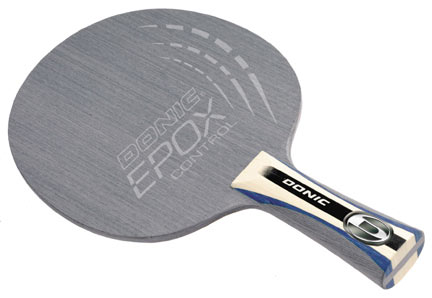
The Epox Control draws on a long Donic tradition, with a design lineage that runs back to the Appelgren Allplay of the early 1980s. Five plies of ayous all wood, bonded with Donic’s epoxy resin system, give allround and controlled offensive players a reliable, low-vibration platform. At roughly 80 grams and 5.1 mm thick, it stays light and predictable. Three handle styles, flared, anatomic, and straight, cover most grip preferences, and the Fineline wood edge system wraps the blade in 360-degree protection.
Performance
The Epox Control earns its name on feel at contact. The epoxy bond, which presses veneers under heat for 20 minutes with an adhesive film rather than liquid glue, builds a structure that soaks up resonance before it reaches your hand. Reviewers on Megaspin, Revspin, and Paddle Palace all flagged the low vibration on their own, which stands out even among control-class blades.
The sweet spot runs wide across the face. Players drilling against first-league opponents hitting heavy topspin found blocking almost effortless, with returns staying consistent even on balls that landed toward the edges. That forgiveness pays off directly for beginners still building reliable strokes.
On speed it lands in the ALL class. It handles loops and drives, which surprised reviewers who expected a slower, more defensive response, but it isn’t a power-play blade. Experienced users keep giving the same advice: pair it with medium to hard rubbers, not slow defensive sheets, because the blade’s own pace is already conservative and the combination otherwise drags.
Control and placement are the blade’s real strength. The short game, pushes, and touch shots all gain from the elastic but dampened response. For players chasing consistent technique rather than raw output, the Epox Control gives honest feedback and doesn’t blow small errors into wild misses.
What Reviewers Agree (and Disagree) On
The broad consensus across reviewers is strongly positive regarding the low vibration, sweet spot size, and overall control quality. The Megaspin, Revspin, and Paddle Palace review pools all independently converge on these strengths. The Donic official specifications align with user-reported performance, lending credibility to the manufacturer’s claims.
The main point of disagreement centers on vibration: while the majority of reviewers praised the blade’s low-vibration character, a minority described noticeable vibration transmitted into the handle, and rated control as only average compared to other all-plus blades. These dissenting reviews appear to come from players with more developed sensitivity or who were comparing against softer control blades rather than offensive models. There is also disagreement on speed - some found it appropriately paced for all-round play, while others found it slightly underpowered and recommended faster rubbers to compensate.
Who Should Buy It
The Donic Epox Control is the right blade for beginners looking to build sound stroke mechanics without fighting an overpowered setup, and for intermediate all-round players who want reliable placement and touch. It is an excellent choice for choppers and blockers who value a stable, predictable response, and works well for players using pips-out rubbers on the backhand. Players who focus on offensive looping, smashing, or high-speed rallies should look further up the Donic Epox range toward the Epox PowerAllround or Epox Offensiv instead.
FAQ
What plies and materials make up the Donic Epox Control?
The blade is built from 5 plies of all-wood ayous veneers: a 3.2 mm core veneer, two inner veneers at 0.6 mm each, and two outer veneers of grey Fineline wood, all bonded with epoxy resin rather than conventional liquid glue.
What speed class does the Epox Control belong to?
It is officially rated in the ALL to ALL+ range with a speed score around 80 out of 100, making it a mid-paced all-round blade rather than a slow defensive model.
Is this blade suitable for beginners?
Yes. It is consistently recommended for beginners and intermediate players because the large sweet spot, low vibration, and forgiving feel help players develop consistent technique without fighting the equipment.
What rubbers pair well with the Donic Epox Control?
Medium to relatively hard rubbers work best. The blade is conservative in speed on its own, so soft defensive rubbers can make the setup feel sluggish. Reviewers using Butterfly Cermet and mid-tension Donic Formula rubbers reported good results.
How does the Epox bonding system affect feel?
The epoxy resin film is pressed under heat for 20 minutes, creating a tighter, more uniform bond than liquid glue. This results in lower vibration transfer to the hand and a more consistent response across the blade face compared to conventionally bonded blades.
How heavy is the Donic Epox Control?
The blade weighs approximately 80 to 90 grams depending on the handle style selected. The flared handle tends toward the lighter end, while anatomic and straight options may be slightly heavier.
Sourced From
This review synthesizes opinions from 4 independent community sources:
- Megaspin (ecommerce)
- Revspin (forum)
- Paddle Palace (ecommerce)
- Donic Official (ecommerce)