Xu Xin's Blade Evolution: From YEO to the Blue Label
1
When I was young and just starting out, following the example of players I looked up to felt like the safest and most natural choice. Holding the same racket as your idol was like channeling their spirit.
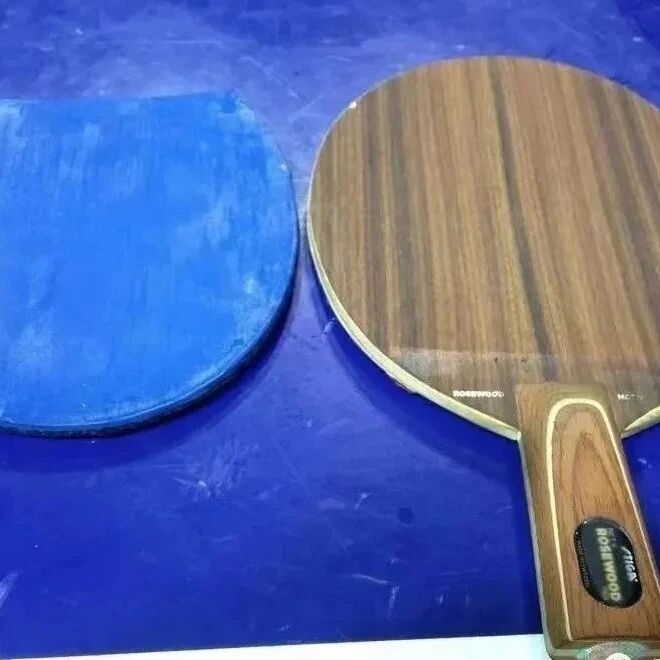
Back then the penhold world still had many great players. Veteran Ma Lin was wielding the YEO to devastating effect, and so Xu Xin emerged with that same blade. Pure wood five-ply, with intense deformation when you play through it. When I — playing shakehand at the time — tried the YEO with Skyline 2 rubber, I remember looping with it and thinking it was incredibly spinny.
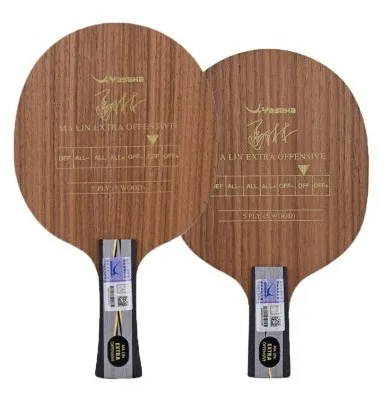
The walnut hard-wood face gave crisp push shots, and the short-game touch was easy to control — genuinely suited to the young Xu Xin, who was still raw at the edges.
2
At the 2010 Direct Qualification Tournament for Moscow, he won the title, defeating Ma Long and Wang Liqin. That same year at the Kuwait Open he beat Ma Lin 4-3 to claim the men’s singles crown. The blade in hand: his first Stiga blade after signing with the brand — the Nano OC.
Built on the original OC structure with a nano-coating added to the paulownia face veneer — hardened, more spring — and a thickened core. The original OC was quite thin, so the Nano OC gains rigidity and support, making the push shot feel more substantial. It’s still a decent option even today.
3
At the 2012 Qatar Open, in a final full of breathtaking rallies, Xu Xin using Rosewood 5 beat Wang Hao 4-3 and claimed the title. That was the peak era for hard-wood five-ply — “Rosewood for men, Ebony for women” — within the national team. My idol Chen Qi at the time used the Ebony 7.
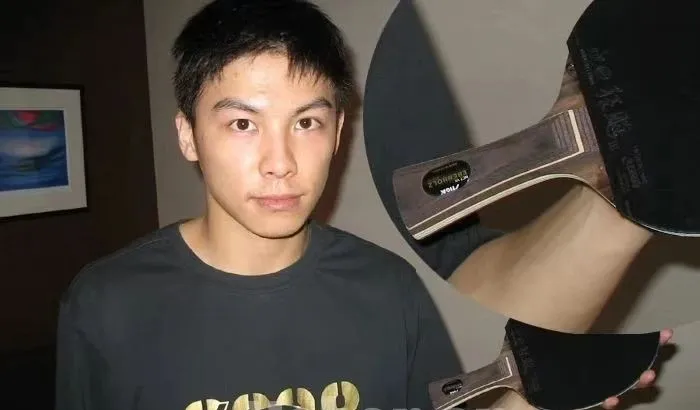
The Nano OC was still fairly traditional five-ply. The Rosewood 5 is hard-wood five-ply proper. The hard-wood face gives even more near-table speed and impact, and the push shot becomes crisper. The looping capability is still very strong. By today’s standards, looping at close range is still fast and spinny — but backing up, the blade loses energy.
Xu Xin’s Rosewood 5 had a water-drop head shape — so Stiga had clearly made a special version for him.
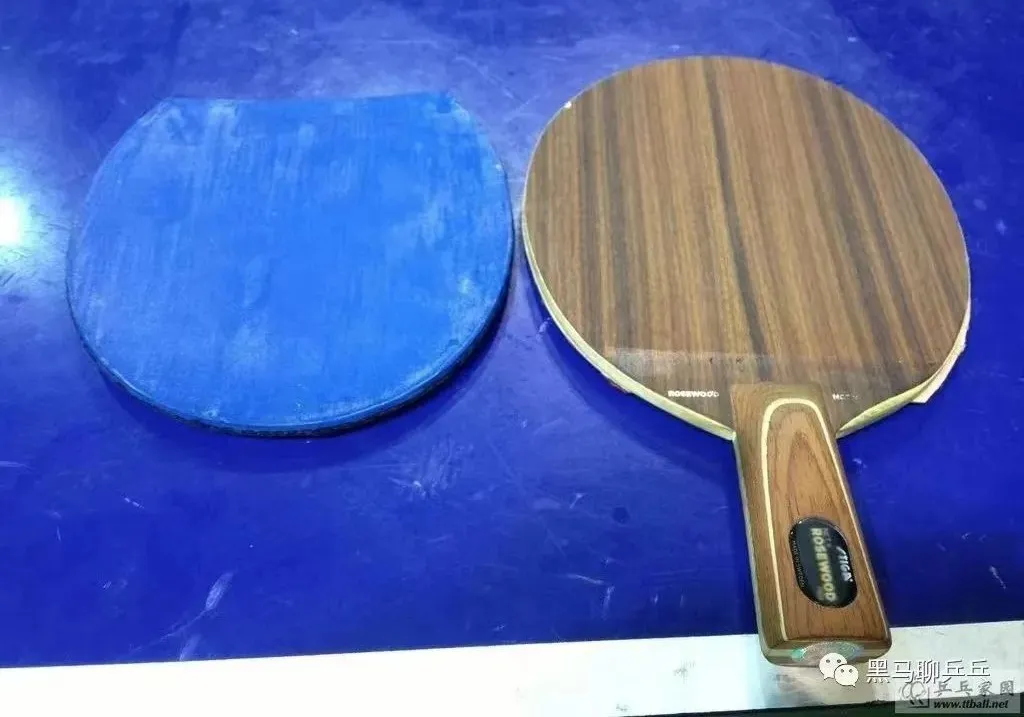
Worth noting: at this stage, Stiga’s adhesive technology apparently had a breakthrough. Rosewood is a hard and powerful face material, and yet this blade managed to deliver solid push feel and looping deformation simultaneously, with a clear and transparent feel. Something special was happening in the construction.
4
At the 2014 Incheon Asian Games, Xu Xin beat Fan Zhendong 4-2. The blade: Walnut 5, also known as “Extrem Pure Wood.” I’m not sure when the nickname “Great Python” caught on for Xu Xin, but this blade certainly poured fuel on the fire — because its deep-arc looping ability is genuinely formidable.
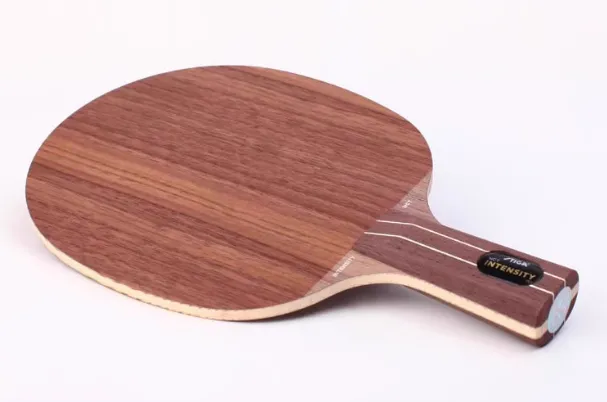
Walnut is softer than Rosewood — naturally. And although the structure is identical to the YEO, it doesn’t play as sharp as the YEO at low-to-moderate force. Instead, it feels smoother and more mellow. Better bottom-end power when backing up, stronger far-table arc capability.
Later, Stiga launched a Xu Xin signature limited edition built on the Walnut 5 base.
5
Through this period, Xu Xin had some ups and downs in results and occasionally went back to the YEO — as if revisiting his younger self. Fans debated which was better for him, YEO or Walnut 5. The YEO offered more precise, sharper short-game; the theory was that with it, he could become the next Ma Lin. In the end, he kept being the “Great Python” and stayed with Walnut 5.
6
As many teammates switched to fiber blades, Xu Xin was curious too and briefly tried the N301. Very briefly. My guess is the trial wasn’t purely about performance — the coaching staff may have asked him to test. Brand contracts and other factors come into play.
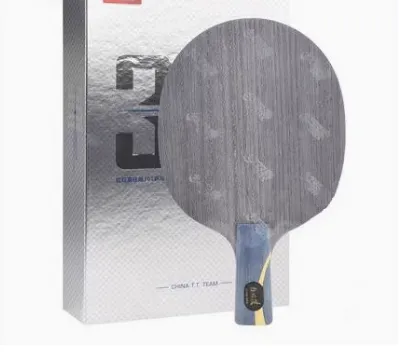
Compared to the Xu Xin Blue Label that came later, the N301’s backhand dwell and spin-loading feel actually more comfortable and easier to load up — but the Blue Label’s forehand deep power is simply in a different league.
7
And then came one of the iconic penhold blades of this generation: the Xu Xin Blue Label. Before the Blue Label, Xu Xin himself said he also used the Carbon Dynasty.
Comparing the two: the Carbon Dynasty is crisper at low-to-moderate force, just a touch faster on the first ball. The Blue Label has a slightly longer dwell, more pronounced bottom-end power, but demands more from you. Some advanced amateurs feed back that the Carbon Dynasty is still easier to play.
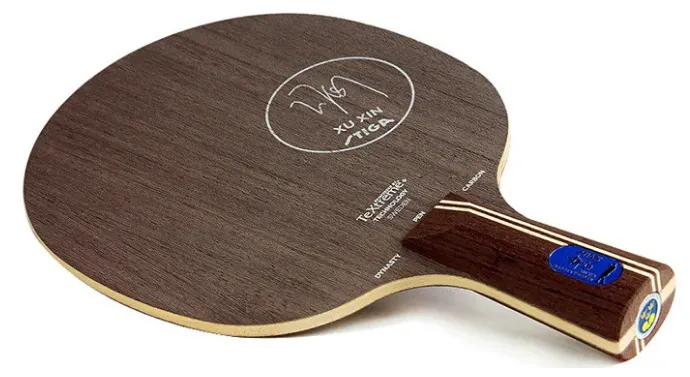
At the Tokyo Olympics, Xu Xin used the Blue Label. But during the post-Olympic Hong Kong visit, he briefly switched to the Xu Xin Gold Label. Very briefly — and then went back to the Blue Label.
Performance-wise, the Gold Label, with its more selectively chosen wood, has a bouncier, more reactive feel at close range — faster first ball. But the Blue Label gives more freedom and better adjustability. For the “People’s Artist,” raw aggression isn’t the top priority — artistry is. Whether the blade can harmonize power and control to do exactly what you want, whenever you want — that’s what matters most. Otherwise, how would you pull off those behind-the-back shots?