What Makes a High-Quality Chinese-Style Serve?
This is a primarily technical column, structured in Q and A format. The answering expert is a former national team player and senior coach who prefers to remain anonymous. They just want to live quietly and sleep well — no fame needed.
I think sharing these technical insights is genuinely valuable, and it complements the main content here.
That’s how this “Peak Mastery” column was born.
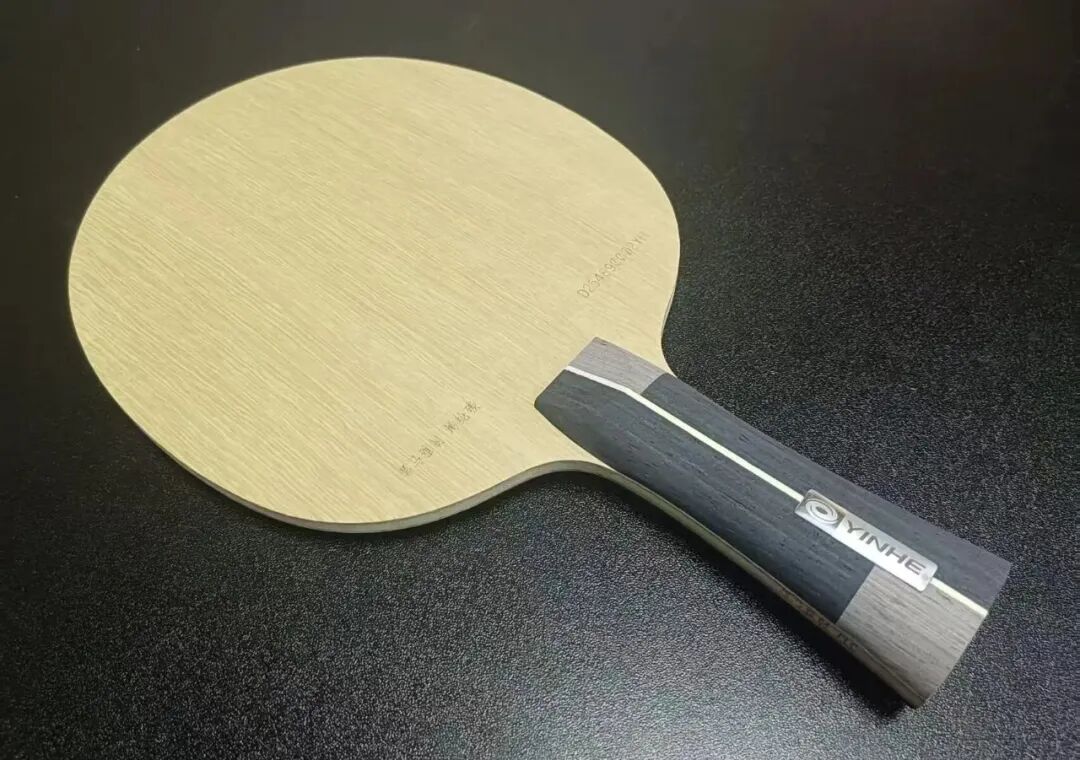
Wei Guan Qingguang (Seiya Kishikawa), men’s doubles gold medalist at the World Championships and Olympics (paired with Chen Longcan), and formerly Lin Yun-ju’s private coach. He shared with “Table Tennis Kingdom” magazine the three conditions for a quality “Chinese-style” serve.
Chinese players have always used high-spin tacky rubbers, and combined with serve masters like Liu Guoliang and Ma Lin, many people have formed a strong impression of Chinese players’ serves as “high spin, full of variation.” However, what Chinese players value most is “not letting the opponent return aggressively” — otherwise, recovering control of the match becomes extremely difficult.
(Author’s note: Especially with the widespread adoption of the flip, limiting the opponent’s flip return has become critically important. Over the past two years, the effective use of backhand serves has also demonstrated how vital it is to “not let the opponent return with power.” Examples include: Ma Long’s 2024 Macao World Cup comeback against Lin Gaoyuan; and this month’s China Grand Slam, where Wang Manyu broke through Sun Yingsha.)
Wei Guan Qingguang noted that the first condition for a quality Chinese serve is that it must be low. The ball’s height as it clears the net must be kept to around one and a half balls; anything above two balls is considered a mistake. Chinese players learn from a young age that “serve as low as possible.”
The second condition is that the serve must have rich variation in left-right placement, long-short depth, and combination with your own follow-up scoring patterns.
For example, Hugo Calderano’s forehand receive of short serves is relatively weak. No matter what kind of player you face, everyone has their stronger and weaker return zones. On one hand, vary the placement widely; on the other hand, aim the serve at the zones the opponent struggles with, then connect it to your own scoring sequences.
The third condition for a quality serve is to make the opponent unable to read the spin. If you make a motion behind the ball (a hook or wrap?), the opponent has difficulty reading the spin amount; or if you add fake motions after contact, the opponent can’t understand the paddle angle at the moment of impact, making an effective return much harder.
Beyond these three conditions, Chinese athletes also emphasize the speed of the serve. Not a slow “thud, thud” float, but a quick “zip, zip” skimmer that gives the opponent less reaction time and makes spin harder to judge.
Due to the widespread use of the flip, Japanese players are now also paying more attention to serving. Previously they overemphasized spin quantity, but if the spin is too intense the ball tends to pop up, the second bounce goes off the table easily, and the opponent gets an easy aggressive return.
(Author’s note: That’s why a national team coach told me — when I’m competing against professional teams, what matters isn’t generating maximum spin, but rather trying to serve a no-spin ball…)
In the plastic ball era, ball spin is declining, and especially with the introduction of the Hawk-Eye system, serve scoring rates will drop. But the three conditions above remain essential components of a quality serve.
The opponent serves a heavy, fast, low no-spin ball to your backhand — pressing it into your body. How do you return that?
It’s heavy and fast, but not spinning much. Two ways to handle it. One is on the rise, push, drive, or rip — all work. The other option is step back half a step, wait for the ball on the drop, and go for a loopy spinny ball.
The core of return of serve is knowing when to generate your own power versus when to redirect incoming power — and specifically whether to take it on the rise or on the drop.
Ma Long, Aruna, Jeoung Youngsik, Xiang Peng — all forehand-dominant players. Why does Ma Long’s backhand look so much more effortless than the rest?
Ma Long’s backhand produces a ball that’s inherently a bit tricky — sometimes it looks very powerful, but it’s hard for the opponent to redirect. His backhand has a lot of variation; he can play almost every technique, and frequently uses side-slice and other unorthodox shots. His backhand isn’t the heavy-pressing type like Fan Zhendong’s or Zhang Jike’s, but the variation is enormous. It’s a bit like Ma Lin’s backhand — shakehand versus penhold aside, the essence is the same: he never follows your expected rhythm and never beats you the way you’ve gotten used to.