Top Penhold Blades and Rubber Setups for Amateur Players (Part 1)
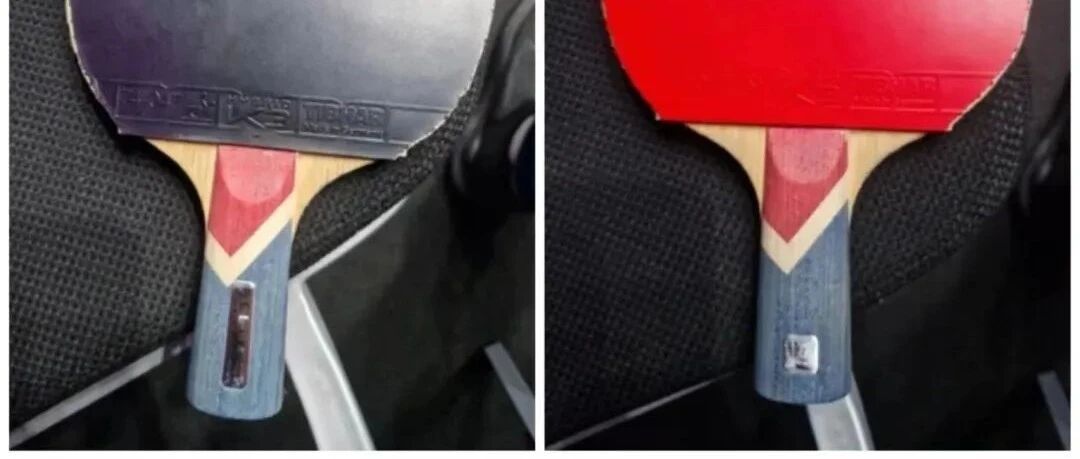
1. Tibhar Felix
I’m putting this one first because Felix LeBrun won the bronze medal at the Paris Olympics in men’s singles, and I genuinely don’t think Xu Xin would have had an easy time against him.
Overall, this blade has decent explosive power, a solid feel for ball contact, and a moderate deep-ball reserve — meaning it’s not particularly strong in that department. The feedback is consistent and linear.
In other words, it’s not a violent blade — it’s a well-rounded, all-around tool, whether you’re using it as Felix does in penhold or in shakehand. Whatever technique you want to execute, you can express it easily, with a low technique threshold and fewer unforced errors. That’s its greatest value.
If you’re someone who demands particularly heavy ball quality from the forehand, I don’t think this blade will fully satisfy you.
For rubber, it’s highly versatile. Both tacky Chinese rubbers and tensor rubbers work on the forehand. If you want to push up your single-ball quality, go with a harder, more aggressive rubber. The K2 Pro has more punch than the K3 Pro.
2. Xu Xin Blue Label
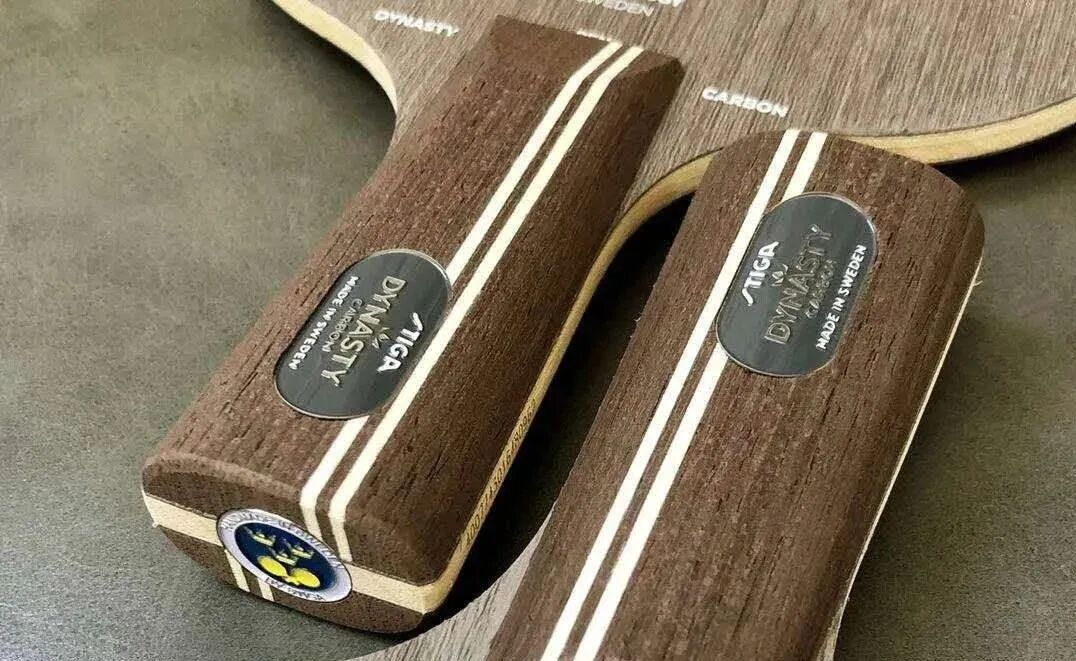
This one feels powerful and satisfying! The close-range game is decent but not spectacular. The mid-range is where it really opens up. You need to swing through fully to get the best quality out of it. Why do some of my amateur penhold friends find the Carbon Dynasty easier to use than the Blue Label? Because it feels crisper and snappier, with better first-speed. The Blue Label has more deep-ball reserve but requires time and space to load up.
Even when you haven’t fully unlocked the blade, the Blue Label still produces a nice arc — easy to get the ball on the table — but the spin quality falls short of DHS special-production blades. Drive it fully and the ball quality is formidable. Other advantages: Stiga’s distinctive blade feel, and a solid backhand.
Tacky Chinese rubber suits the forehand well. More grippy tensor rubbers like DNA Platinum XH or Omega VII Asia are okay, but they limit spin quality — the Hurricane 3 is still a better match here.
3. N301
Archetype player: Xue Fei. Especially in national team special-production spec, this blade practically auto-aims onto the table — forehand tolerance is extremely high. No matter how I hit, the ball just keeps going in. I’ve tried national team coach versions that genuinely let you play without restriction.
The N301 with the Koto face veneer outperforms the W968 with its Limba surface because it raises the first-speed output while the slightly harder surface gives sharper feedback on short-game touch at the table. We’ve mentioned this before — blades with hard-wood face veneers (such as Stiga Ebony, Rosewood, or my Ibex) all share this characteristic that suits penhold play well.
Comparing the official version versus the lettered version: the official version has noticeably more pressing arc quality and is more lethal. Of course, aside from price, some players find the official version too springy and hard to control, so they accept slightly lower quality and choose the lettered version.
The retail Hurricane 301 is actually very good value. The high-arc topspin is remarkably spinny, and the forward drive quality is high — though speed at moderate power is average, and you always need to generate your own pace. The retail version also feels a bit floaty on short touch balls.
4. N656-1
Archetype players: Wang Hao, Xue Fei. Compared to the N656, the N656-1 has a thicker core ply — and the ball quality is significantly more powerful. Today’s Hurricane Hao 2 and Special N656 are still playable with fine arc and strong spin and good continuity, but the ball just doesn’t carry enough weight. Opponents can defend it more easily. You have to earn points through spin variation and placement, rather than relying on sheer power.
The N656-1, however, can hold its own against some carbon blades. The internal structure is genuinely stiff. For the same reason, pairing it with a tacky Chinese rubber is better. High-tension tensor rubbers on a blade with strong overall flex like DHS special-production can make control feel rootless — hard to find a landing point.
5. Boll ALC
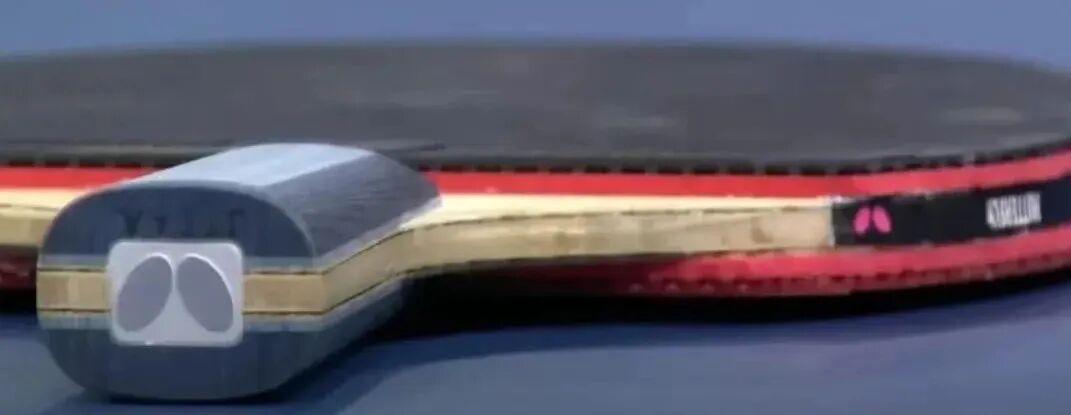
Penhold archetype: Qiu Dang in his earlier days. Shakehand representatives are numerous — Boll himself might be enough. Shinozuka Hiroto won bronze at the Asian Championships men’s singles, though that had a bit of luck involved. His defensive unloading stroke is interesting and worth studying for club players.
This penhold Boll ALC — I had a friend who finished in the top eight at the National Urban Games using it, paired with D09c on both sides. The spin quality of that setup is genuinely excellent.
For Butterfly-contracted players, there’s a harder version of D09c available to them, which is a better match. For the rest of us, you might want to pick a stiffer Boll ALC if you’re going to pair it with D09c.