The Best Lightly-Tacky Power Rubber: A Comprehensive Shootout (Part 1)
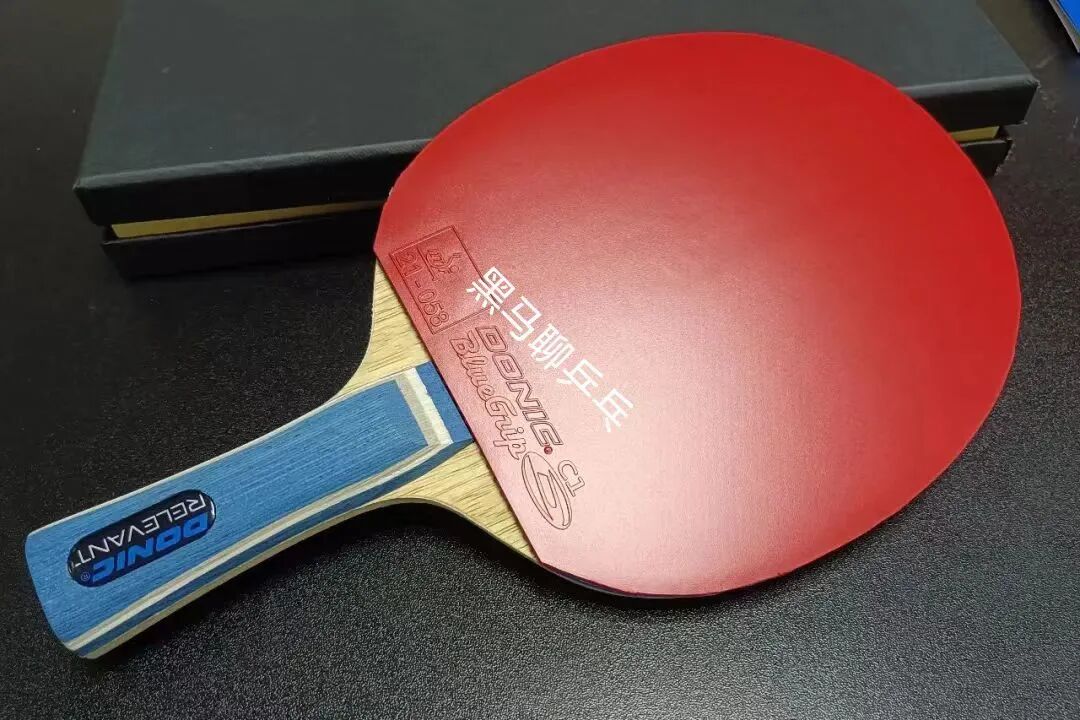
When I describe “lightly tacky,” my interpretation is: there’s a tacky grip feel, yet it’s almost imperceptible. That said, D09C fresh out of the wrapper does have a slightly stronger tack at first — probably related to its transparent protective film.
But broadly speaking, all the rubbers in this article are lightly-tacky import rubbers, and the vast majority are in the “aggressive” category. If you’re chasing maximum single-shot ball quality and looking for a replacement for boosted Hurricane, read on.
The main value of “lightly tacky” is: better control over the short game at the table, while suppressing elasticity at low-to-medium force, making the arc more predictable. At full power, however, these rubbers can still deliver explosive bounce — because they are all inner-energy rubbers. And because they can’t afford to lose speed, they stay only mildly tacky rather than fully sticky.
Donic Grip C1
Measured weight: 56g. Standard shakehand sheet size.
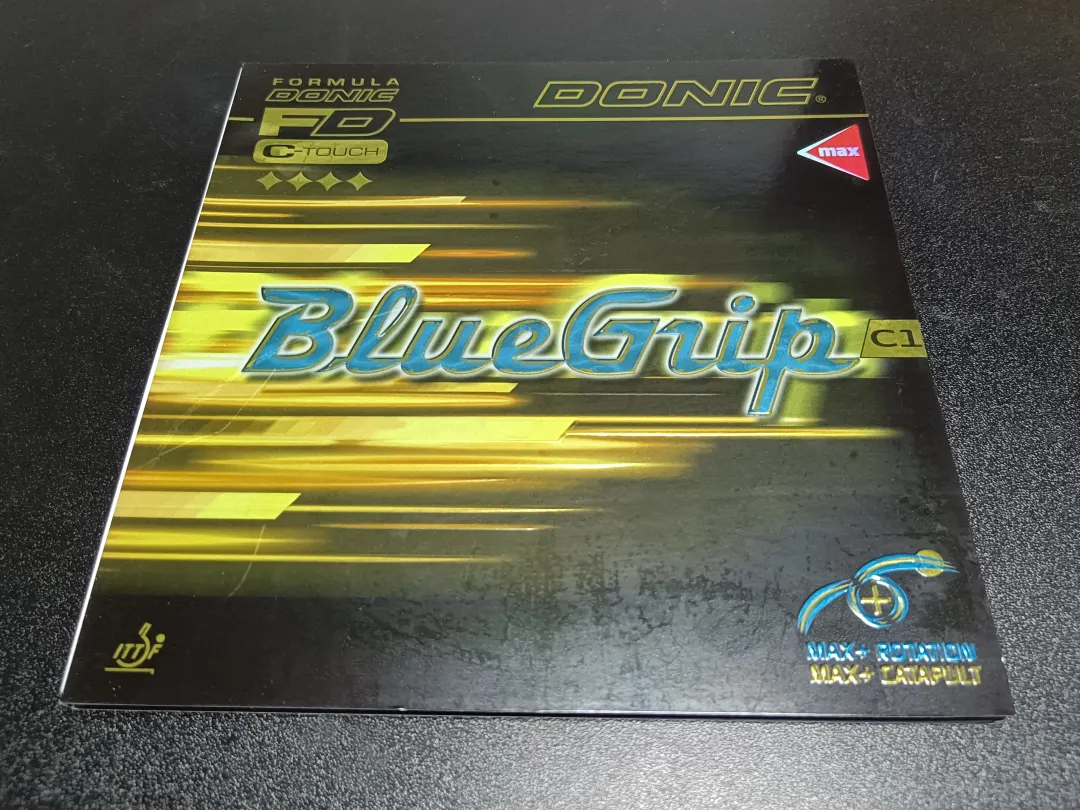
I’m putting C1 first because it’s probably the earliest of these to be released. The Butterfly D09C came out in 2020; Grip C1 and C2 launched in 2019, the first rubbers to combine a lightly-tacky topsheet with a large-pore cake sponge. That said, C2 won’t be covered today — C2 is warm and smooth in character, not aggressive.
Among recreational players — especially those who favor one-wing loop attack — C1 has long been viewed as a replacement for boosted Hurricane: bouncy, powerful, with excellent ball-dwell. The problem is the weight: at around 56g for a standard shakehand sheet, it’s not just your forehand that feels heavy; it shifts the entire racket’s balance point toward the head.
C1 has ferocious ball quality, but it’s genuinely too heavy. That’s part of why its sales were unremarkable. Donic has since discontinued it and replaced it with the professional-edition C1 and the D1. I haven’t tried those two yet, so I won’t go further here.
Butterfly Dignics 09C
Measured weight: 51g. Standard shakehand sheet size.
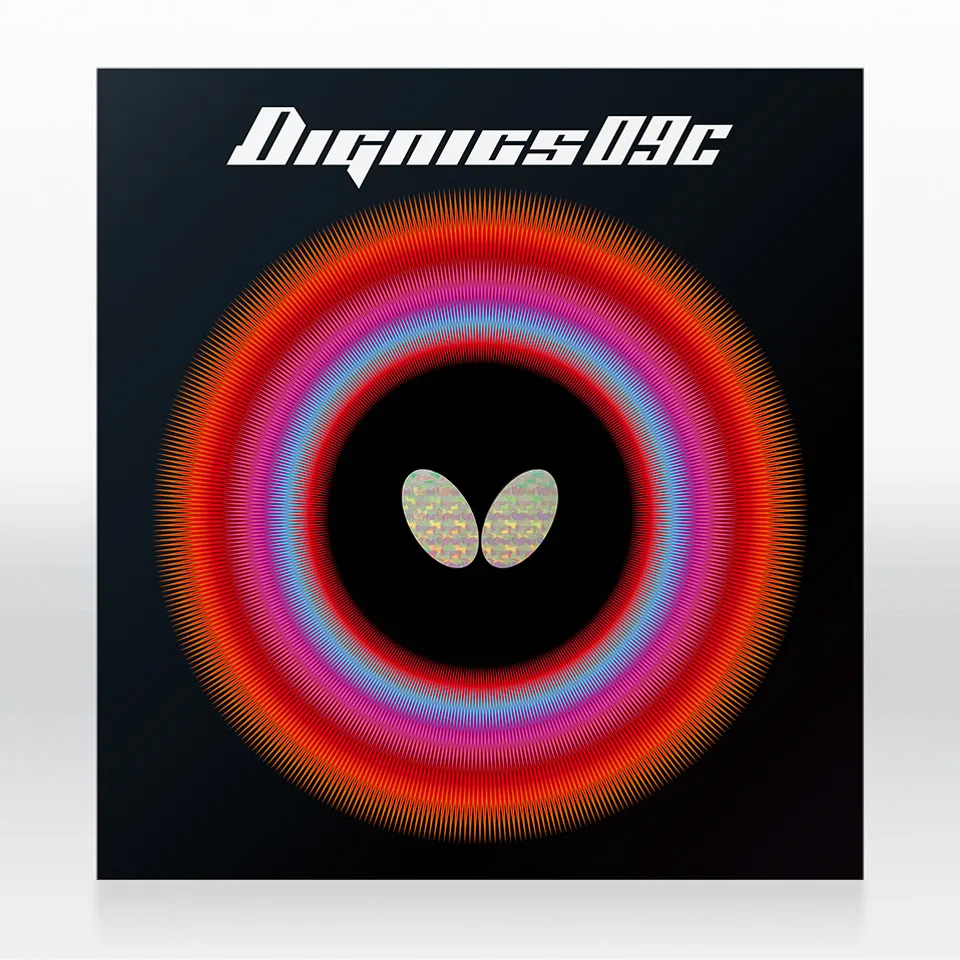
Butterfly’s quality control is second to none, but that doesn’t mean their blades or rubbers necessarily deliver the best raw ball quality. For example, the Mizutani Jun ZLC lacks the deep power of Blackhorse’s custom PLC blade; and on the forehand, quite a few players find D09C less explosive than the Dynasty ZGR or Jinghai C55.0.
But Butterfly knows marketing, and knows how to make products that sell. That’s a compliment.
It comes down to Butterfly’s long-standing product philosophy. Nearly all their products emphasize balance. Balance on the table translates to ease of use with no obvious weaknesses — which means players at different levels can all get comfortable with it. You might say D09C isn’t the most aggressive option, but is it easy and approachable? Absolutely.
Add to that the fact that it’s the flagship lightly-tacky rubber from the number-one brand in the sport — you can’t leave it out of any article on this topic.
D09C’s topsheet friction is genuinely better than many lightly-tacky European rubbers. Even without the traditional full tack of a Chinese rubber, a fresh D09C has noticeably strong friction. Overall it suits both looping and driving. Spin and speed work together nicely. It’s not the most explosive option, but you can brush out spin or load up and power-loop — every single dimension scores 80 or above. Good enough is a given.
It performs better on stiffer blades, which give the sponge better backing.
And here’s a thought I’ve been mulling lately. Among these lightly-tacky rubbers, higher aggression isn’t always better. For one thing, it often comes with a weight problem. If the rubber isn’t heavy enough, the pips usually aren’t thick enough and the sponge pores aren’t tight enough — and that makes aggression hard to achieve. Alternatively, the inner-energy treatment at the factory isn’t sufficient (the better the factory pre-treatment, the heavier the rubber tends to be). Once the rubber gets too heavy, it compromises your backhand configuration. Having a backhand rubber that’s too light and soft creates too big a gap in feel between the two sides. Having both sides heavy increases control difficulty overall.
For another, more aggressive lightly-tacky rubbers demand more power from the player and higher precision at contact. I’m not saying D09C is the best all-arounder — if you specifically need heavy single-shot quality, it may not satisfy you. But D09C working for players across a wide range of levels is itself a kind of commercial wisdom.
Tibhar K2 Pro and K3 VIP
Measured weights: K2 Pro at 49g, K3 VIP at 50.7g.
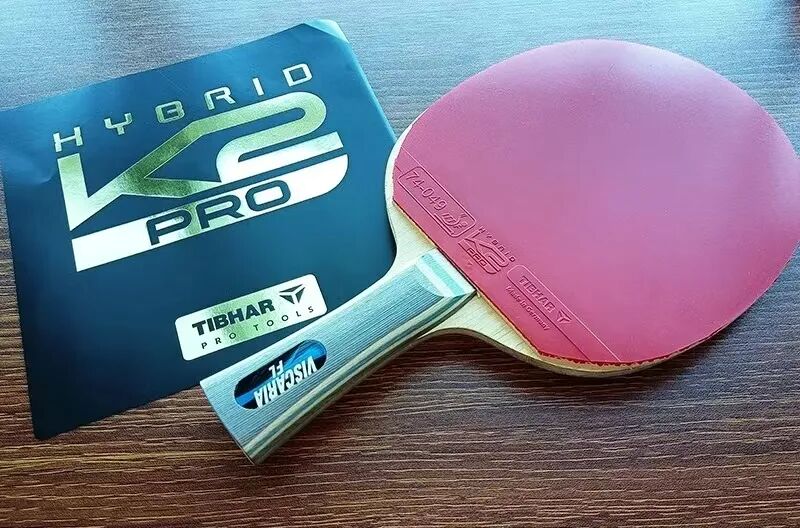
Note: K2 leans toward high tack; K2 Pro and K3 VIP are lightly-tacky. Both qualify as aggressive tacky rubbers. Many players have long regarded K2 Pro as a kind of Hurricane 3 substitute because of its power output.
K2, K3, and K3 Pro aren’t aggressive options. High-density-sponge K2 is rock-solid and steady — well-suited for general-level players — but its looping comes at a monotonous pace with no gear changes, lukewarm. K3 and K3 Pro are lighter and snappier with more pronounced dwell, thanks to the cake sponge. But at full power there always seems to be insufficient backing, and unless you’re using a fairly stiff blade it’s hard to generate a heavy quality ball.
Compared with D09C or with K2, K3, and K3 Pro, K2 Pro genuinely delivers better single-shot loop quality. It’s one of the more powerful options. But it remains better suited for fast looping and power loops — more aggressive than D09C, though with a higher miss rate.
The new 59-degree K3 VIP improves on K2 Pro. The K2 Pro has a hard-to-soft progression during the stroke, but overall it still feels stiffer than K3 VIP. K3 VIP has more dwell and rebound, and after loading up it fires out faster than K2 Pro. The effect of building up force and then releasing is more pronounced.
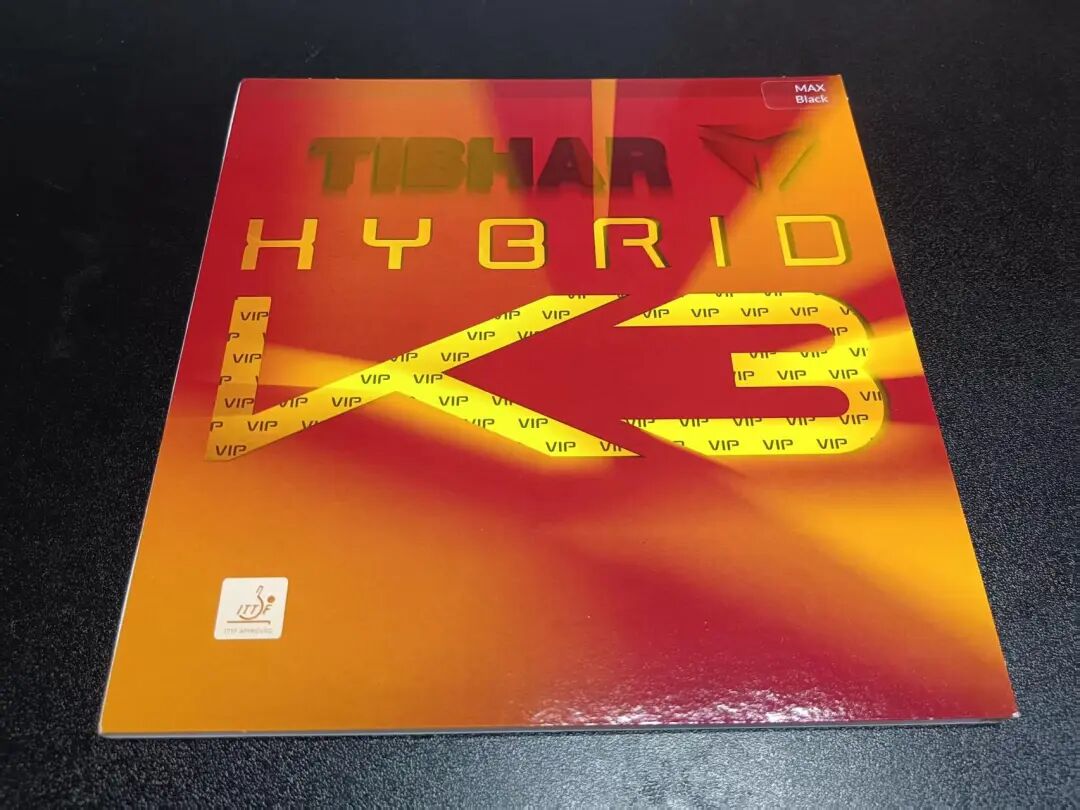
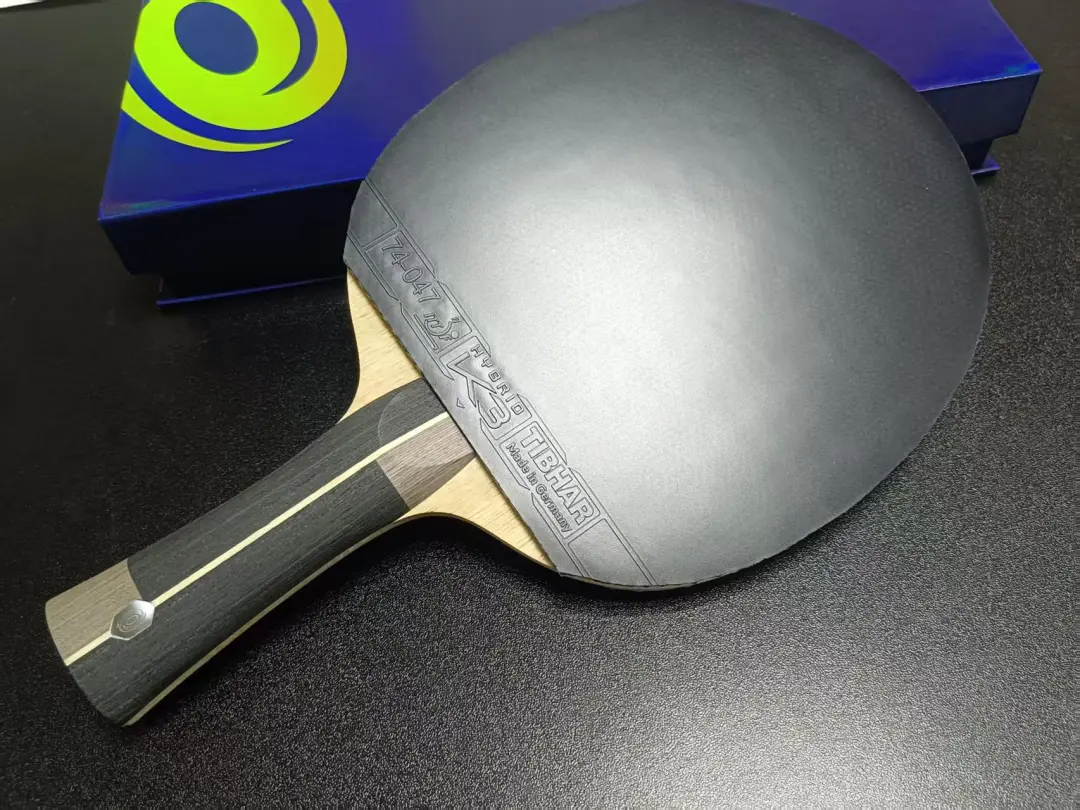
For forehand use, K2 covers steady play for general-level players, even if it lacks aggression. K3 and K3 Pro have limited absolute backing and work best paired with a crisp, lively blade — otherwise it’s hard to finish off a good defender. For pure ball quality, K2 Pro and K3 VIP are the ones to beat.
That said, K2 Pro and K3 VIP don’t pair well with an overly stiff blade, since both rubbers are already on the snappy side. K3 VIP in particular still calls for a relatively softer blade — otherwise the combined bounce gets out of control, errors creep up, and the threshold for generating good power rises accordingly.