Playing Style and Equipment: Choosing Between Tradition and Trend
1
In the plastic-ball era, the consensus leans toward harder rubbers — Butterfly itself holds this view. Accordingly, they’ve announced the discontinuation of several products: some pimple rubbers (some fully discontinued, some in specific thicknesses depending on sales), and some relatively soft inverted rubbers. Among them are the well-known Sriver FX and Bryce Highspeed.
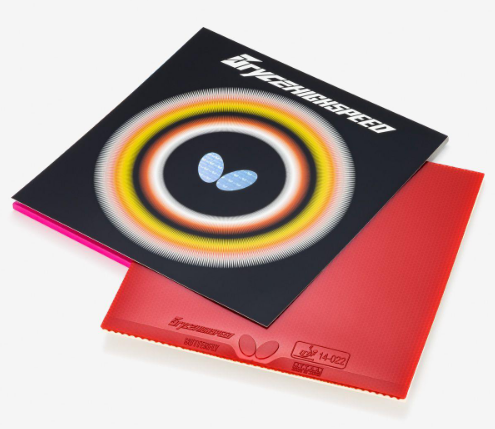
One was the go-to backhand rubber of the speed-glue era. The other was the showcase of Butterfly’s microlayer technology — not especially spinny, but light and quick, very beginner-friendly. Also discontinued: Roundell Soft, also a soft sheet. Sales trends confirm it — players are gravitating more and more toward harder rubbers. It wasn’t long ago that amateurs were complaining that D09c was too hard for the backhand; now plenty of them are sticking it there anyway.
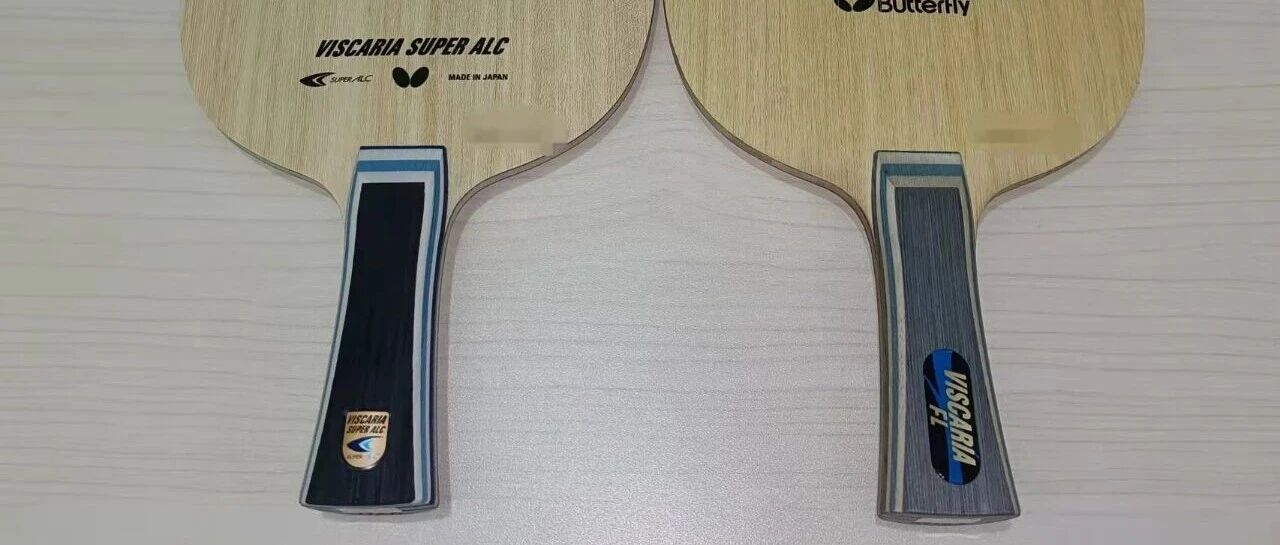
Some Butterfly blades are also being discontinued — for example, the Yoshida Kaii penhold, popular among certain penhold players, and also some handle types. These include the AN grip from the full Harimoto Tomokazu line, two Mizutani Jun models, Super Lin Yun-ju, Timo Boll ZLC, as well as the ST and AN of Appelgren and Franziska ZLC.
Professional players who use AN grips are now extremely rare. Looking at the past few years, ST is declining too, and FL has essentially won the war.
2
I recently wrote about how the younger generation tends to play a topspin-dominant system — sustained rallying that’s very effective, not just at the professional level but among advanced amateurs as well. Older players, by contrast, mostly started with a backspin-heavy system. In a sense, these two slightly different systems call for different equipment.
For a primarily backspin-based style, even an inner-fiber blade should lean softer and more spin-loading. Think W968, Innerforce Layer ALC/ZLC. Tactically: either explode a ball that’s just past the edge of the table in one shot, or loop a heavy float as the first ball and finish on the second.
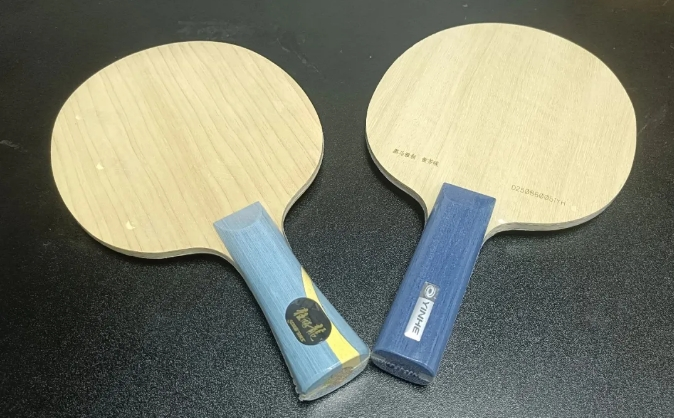
For a primarily topspin style, even when choosing an inner-fiber blade, you still want more stiffness — harder or thicker — something that can be described in a single word as “dynamically balanced.” Such blades can loop and drive equally well, making topspin rallies more stable. Examples: S968, Ovtcharov ALC, Yalyard KLC, Harimoto Tomokazu ALC. These can be used more like outer-carbon blades.
Classic inner-carbon blades prioritize maximum spin and absolute single-ball lethality. They demand active power generation from the player.
Classic outer-carbon blades prioritize easier consistent rallying, relying more on speed, placement, and continuity for points. They need to be paired with tacky rubbers that enhance dwell and spin.
Every player’s style can be intensely spinny and punishing at times, or varied in speed and placement. But the blade will have its natural tendency.
In match play, against topspin-dominant opponents, try to start the point in the short backspin zone and win through spin and rhythm variation. Against backspin-dominant opponents, open up the angles and use placement to move them, while pushing the tempo as high as possible.
For younger players facing older veterans: don’t get drawn into short-game and spin battles — play more expansive, attacking topspin balls. For the veterans facing young players: mix it up, make the difference between backspin and float noticeable, and try to win or force an error in the first three balls.
3
Fan Zhendong ALC and Fan Zhendong SALC are two of the more popular blades right now. The former is more traditional and classical; the latter, with its Super ALC fiber, is the current trend.
Fan ALC plays more simply — handling incoming spin is easier — but elasticity is average, and it demands more of your own power. Fan Zhendong SALC is more reactive to incoming spin and relatively more sensitive to it, but gives a better combination of spin and speed at moderate force levels.
Whether in playing style or equipment choice, we all have to find our place between tradition and trend.