Harder Rubbers, Springier Blades: The Dominant Trends in Modern Table Tennis Equipment
Some years ago, coaches at the national team level were already saying that “soft blade plus hard rubber” had become the dominant formula for the new era. I had my doubts about part of that. “Hard rubber” is confirmed. “Soft blade” is less clear-cut. Outer-carbon blades have been tuned to dwell more — yes, many have been made gentler in feel. But at the same time, inner-carbon blades have been made more rigid, with stronger structural support.
Regardless of whether blades are going softer or harder, the broader trend toward more bounce is real, especially at the professional level. Let’s look at both dimensions.
The Rubber Story: Getting Harder Over Time
In 1967, Butterfly introduced Sriver, a high-elasticity rubber rated at 38 degrees (Butterfly scale). Two years later, in 1969, the soft-sponge Sriver FX arrived at 33 degrees. That same year, another rubber of remarkable longevity — still widely used in Japan today — was born: Yasaka Mark V. Sriver and Mark V were the Excalibur and Durendal of their era.
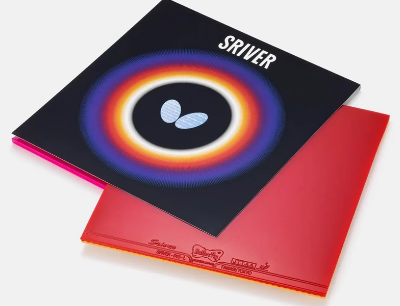
Yasaka later added the soft-sponge Mark V AD. Decades later, the backhands of two penhold legends would meet in combat: Wang Hao used Sriver with a special-formula sponge; Ma Lin used a custom Mark V AD.
The context back then allowed organic glue, so even a soft sponge could produce high speed. Soft sponges were popular.
Then two turning points changed everything. In 2008, organic boosting was banned. In 2014, the sport moved from celluloid balls to plastic. With celluloid, soft rubbers were very comfortable. In the plastic ball era, players broadly shifted to harder rubbers, which trickled down to recreational players.
To be more precise: a seamless ball feels slightly lighter than a seamed ball. A soft rubber on a seamless ball still feels fine. But on a seamed ball, a soft rubber requires more effort — less stable friction, and not enough deformation of the ball. In the plastic era, the thicker ball shell is harder to indent. A harder rubber deforms it more efficiently. Before the plastic era, Nittaku G-1 and Hurricane were mostly used on the forehand; now many players use them on the backhand too.
As rubbers hardened, they also got heavier. Players gradually adapted to the added weight.
The Blade Story: More Bounce Over Time
With the plastic ball came lower ball speed, so blades needed more bounce to compensate. There are several engineering pathways.
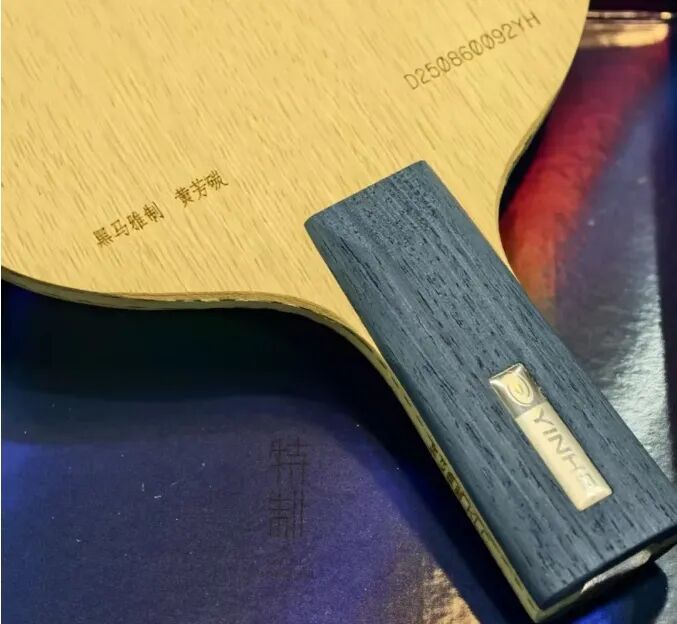
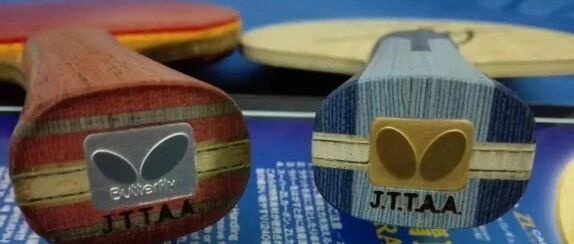
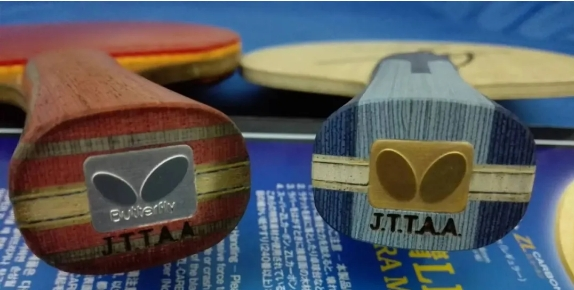
First, superior glue and bonding technique. Players who have used Butterfly custom-order blades notice how the clear tactile response and elevated bounce from the bonding process set them apart from retail pieces. Using different glues and wood treatments, companies like Yinhe can produce dozens of distinct feels from the same structural formula.
Second, denser and thicker fiber layers. Butterfly went the Super ZLC and Super ALC route to raise rebound power and expand the sweet spot. Joola moved from Green ALC in the Ice HRD to Super Green ALC (S-ALC) in the Zhou Qihao 90, chasing the same type of improvement.
Third, overall blade thickness. The popularity of the Ovtcharov ALC and Harimoto Tomokazu SZLC — both thicker than standard — has been evident for several years now.
Representative users of the Ovtcharov ALC: Ovtcharov, Tanaka Yuta, Oikawa Mizuki, among others. Representative users of the Harimoto SZLC: Ofutani Satsuki, Yokoi Sakura, Kuai Man, among others.
These blades increase rigidity, structural support, and bounce. In this era of multi-ball topspin rallies, making the blade more effortless and bouncy is a primary objective.
Beyond thickness, shortening the dwell time through adjustment of the face veneer and core thickness can also raise rebound speed — the S968 and Pro-01x Max take this approach. The custom B-Horse KLC likewise uses a thicker face veneer to add bounce.