Japan's Top-10 Best-Selling Rubbers and How to Actually Use Them (Part 2)
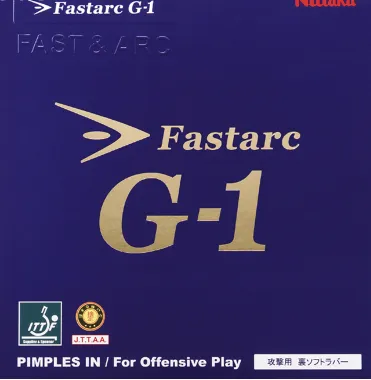
No. 3 — Nittaku Fastarc G-1
Times change, and so do opinions on rubbers. Go back six or seven years, and when we talked about amateurs choosing from Nittaku’s Fastarc line, the backhand side more often went to the lighter, more penetrating C-1 or S-1. Back then, G-1 felt a bit too stiff and hard to push through for most recreational players.
But now? Things are different. Plenty of recreational players are using D05 and D09c on the backhand — so G-1 is hardly a problem anymore. Putting G-1 on the backhand today raises no conceptual eyebrows.
G-1 has ranked near the top of Japan’s sales charts for the past decade. Star power plays a role: Ishikawa Kasumi and Ito Mima used it on the forehand; Mori Motomasa (now Matsushima Kizara’s coach) and Cheng Xianchi used it on the backhand. For general use today, it works fine on either side. Its warm, yielding feel is reasonably similar to T05. The thickest sponge used to be just 2.0mm, which limited its underlying support compared to T05. Since a Max thickness became available, it at least has more bottom-end power than the Revolutia MX-P.
No. 4 — Tenergy 05
Not much to say here that hasn’t been said. Especially when it’s fresh — that feel is genuinely excellent. And unlike D05, it doesn’t have super-high demands on technique or force. T05 is something almost anyone can pick up and play well with.
The issue is that it scales easily. When I was swapping sheets every two months, the accuracy and error forgiveness were noticeably better. Once I went past three months, the sponge started feeling sluggish and less responsive, the topsheet friction dropped, and unforced errors climbed.
No. 5 — Dignics 05
In a compact, tight stroke, its topsheet has great grip. When your motion gets a little loose — say, on the forehand — you sometimes can’t generate the spin you want, or you can’t push through the blade. In my view, the backhand stroke more naturally suits D05, while the forehand is comparatively more demanding.
Beyond that, the Dignics series — D05 and D09c in particular — uses a small-cell cake sponge that needs direct structural support from the blade. Mounted on an outer carbon blade, it’s easier to bring out the threat of these two rubbers than on a typical inner carbon board. Mounted on a soft blade, the rubber can feel sluggish.
The Tenergy series, by contrast, uses a large-cell cake sponge with lower demands. It plays fine even on softer blades.
No. 6 — ZYRE-03
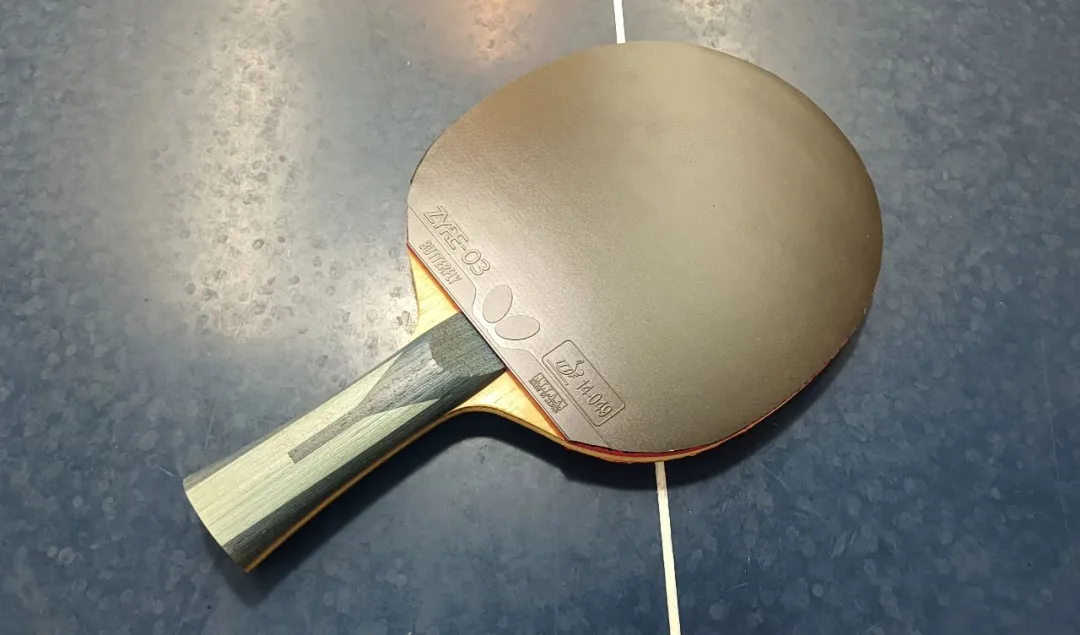
Might be worth getting hold of a custom-made Z03 to try. I’m curious whether the topsheet grip and spin would exceed the retail version. As of the retail version: rallying is easy and you can speed up the ball pretty freely, but the spin variation and rhythm feel different from what you get with Butterfly rubbers. Quite a few players can’t adjust to it, including that sense of “catching” the ball — it doesn’t feel deep enough or grounded enough.
The same pattern plays out in Japan. Many intermediate-level amateurs have leveled up using Z03. But at the professional level, opinions diverge sharply. Some find it genuinely easy to use, others can’t get on with it at all.
Either way, plenty of people who haven’t tried it yet are still curious enough to give it a shot.
No. 7 — Vega Europe
Victas Vega Europe. Nothing much to say. It’s soft, easy to push through, and cheap. There are far too many alternatives out there.
No. 8 — Nittaku Fastarc C-1
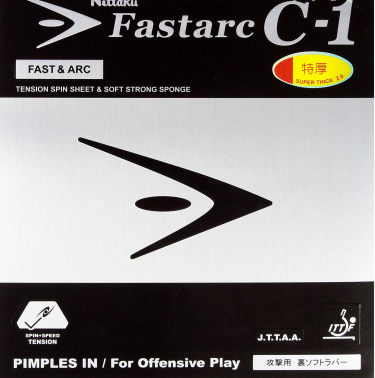
As mentioned above, if you want something a bit easier to push through on the backhand, choose C-1 over G-1. C-1 has a more linear response, no hollow bouncing, and it’s not heavy — all of which helps build consistency in backhand technique.
No. 9 — Glayzer 09c
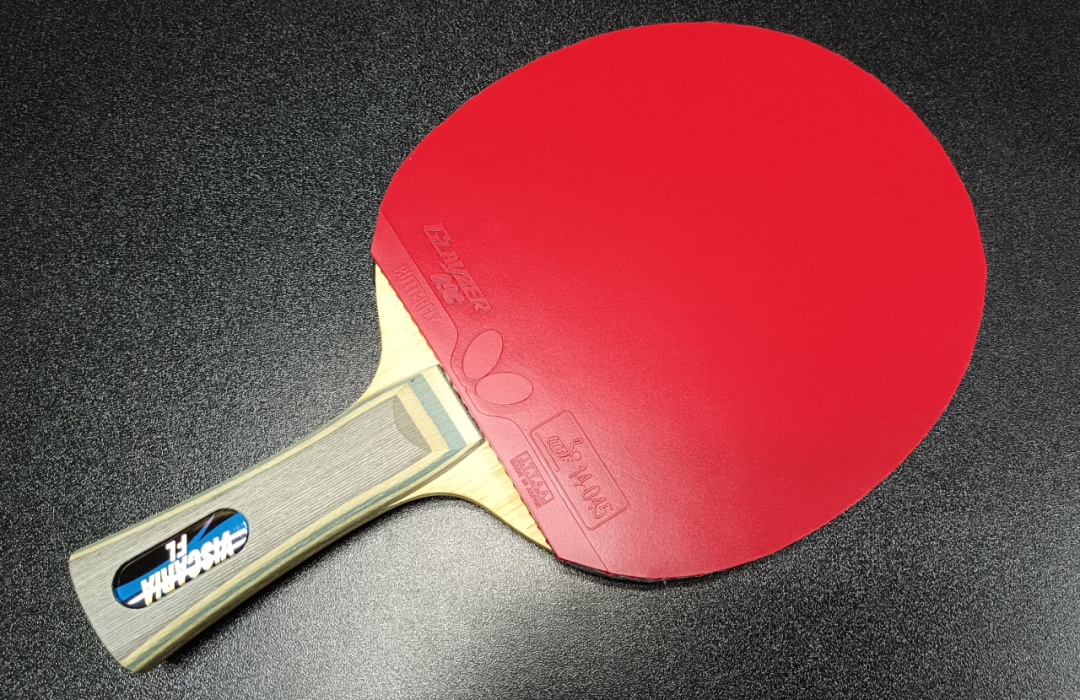
I personally rate the non-tacky Glayzer over the semi-tacky Glayzer 09c. That said, both sell very well in Japan’s domestic market. For Chinese players, the G09c’s depth of ball contact or “grip” on the forehand isn’t particularly satisfying. On the backhand, I don’t find it any more dwell-time-heavy than something like the V15 Sticky or the DNA Hybrid series.
That said, there is one type of player who does well with it: technically mature players who combine loops and drives well tend to find it pretty consistent. And Butterfly rubber sponge tends to hold up a bit longer.
But if the topsheet doesn’t feel right to you, there’s nothing to be done — it genuinely doesn’t match D09c’s friction level.
No. 10 — Yasaka Mark V
A rubber born in 1969 — a genuine classic. I haven’t used it in twenty years, so I honestly can’t speak to its current performance anymore.