Soft Tacky Rubbers on the Backhand: Do Any of Them Actually Work?
Honestly, I’m not a big believer in soft tacky rubbers. The advantages of a soft tacky rubber are that it’s relatively light, suits the backhand — especially penhold reverse-backhand strokes — has good grip, better control, and is less physically demanding. But the downsides are real: speed is slower; because the rubber is mushier, power suffers; and compared to grippy non-tacky rubbers, tacky surfaces eat spin more easily.
Slower speed is easy to understand. A tacky topsheet creates “dwell,” which means the ball exits slowly. Add a soft sponge on top of that and the ball sinks in even deeper — it’s very hard to generate pace, unless you boost the sponge to add spring.
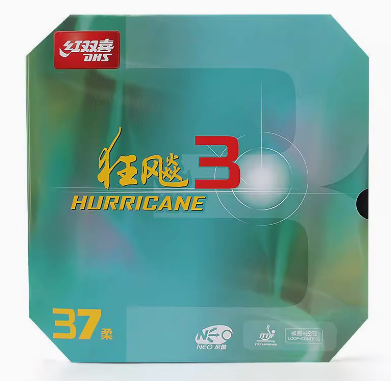
1. NEO Hurricane 3, 37-degree soft
You can choose between the regular NEO Hurricane 3, provincial edition, or national edition depending on your budget. But without boosting, the results are underwhelming. National-team players, provincial-team players, and some high-level recreational players in my area all use the 37-degree soft version with boosting. Boosted, the speed picks up considerably. Combined with Hurricane’s already strong topsheet grip, the boosted version really does have no obvious weakness for a backhand tacky rubber.
2. Best boosted option: the most expensive one
The champion national-rubber setup that Chen Meng uses on her backhand is Hurricane 8 with a No. 20 sponge.
The No. 20 sponge is the original Hurricane 3 sponge. Boosted, that’s naturally one of the better choices.
3. If you don’t boost, you’re settling
Go with Hurricane 8-80 or Hurricane 9 in the purple or light-green colorways.
Aside from different topsheet dye, performance is roughly the same. Both forehand and backhand looping are workable. But that so-called high-rebound sponge isn’t really that high-rebound — speed still feels a bit slow. That said, paired with a livelier blade like the Hurricane Dragon 5 or W968, I think it’s fine.
4. Glayzer 09c
The jack-of-all-trades rubber — which also means it doesn’t excel at anything. Arc is okay, grip is okay, speed isn’t too slow. It plays fine, but nothing about it impresses you. I personally think it works better on the forehand than the backhand. On the backhand it feels even more average. On the forehand, paired with a stiff and lively blade, the results are solid enough.
On the backhand, the grip at low input doesn’t feel more pronounced than a good non-tacky rubber. And because it’s less elastic than the Glayzer or Tenergy series, you’ll notice: its support for the forehand is just okay. What do I mean? If you put a T80 or T05 on the backhand, you feel more support from the whole racket and your forehand feels livelier too. With G09c on the backhand, the forehand doesn’t respond as well.
5. V greater than 15 Sticky Soft
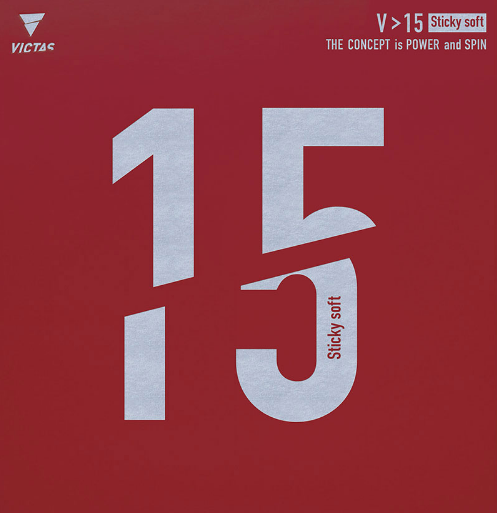
Actually, V greater than 15 Sticky isn’t bad on the backhand. But since this article is about soft outer rubbers, and V greater than 15 Sticky along with D09c are on the stiffer side, I won’t cover those here. The V greater than 15 Sticky Soft has recently launched overseas, at 47.5 degrees — the same hardness as the original V greater than 15 Extra — but with a mildly tacky topsheet instead. How does it perform? We’ll have to wait and see.
6. Tibhar Red K1
One of the earlier backhand tacky rubbers to hit the market. It’s easy to pick up and play with. But the ball quality threat is low. Personally, I’d rather put on a Sanwei Target 3 Medium-Soft, or even the Hyper-Power 37-degree — similar performance, and cheaper.
By comparison, Target 3 Medium-Soft has a more stable topsheet grip, while the 37-degree Hyper-Power has that light, quick feel similar to Tinarc 3-60. If you want backhand speed, consider the Hyper-Power or Tinarc 3-60. If you prefer a slower loop with more spin, Target 3 Medium-Soft or Hurricane 37-degree soft might be your pick.
7. Xiom Vega Pro Dual and Vega Europe Dual
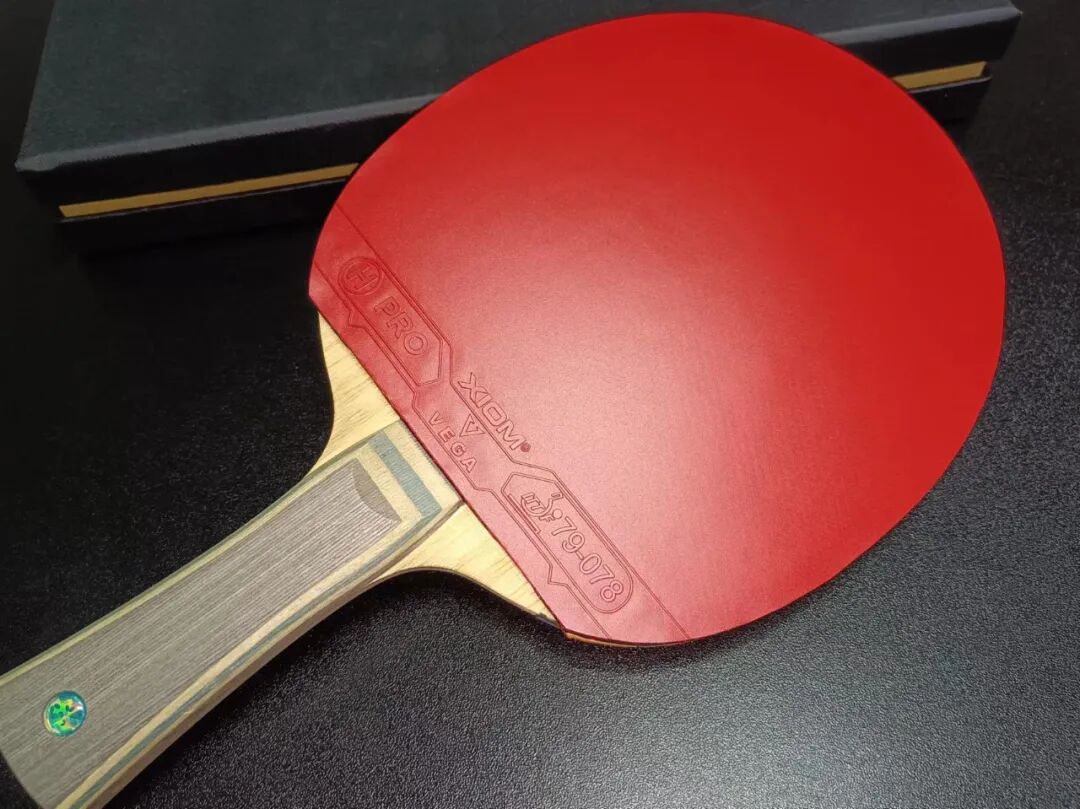
Vega Pro Dual is 50 degrees, Vega Europe Dual is 47.5 degrees. The Pro Dual is hard enough to use on the forehand. For some players, it also works on the backhand, though slightly on the stuffy side. For average-level players, the backhand choice would be the Vega Europe Dual. Not blazing fast, but the control is genuinely good.
8. DNA Hybrid M
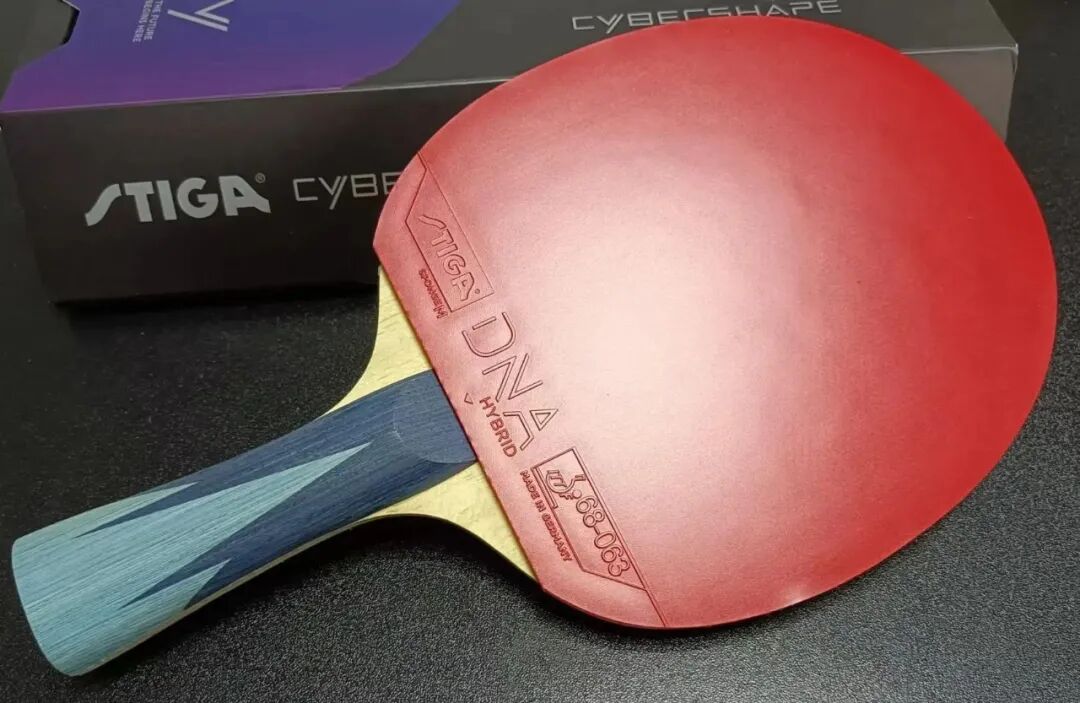
Honestly, I can’t really tell the difference between it and the Vega Europe Dual in feel. Very similar mold. That said, the DNA Hybrid M I tried — the medium hardness version — has one advantage: it comes in around 46g, which is light for a mildly-tacky outer rubber. Vega Europe Dual tends to be heavier. From that angle, the DNA Hybrid M is actually the soft mildly-tacky outer rubber I’d lean toward for backhand use.