Singapore Smash: How These Forehand Non-Tacky Rubbers Actually Play
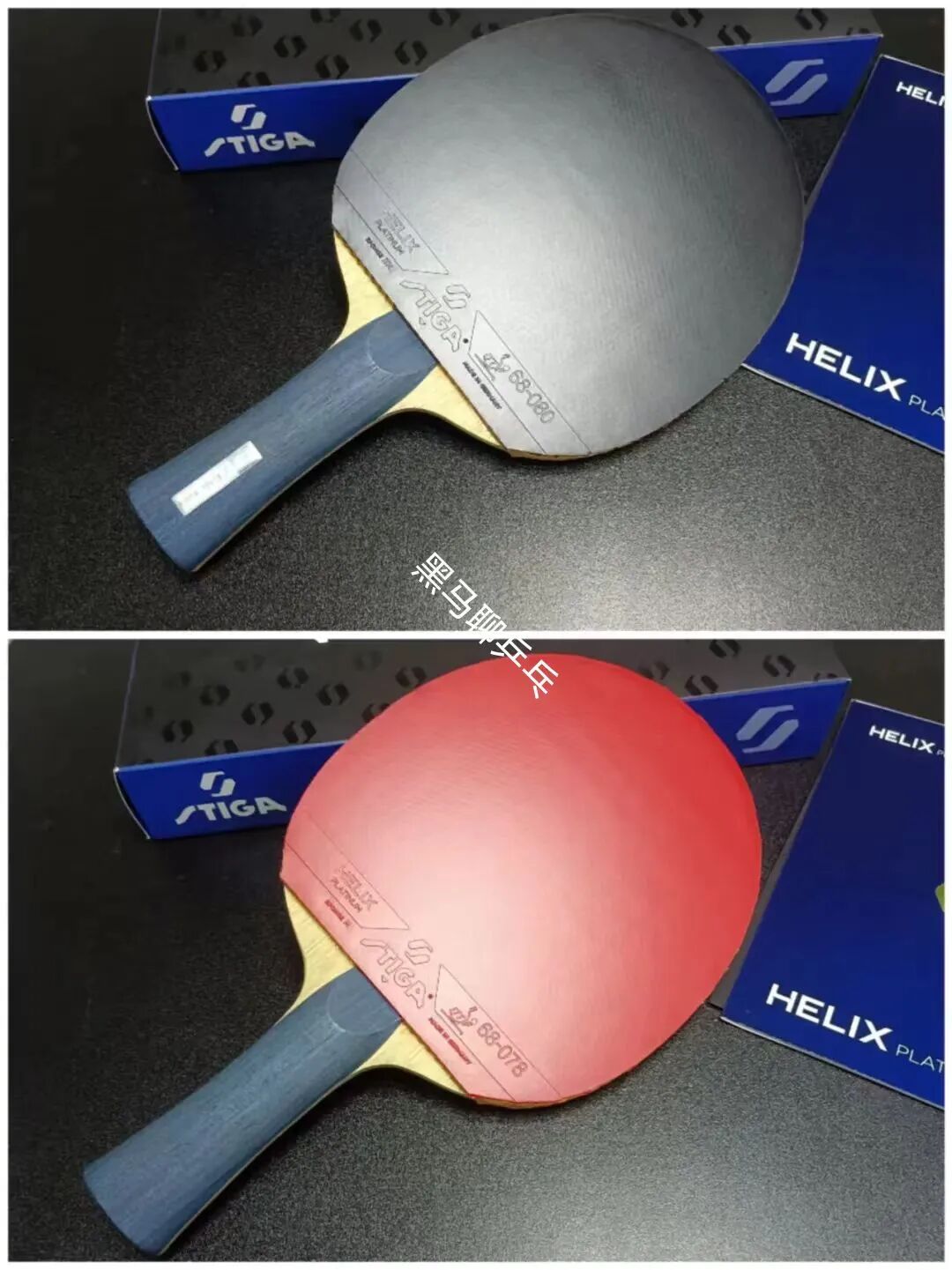
Tacky rubbers now dominate forehand setups at the top level, whether fully sticky or slightly tacky. Observation has made it increasingly clear that in big arenas, especially from the mid-to-back court, tacky rubber provides a more reliable arc and better spin. Non-tacky rubbers score mainly through “penetration” — but in the mid-to-back court, for the most part, both threat and consistency fall short of tacky options.
Yet a handful of players still stick with non-tacky rubber on the forehand. Evidently, in their view, the speed and penetrating power of the forehand remain paramount.
ZYRE-03
Users: Lin Yun-ju, Harimoto Tomokazu, Hoshino Shunsuke, Jha
Even though Z03 is a non-tacky rubber, everyone agrees that dwell is surprisingly easy — and lifting backspin is genuinely stable. That said, easy dwell and reliable backspin lifting do not automatically mean the spin level is high.
Z03 can go very fast, and it can also go very long. “Long” here means it produces a long arc, especially in topspin exchanges. In fact, some players who first pick up this rubber find that after loading up, the elasticity and arc length feel excessive — it seems to sail out.
For Harimoto, Hoshino, and Jha, you rarely hear the description “his ball is very spinny” anymore. They rely more on “ball speed.” Fast enough, direct enough — that is what Z03 does well. Its absolute spin on backspin lifting is not particularly high, but the ball does come up, and then the rally transitions to speed exchanges. The blade is part of the whole setup, of course; rubbers alone tell only part of the story, and a different blade will change the outcome.
Helix Platinum
User: Truls Möregård
I have been busy recently, so the 55-degree Helix has not made it onto my testing table yet — check back next week. I did confirm with Stiga that at this Singapore Smash, Möregård used both sides at 55 degrees. I have previously tested the M and XH hardness versions.
The M hardness is already more than enough for the vast majority of recreational backhand players. It is slightly firmer than DNA Platinum at equivalent hardness, and when you power through a shot it feels noticeably dense and solid. The spin quality leaves a strong impression — it is among the top-tier non-tacky German rubbers for spin. This is where it edges out the DNA Platinum series, especially on that one shot: lifting the ball that is barely half-off-the-table.
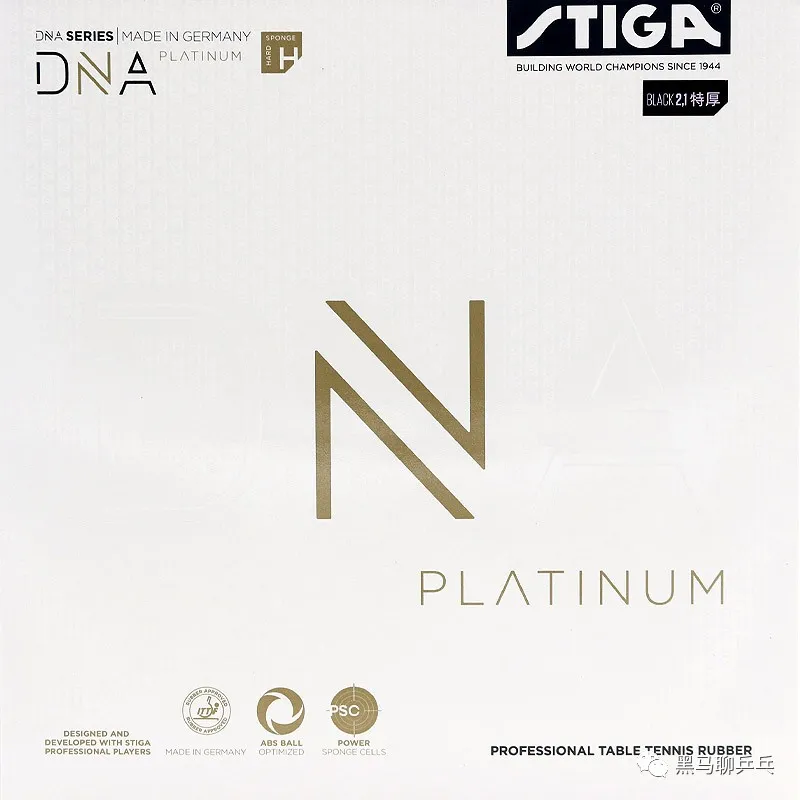
DNA Platinum
User: Hannah Gouda
For recreational use, M or H on the backhand are fine choices. At H hardness the feel has a bit of T80 character. For the forehand, XH works well. Although this series is also a non-tacky rubber, the friction is fully adequate. Compared to Helix Platinum, the DNA Platinum feels easier to penetrate — easier to generate speed with forward power.
What does that mean in practice? For recreational forehand use, it lowers the barrier and makes it easier to punch through with speed. If you are looking for a more affordable Tenergy substitute, the DNA Platinum is worth considering.
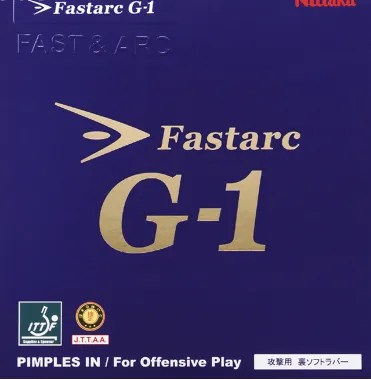
Nittaku Fastarc G-1
User: Ito Mima
G-1 handles the current plastic ball well on both forehand and backhand. For the backhand, Super Thick (2.0 mm) is the typical choice; on the forehand, either 2.0 or Max works. At Max thickness it generates more power than German rubbers like MX-P, which actually makes it well-suited for the typical Chinese recreational forehand. The sponge has very good ball-wrapping feel, which is why it was long considered one of the budget alternatives to T05. Controllability is also a bit easier than T05 — it does not bounce quite as freely.
Tenergy 05 Hard
User: Zhu Yuling
Powerful and uncompromising, with precise bite — this really is like a non-tacky version of Hurricane: it never lacks spin or depth. Zhang Jike used it as a forehand rubber (at a Swedish Open some years before retirement), and Zhu Yuling has used it long-term. It is a bit heavy, a bit stiff, but once you are accustomed to it, it is excellent on the forehand. It requires you to actively generate power output, which means the entry barrier is a little higher.
Traditionally speaking, though, it fits our forehand habits very well — whether you are talking about the spin quality on a looped half-off-the-table ball, or the raw force of a full-swing attack. If I were a few years younger and not staying up late working every night, this would be my personal favorite.