Does Ma Long Have a Weakness?
This is a brand-new, technique-focused column presented in a Q&A format. The mystery advisors answering your questions are two former national team players — now veteran coaches — who prefer to remain anonymous. They just want a quiet life and a good night’s sleep. They have no interest in fame.
I believe sharing these technical insights with everyone is genuinely valuable — a nice supplement to the main content here. And so, the “Climbing to the Peak” column was born.
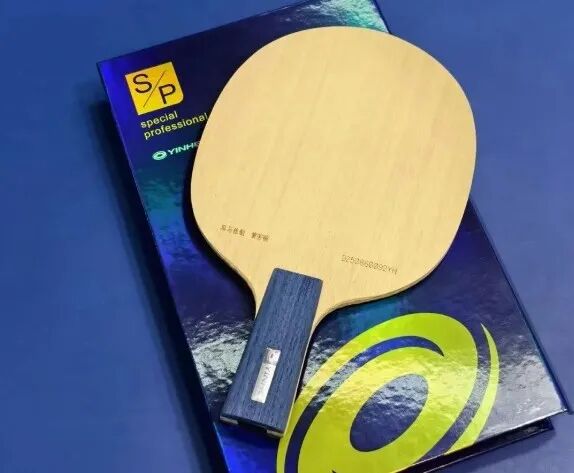
Where Is the Core of the Penhold Hook Serve?
Some people emphasize snapping the wrist downward at contact; others stress the hip rotation and pull-back; still others say the paddle arm should lift upward. These points all focus on “making the serve spinny.” But the real purpose of the hook serve is deception, not maximum spin.
The more your arm and wrist move, the less deceptive it becomes. The less your arm and wrist move — and the more your core drives the motion — the more deceptive it becomes.
A hook serve that doesn’t use the body loses its whole point. On its own, it’s relatively low in spin, with minimal wrist action — sometimes no action at all. From a pure spin standpoint, it’s actually inferior to a conventional serve. Its value lies entirely in deception.
Harimoto Tomokazu: Is His Forehand Actually Weak?
Is Harimoto Tomokazu masking a deficient forehand by staying close to the table and playing at high speed?
And why does he sometimes lose fairly easily to certain European players?
Actually, Harimoto’s forehand was never weak to begin with — this is a common misconception. Like Zhang Jike and Wang Hao, his backhand is more vicious and faster than the typical professional player, earning him a higher scoring rate on that side. His forehand is roughly on par with other top players, which gives people the impression that it’s a “weak point.” It isn’t.
When you attack his forehand, he presses your backhand with his own forehand, and you end up in an even worse spot. You’d be better off going backhand-to-backhand — at least then you have a chance to pivot and counter. After all, a backhand drive might not penetrate your defense, but a forehand could punch through in one shot.
Relatively speaking, his physical strength used to be lower, so he couldn’t afford to back up from the table — his power and speed would drop significantly. His table coverage wasn’t wide enough. The moment he stepped back, he’d fall out of the top tier.
Against Europeans, most of whom prefer playing away from the table, his speed and power became less threatening — his advantages faded. And unlike Ma Long or Ma Lin, he lacked a tight short game, which made it harder to handle deep-position European opponents. But it wasn’t impossible for him — when the opponent backs up more, you can exploit wider angles.
Ma Long’s Weakness: Press the Backhand, Then Pull to the Forehand
Ma Long is often called the “hexagonal warrior” for his all-around game. Does he still have any exploitable gaps?
Ma Long’s weakness today is similar to the weakness of penhold players: “press the backhand, then redirect to the forehand.” But you have to redirect quickly — the pull to his forehand must arrive fast, before he can recover. If you’re even slightly slow getting to his forehand, he has time to set up and rip a topspin winner.
This is why everyone knows the weakness but can’t exploit it — individual skill is the limiting factor. Fan Zhendong and Harimoto have each managed it on occasion, which is why they’ve beaten him from time to time.
When you try to attack someone’s weak spot and fail, you may actually end up feeding their strength.