A Year of Gear Obsession: What I Learned from Burning Through Equipment
1. Buy What You Truly Love
There is a line from the recent TV drama Light Years starring Huo Jianhua: “Money only becomes real money when you spend it on things that are not worth it.” That line, with all its dramatic irony, reads almost like philosophy. It occasionally reminds me of my younger self — back when I was hunting for a cheap substitute for Butterfly T05. Eventually I figured it out: stop looking for substitutes, just use the best, and paradoxically you end up spending less.
Nowadays I do not stress about durability anymore. I use whatever I like. Ideally I would swap out a sheet of T05 every two months — or even every month — to keep the surface fresh and the feel responsive. That way playing is just more enjoyable. As you get older, spend money on the things you love. Do not short-change yourself. You can always cut back in other areas.
It is no surprise that Butterfly special-order and player-issue sheets on second-hand markets routinely fetch tens of thousands — sometimes far more. Because some people are simply willing to pay for what they love. They want the genuine best (even if it is not necessarily the most suitable for them), or at least something they genuinely love at that moment. If it turns out not to be a good fit, you sell it. That mindset is ultimately a form of treating yourself well.
Of course, “the best” does not have to mean expensive. Sometimes we just want to try something new. Modern paddle spending is not always about finding what objectively suits your game and lifts your level — sometimes a blade is just a toy. And who says adults cannot play with toys?
2. Rubbers Affect Your Game More Than Blades
About ten years ago, when a friend and I were planning topics for a table tennis magazine, he proposed: pick the rubber first, then choose the blade around it. I immediately agreed. The idea felt fresh at the time, yet the internal logic was solid.
When we marvel at how national-team pros can bridge the gap between different blades, we also notice that many of them change rubbers less frequently than they change blades. I do not think it is simply because everyone agrees on one ideal rubber or because of some team policy. A key point is: across years of competition, they need to maintain certain constants — stability. And even for amateur players, long-term use of a single rubber genuinely makes it hard to change that muscle memory. Picking the rubber first, then building around it with a blade, has its own sound logic.
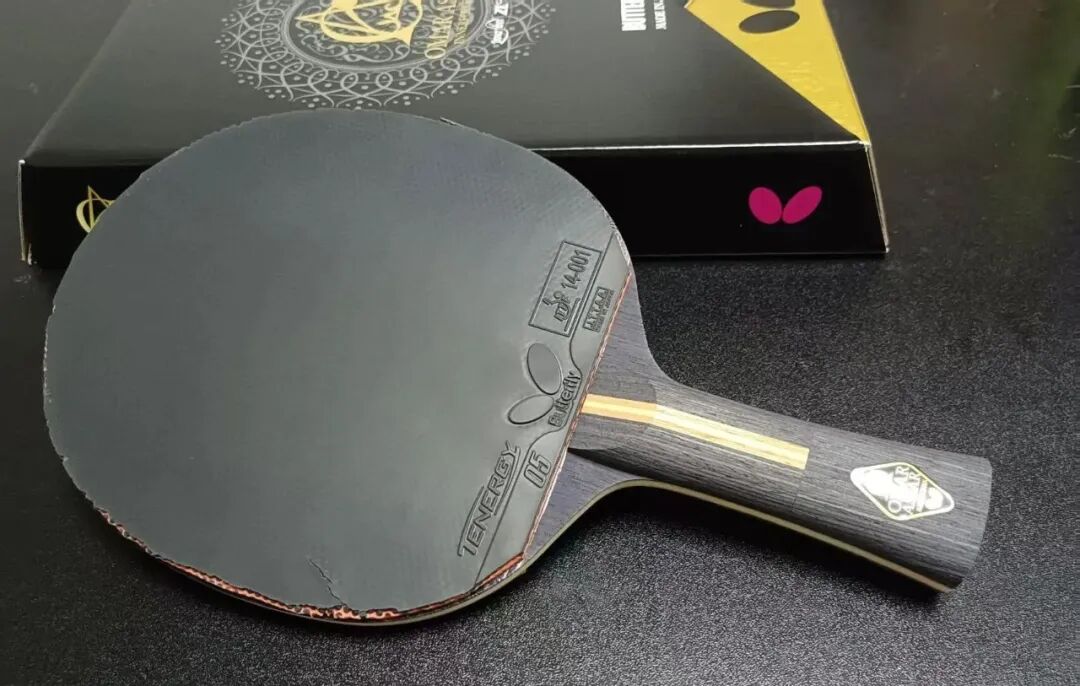
Rubbers affect your game not only because sticking with one model is better, but also because fresh rubbers are better. The technical consistency of pro players is partly sustained by access to a constant supply of fresh sheets. Amateur players are a different story. Put a fresh sheet of T05 on a Mizutani Jun limited-edition blade and the whole setup feels like a magic wand — play a few weeks, the surface starts to scale, the sponge loses responsiveness, you find yourself having to dig deeper just to get consistent, free-swinging shots become riskier and errors creep up. The difference between new and old rubber shows itself especially clearly on certain blades. Other blades are less sensitive to it.
3. Most Blades Are Not Garbage — They Just Have Garbage Price Tags
Under mainstream construction categories, reputable manufacturers generally produce playable, even quite capable, products. Good blades are actually plentiful; many just have mismatched price points. Beyond that, for blades built on proven structures, the materials are rarely poor enough to significantly affect your results. What matters is whether you can adapt to them and how long that takes.
For players used to inner carbon blades, switching to outer carbon is perfectly feasible — especially since many outer carbon blades today offer plenty of dwell time. The problem is that we often want instant results, expecting to adapt in a single session. Without a month or two, it is genuinely difficult.
The usual advice is: “do not jump out of the system you are already comfortable with.” But if your mindset is “I am just playing with a toy,” then go for it. Life is hard enough for most people — why not let yourself play with some toys?