How to Hold Your Game Together as You Get Older (Part 2)
As you get older, you need a richer toolkit of ways to score. That means leaning on variation and rhythm to create opportunities, rather than just muscling your way through every rally.
Some players do stay strong well past their prime — but learning to play with your head is the new standard for those of us who aren’t young anymore.

1. Use more set plays to win points
In the later stages of their careers, Ma Lin and Ma Long were constantly playing “tricks” — deception, misdirection. We need more of those set plays too.
For each of us, the first step is analyzing our personal scoring patterns. For example: serve fast and long, then push to a straight line; loop a heavy topspin ball, then drive hard to the opponent’s body; serve half-long with ambiguous spin to bait an unforced error. These set plays are simple — they mean nothing to a professional — but for most recreational players, they’re plenty.
From a competitive standpoint, we need to accumulate more of these simple patterns and use them repeatedly.
As energy and stamina decline with age, we have to rely more on set plays to score. Which patterns actually work best is something you need to figure out and refine for yourself.
2. Different seasons call for different approaches
There’s a time to fall in love, a time to chase career breakthroughs, a time to settle into a calmer pace of life. I’ve come to see that recognizing those different phases matters.
As we get older, at a certain point we don’t need to chase ferocious attacking power. We don’t need to push every stroke to its physical limit. For some of us, even the win-loss record stops mattering as much — playing with measured energy and genuine enjoyment becomes the goal.
Most discussions about table tennis tactics, technique, and equipment tend to focus on players under 40. Content specifically for the over-40 crowd is thin. That may be something worth exploring in future articles.
And of course, the needs of retired professionals and amateur players are quite different.
3. Blade selection for efficiency
In the year or two before the Paris Olympics, Ma Long was going through more than ten 968 blades every year. Not purely because the blades wore out — it was about “dialing in the exact elasticity he needed,” and as his tactical priorities shifted, his requirements from the blade changed.
But effective spring-bounciness improvement was a key piece of that. Because as he aged, Ma Long needed to play with less physical effort. More rebound, more explosive pop — those became requirements.
You can see how the 968 has evolved over the years: the blade’s elasticity has become more pronounced, while the structural stiffness that supports it has also gotten better.
For us recreational players, many of us are actually older than Long-dui. We need a blade with better natural rebound to play more efficiently.
Among middle-aged recreational players, super-fiber blades (like the Super Zhang Jike) are popular for exactly this reason — high rebound, less effort required, and better for defense.
4. Learning from Boll’s injury period
From early 2021 through April 2022 — from club leagues to the Tokyo Olympics — Timo Boll was dealing with injuries and switched from the Boll ALC to a standard carbon blade. That doesn’t mean the standard carbon is a better blade.
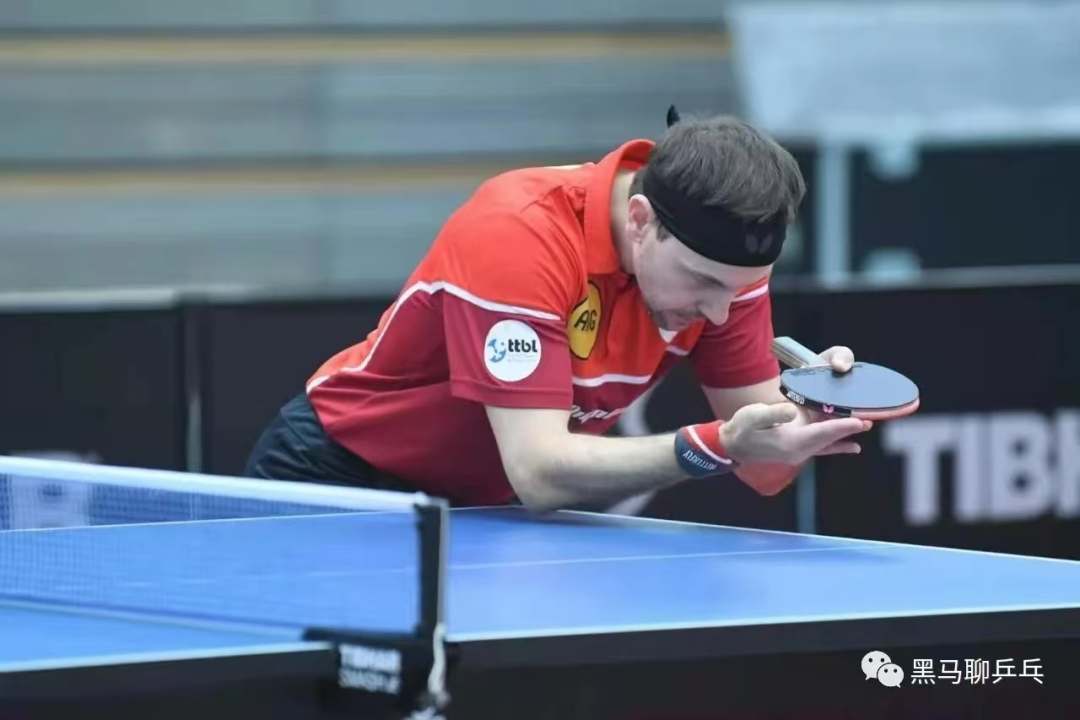
It was simply that after his injury, he felt he needed a blade with more structural support and speed. So he chose something stiffer, thicker, with higher rebound and velocity. Once his body recovered well enough, he went back to the Boll ALC.
For aging players, choosing a blade with better support and more pop may be exactly the right call for a lot of people.
In tuning the Heima Yazhi (my own custom blade), some players told me they preferred the larger head size. But a larger head — around 160 or 161mm like the 968 — is actually more tiring to swing, and can feel sluggish when you can’t generate full power. I ultimately settled on a Vis-sized moderate head, and made the blade slightly thicker, to improve the backhand’s solidity when blocking and increase exit speed.
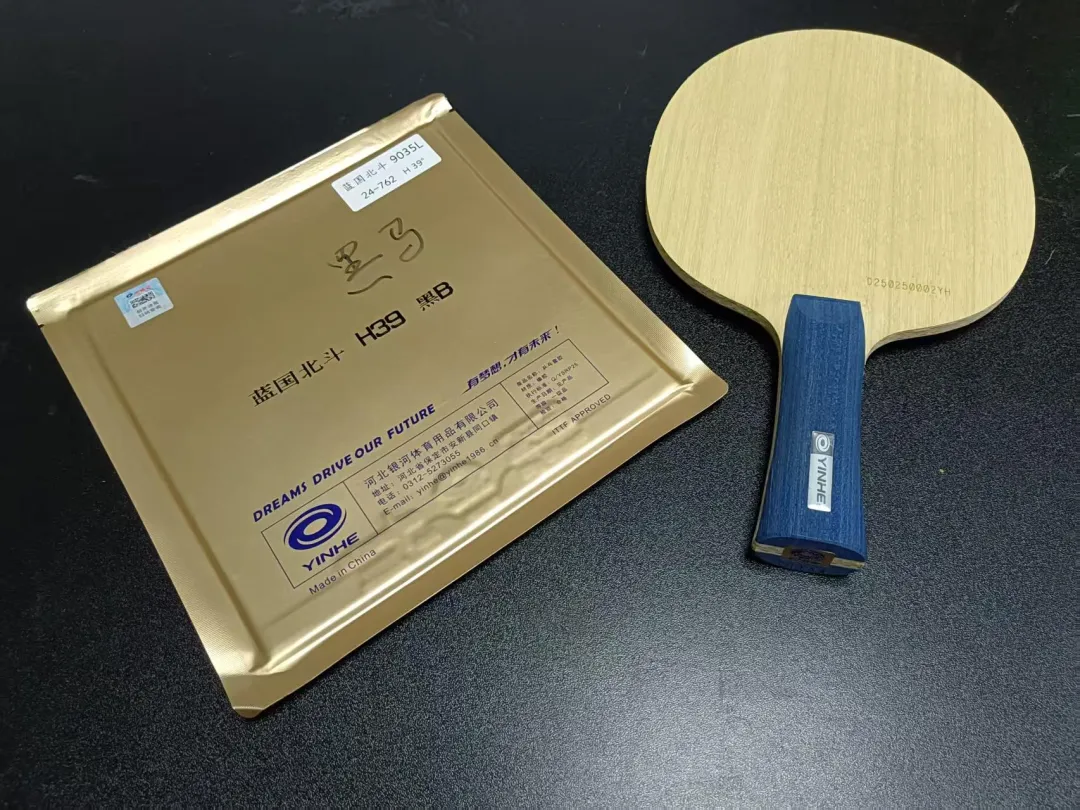
A lot of players have told me the backhand on this blade feels like an outer carbon. That was exactly the intention. Playing with less effort and more ease is important.
We may revisit equipment selection for older players in future discussions. That’s not something I can write richly on alone — it requires conversations with more retired professionals and high-level recreational players. It’s a topic that doesn’t get nearly enough attention.