Ma Long's Backhand: How Softness Overcomes Strength
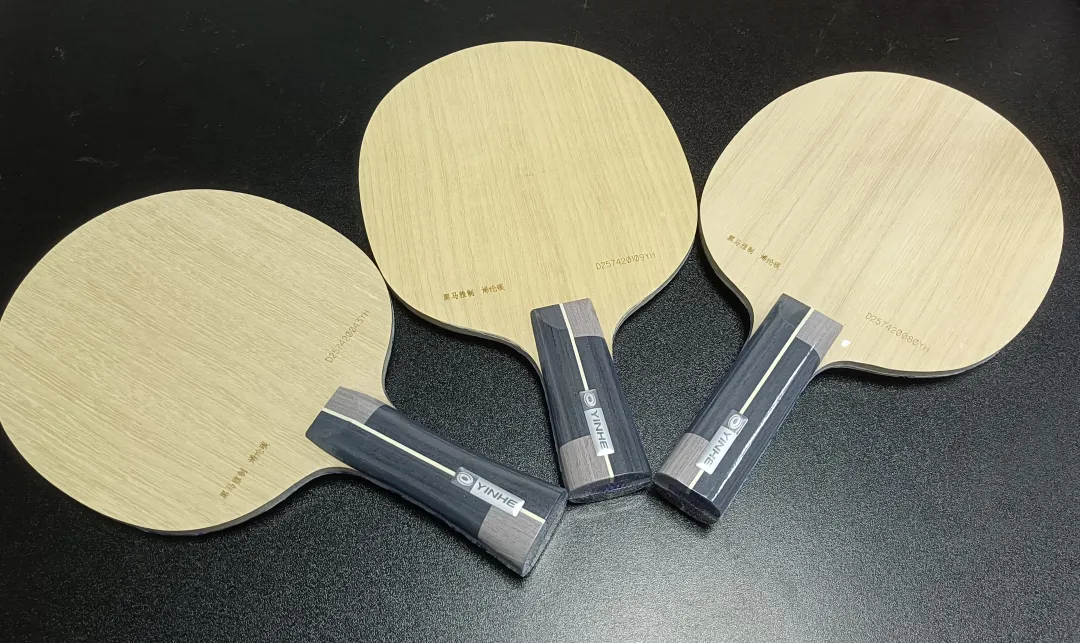
This is a brand-new, technique-focused column in a Q-and-A format. The anonymous experts are two former national team players and one retired provincial-team player — all experienced coaches — who just want a quiet life, a good night’s sleep, and no fame.
Sharing these technical insights feels genuinely worthwhile, and this “Reaching the Summit” column was born from that.
Question 1: A training partner plays about the same as me normally, but in competition he goes into beast mode — better ball quality, better everything. How do I handle that?
This is the classic match-day specialist: the bigger the stage, the more fired up they get.
Two general approaches. First, try to control the opponent — push balls to uncomfortable positions, or deliberately let them initiate but make them loop without quality (something easy to defend). Second, vary your own hitting rhythm — mix fast and slow, making it hard for them to load comfortably. Since you know each other well, plain-old speed, angles, spin variation, and fakes probably won’t do much. What matters is disrupting the rhythm, not playing your normal pace.
Question 2: Opponent serves a hook serve and I flip it back short, then they counter-loop a long, arced ball. How do I block effectively and control the landing zone?
Blocking is the beginner’s defensive option — a last resort. You use it when you can’t read the opponent’s spin well enough to hit through it. The technical key: time the rising phase, stand the blade more upright, use your body weight to press the incoming ball, lightly block with the arm, and micro-adjust with the wrist based on incoming spin and pace.
The better option is to wait until the ball is just a little above net height. Use your center of gravity to brace your arm, and lightly push-press forward, using your fingers to fine-tune the angle. After a few of these, you’ll start reading the opponent’s spin and power level quite accurately.
Question 3: How does Ma Long’s backhand use softness to overcome strength?
Rhythm, power, length, speed, and angle — constantly changing.
Ma Long’s backhand has a very distinctive character. The quality looks modest on the surface, but look closely and every rally is slightly different from the one before — rhythm shifts, short-long variation, left-right placement changes, and power adjustments all keep the opponent slightly off-balance, constantly recalibrating their body.
To do this, Ma Long has to be in an extremely relaxed mental state, while also reading the opponent’s returns with precision. Power hitters like Fan Zhendong and Liang Jingkun have better raw single-ball quality, but their play is relatively predictable — fewer dimensions of variation. So in high-stakes matches against Ma Long, they can end up feeling controlled.