Half a Century of Outer Carbon Blades: Evolution, Trends, and a Full Roundup (Part 3)
Lightweight Carbon Blades for Beginner and Intermediate Players
There was a time when inner lightweight carbon blades had their moment of popularity. In China, for instance, Ma Lin Carbon and Ma Lin Soft Carbon were once beloved by many penhold players. But the lightweight carbon blades I’m covering today are all outer constructions. Their target audience now is beginning or intermediate players, women players, or anyone who prioritizes control and stability. They include Nittaku’s ultra-thin carbon, Victas’s wool carbon, Yasaka’s UD carbon, and similar products. These fibers are thinner and lighter than standard carbon fiber, with less spring and a softer feel that sits closer to an all-wood blade.
This category includes:
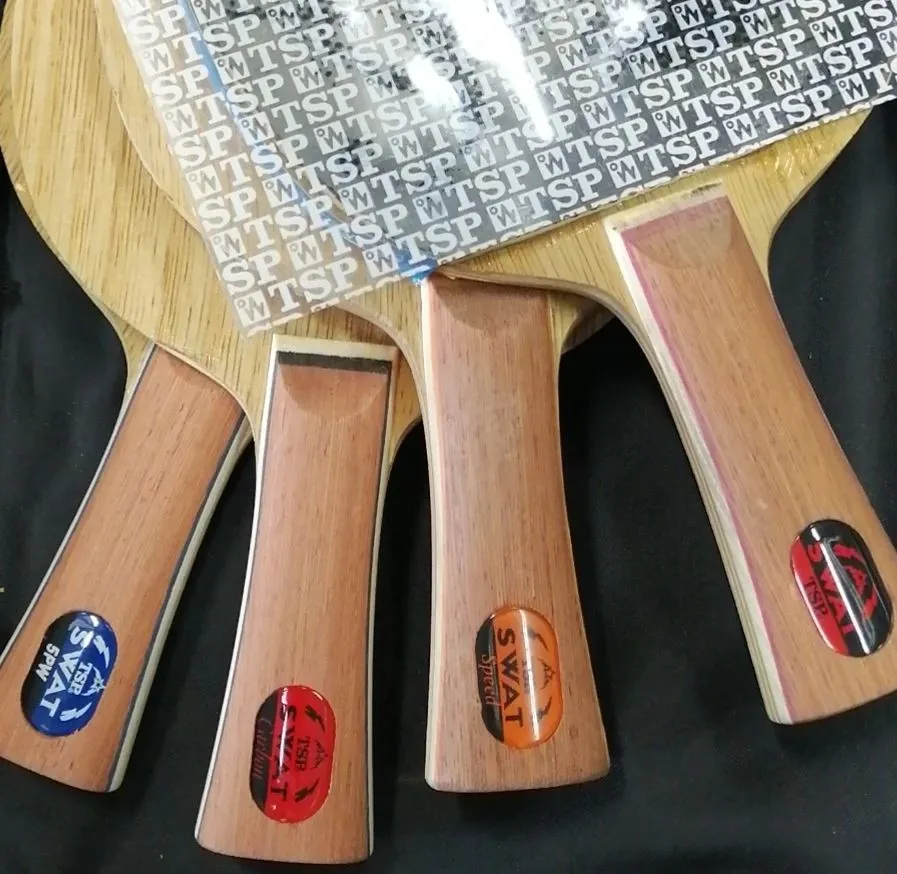
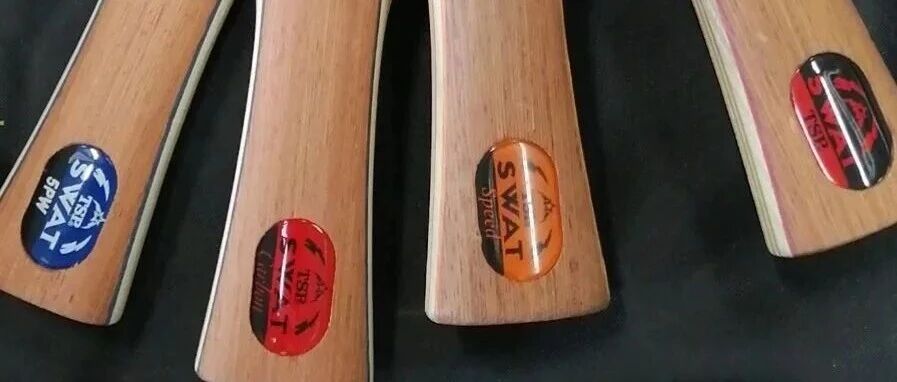
Victas Swat Carbon — uses a nonwoven wool-type carbon. 6.0mm thick. Doesn’t feel hard at all. You only get a faint sensation that some fiber is layered inside, and the rebound is just slightly faster than the pure-wood seven-ply Swat that Ni Xialian uses.
Nittaku Ease Carbon — 5 wood plus 2 UD carbon layers. Light and thin. I haven’t played it. Thickness 5.9mm.
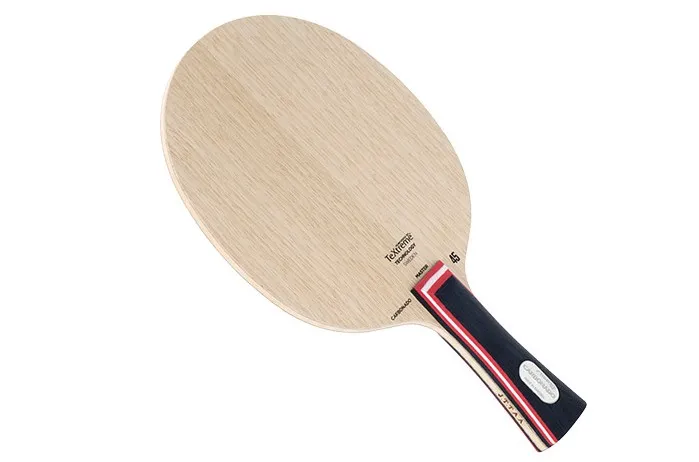
Carbon 45 — a blade we know very well. 5.8mm. A legendary blade in its day. Feel is close to all-wood. Usable from intermediate to elite players. Pairs beautifully with Chinese sticky rubbers on the forehand. Also works well with tensor rubbers. Pure power ceiling is ordinary, but the attack has great sustained flow, feel is very consistent, strong continuity. Excellent ball-dwelling on the backhand; fast snapping strokes feel very natural.
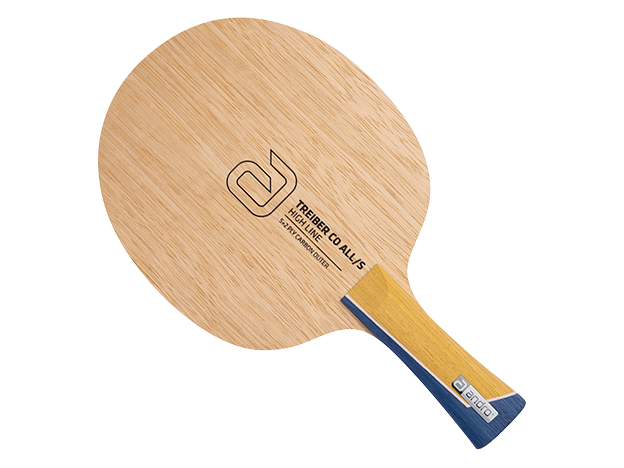
andro Treiber CO ALL/S — also a very thin body design at 5.6mm. Soft and spin-friendly. This reminds me of another blade — Simon Gauzy’s HL CO OFF shown below. Two layers of outer KLC, but extremely thin; you can barely see the fiber layer. The whole blade plays very wood-like, with deformation of the entire structure providing the dwelling quality, and excellent transparency. The face veneer has some hardness (probably Ovangkol or yellow birch), but is also extremely thin, and the core is very soft. Another approachable blade for intermediate players.
Non-Carbon Stability-Focused Fiber Blades
The selling point here is moderate elasticity with superior consistency. No carbon added. For beginner or intermediate players accustomed to all-wood, these are also fairly easy to adapt to. The fibers in this category include cellulose nanofiber CNF (Butterfly, Donic, and Razri all have versions), CAF (Butterfly), and Victas’s wood fiber. Blades in this category include:
Outerforce CAF — one of Butterfly’s new series this year. 6.3mm. Ball-dwelling feel is relatively soft and easy to control. But to boost rebound, the blade has to be made thicker.
Hugo HAL — we’ve talked about this one many times. The blade Hugo used to win the Macau World Cup men’s singles title. We’re looking forward to the Doha World Championships starting this week. Can Hugo keep performing at this level?
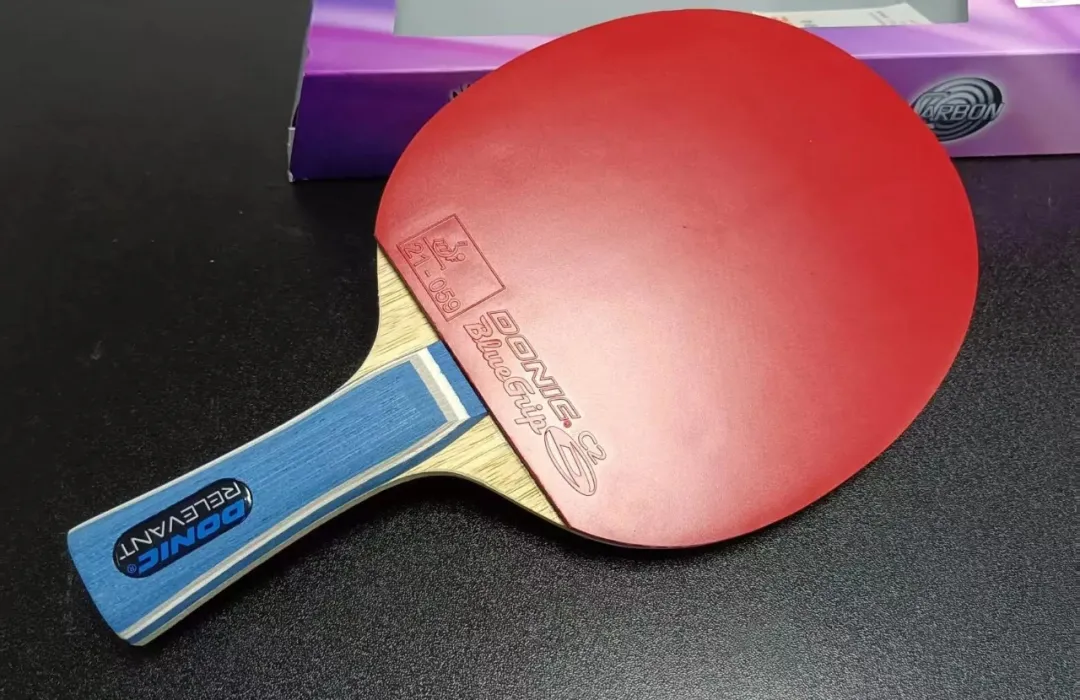
Donic Nyrwolt — also 5-plus-2 construction. The two outer fiber layers are CERTRAN synthetic fiber — the kind used to make fishing line. That fiber type should be similar to what’s used in the Stiga Power Carbon being covered in a separate review coming out in the next couple of days.
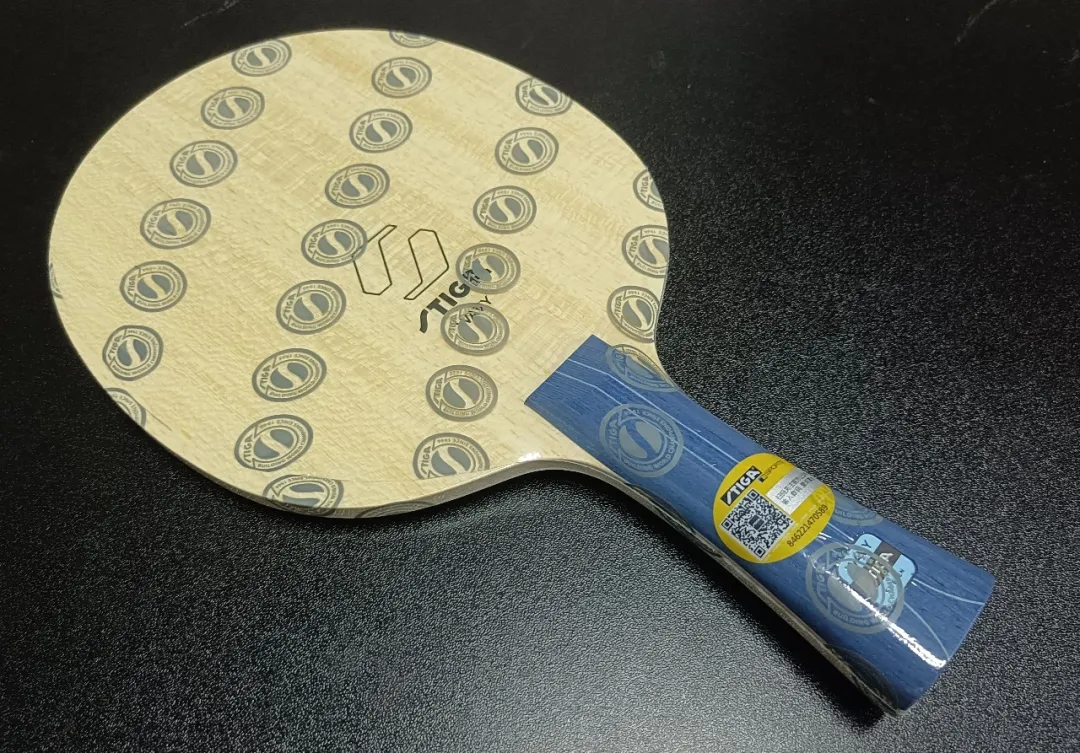
I tested the Nyrwolt last year. It felt somewhat similar to Mizutani Jun ZLC in some ways. Limba face veneer, also good at dwelling on the ball. Feel clarity is not as sharp as the Mizutani ZLC, probably because of the Ayous core (vs. the ZLC’s paulownia). But overall it’s quite stable.
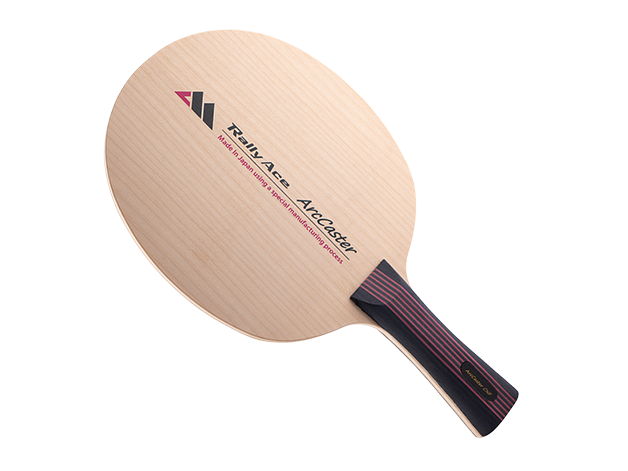
I haven’t played the Razri blade shown here. Zhuqiu Wanguo recommended it. Also uses plant-based CNF. Face veneer appears to be maple.
Unique Specialty Fiber Blades
As outer fiber blade technology has evolved over half a century, some one-of-a-kind specialty pieces have emerged. Take the Duda AFC, which shares its construction with the Koki Niwa AFC: two outer layers of wool carbon plus two inner layers of arylate-carbon. The outer two layers aren’t hard, and the feel transitions fairly smoothly. The inner two layers provide a degree of support and rebound.
Carbon Era — blind-tested, I initially thought it might be similar to the Offensive Classic. At low to mid power it generates more spin than Carbon Dynasty. Very large sweet spot, almost like automatic defense mode. But it doesn’t have the supporting feel of Viscaria-type arylate-carbon blades — it has a bit of a hand-shock and a hollow bounce. Because of its unique character, players used to Japanese-style ALC blades may not like it. But fans of Stiga’s crisp, sharp feel might find it genuinely interesting — a good blade that’s easy to load with spin and works for both looping and hitting.
Super Mizutani Jun — we just covered this one. With the denser fiber, the rebound sweet spot is larger, but it demands tighter, more compact stroke mechanics.
Ice Cream AZX — heterogeneous fiber construction. We’ve reviewed this one before.