First Look: Liang Jingkun ADC Special Edition (S) — The Blade Done Right?
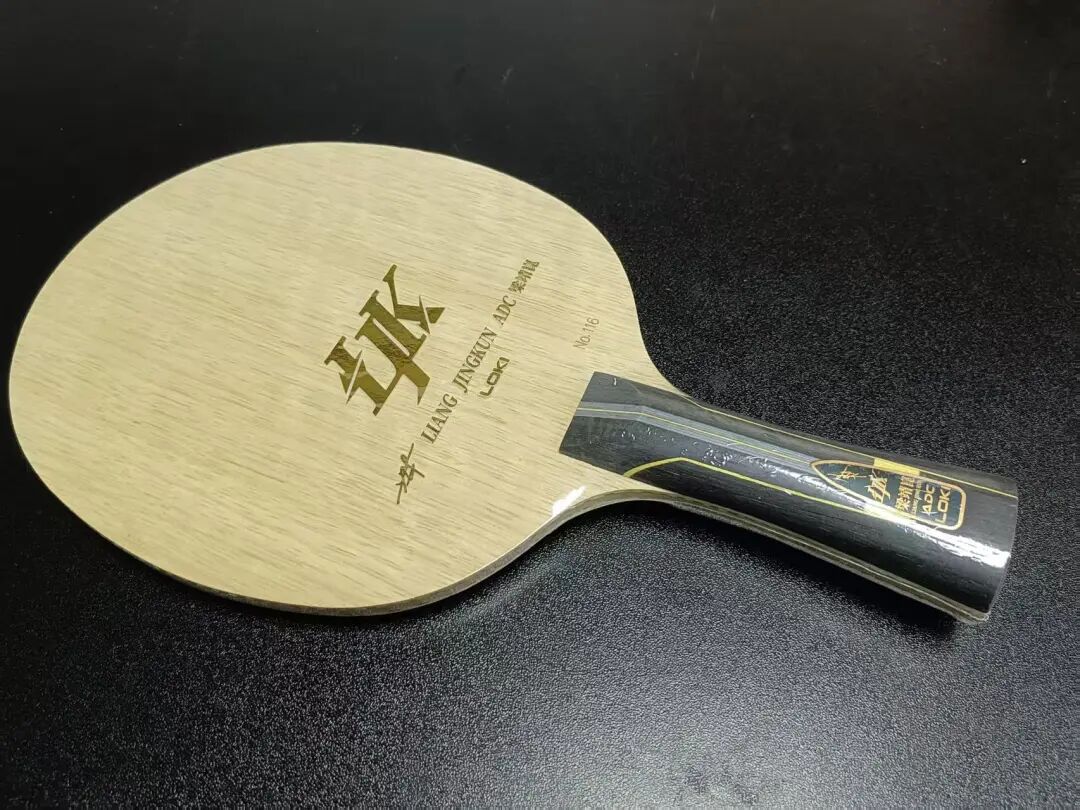
Before testing the special edition, a quick recap of the standard Liang Jingkun ADC market version.
Structure: limba face veneer plus ayous force layer plus ADC fiber layer plus ayous core. This is the shared construction of both the market version and the special edition.
Against other blades on the market, the standard Liang Jingkun ADC tends toward a Viscaria-type character, though with slightly reduced elasticity and a crisper, more transparent hitting feel. Overall it’s a balanced blade suited for both looping and hitting. The feedback on borrowed backhand force is decent among inner-composite blades.
The main drawback is that spin generation is only average — it lacks that flagship-level hand feel. There is some power amplification, but the character is balanced rather than explosive, and the snap isn’t particularly strong.
On the Liang Jingkun ADC Special Edition (S-size), I saw something different.
Basic Specs
The structure will be familiar to many — this is the classic 968 construction. Under moderate force, it feels almost like pure wood; under heavy force, it’s like a turbo-charger kicks in, with clear amplification and snap. How high-class does it feel? That comes down to how well this blade accelerates and fires.
This S-size Liang Jingkun ADC weighs approximately 88.7g and measures about 6.0mm thick. The blade face is 159x150mm.
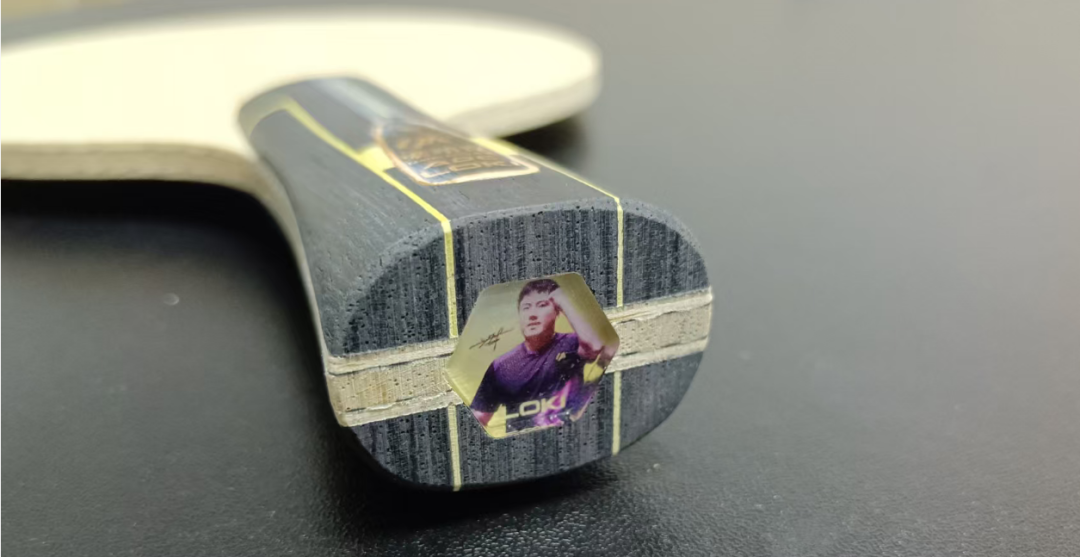
The handle, grip feel, and balance point are very similar to the W968. The handle is on the slim side, balance is head-heavy, and the shoulder seems slightly narrower than the market version I played before.
Real-World Testing
This is the current new special edition version. Previously, there’s been plenty of online discussion about the Liang Jingkun ADC Special Edition R-size, with opinions ranging widely. I only had a brief hit with a friend’s R-size — nothing deep. My rough impression was that it felt stiffer and deformed less. By comparison, the S-size I’ve been testing feels noticeably softer and makes deformation easier to achieve.
I checked the official LOKI specs. R-size: speed 9.25, spin 8.15. S-size: speed 8.75, spin 9.17. That aligns closely with my impressions — the S-size is easier to dwell on and load spin into, deformation is more visible, and when you accelerate it has more of a snap.
After several evenings of play, I found many similarities with the W968. So I asked myself a sharp question: if I were playing blind, could I actually tell the difference between this Liang Jingkun ADC Special Edition (S-size) and an official numbered W968?
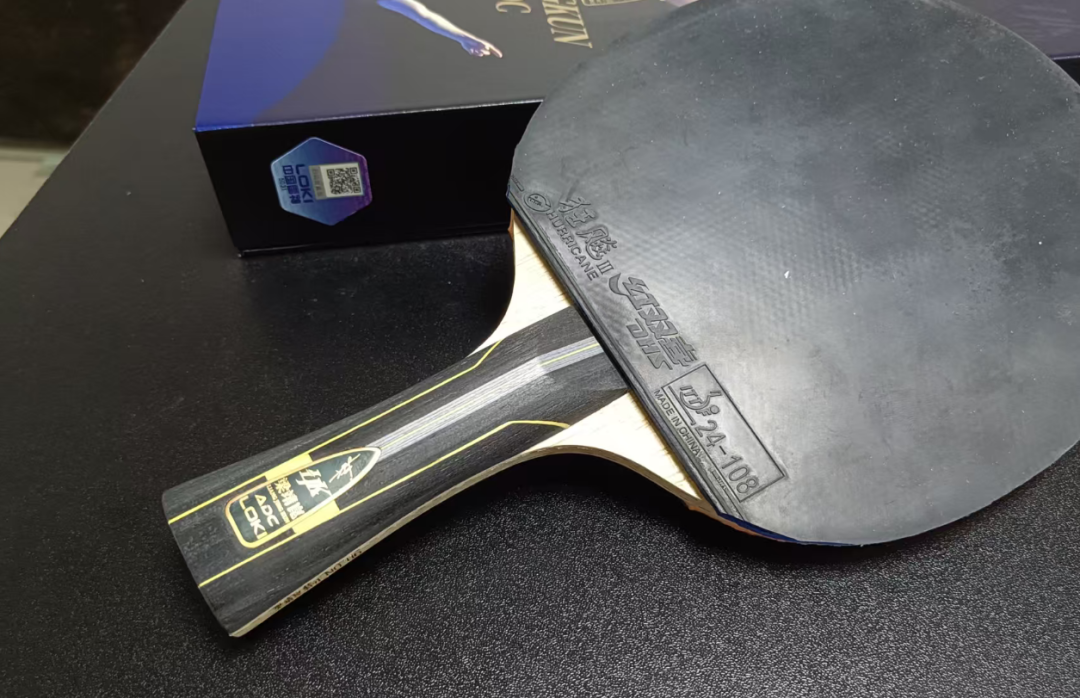
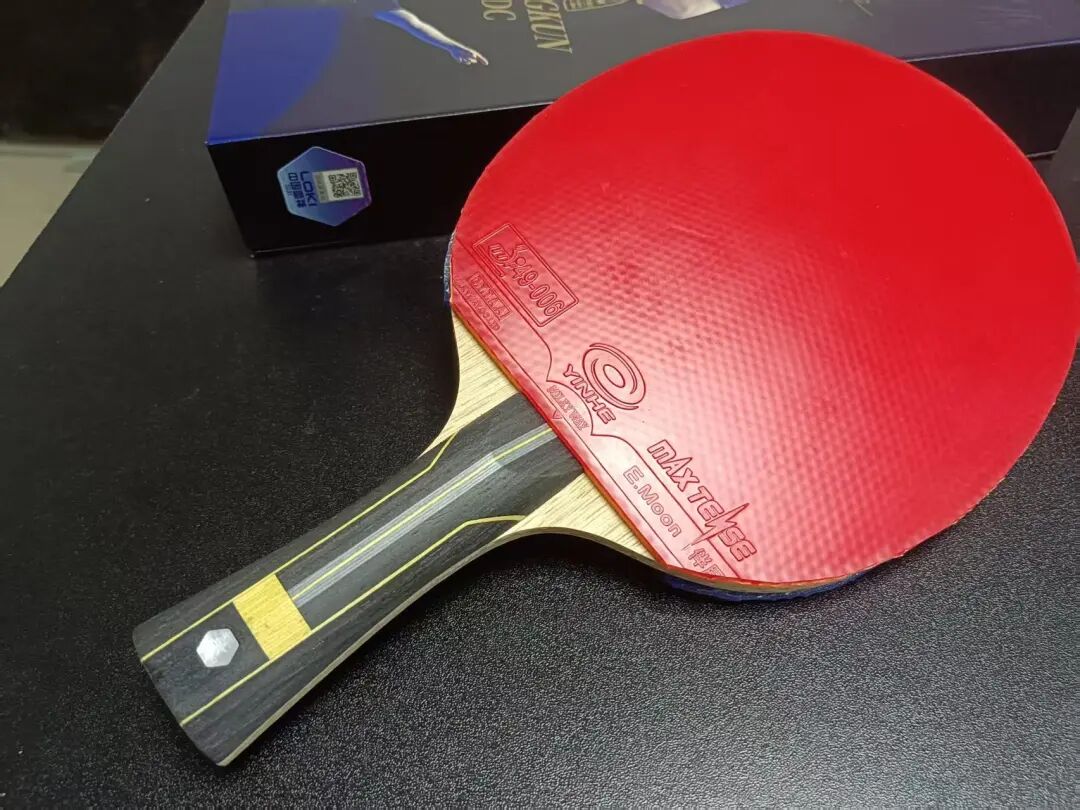
The grip feel, playing feel, balance, spin generation, and loop quality have a lot in common. Fast loading then acceleration and explosion — the two really do feel alike. Both give you controlled short-game play under light force, then clear amplification when you put power in.
But with careful comparison, one difference stands out. The W968’s snap effect is more extreme. The Liang Jingkun ADC Special Edition (S-size) also delivers excellent acceleration and snap, but not quite to that 968 extreme. It feels more like a blend — stiff meets yielding. For example, on borrowed backhand force, active flicks, forehand drives, or smashes, you sense something slightly stiffer than the 968. But it’s not as rigid as the R-size reportedly is.
I’d imagine this is closer to the style Liang Jingkun himself uses — overall still supple enough to generate spin and dwell, with looping snap and power amplification, while also having enough structural stiffness to handle exchanges and stay resilient.