How Are Custom-Made Blades and Rubbers Actually Made?
Custom Rubbers: How Are They Made?
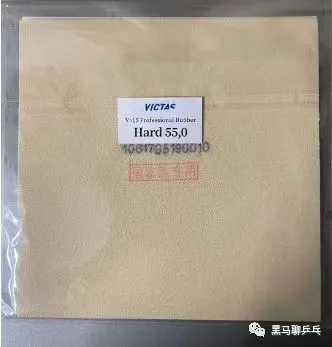
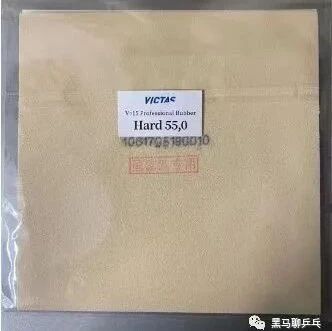
A small quantity of a custom V greater than 15 Extra recently appeared on the market, with “National Team Exclusive” printed on the sponge. Don’t worry — unlike the sketchy fake Hurricane special editions or the mysterious fake Butterfly special editions (the ones with a player’s name written on them), this one is the real deal.
So how is a custom rubber “made”? The national team’s custom V greater than 15 Extra goes from the standard market version’s 47.5-degree hardness all the way up to 55 degrees. On one hand, the sponge is firmer; on the other, the topsheet grips the ball noticeably better. Some players had complained that the market V15 topsheet was slippery and required sinking into the sponge to generate spin. The custom V15 grips the ball much more easily. The feel has a fresh, firm quality to it.
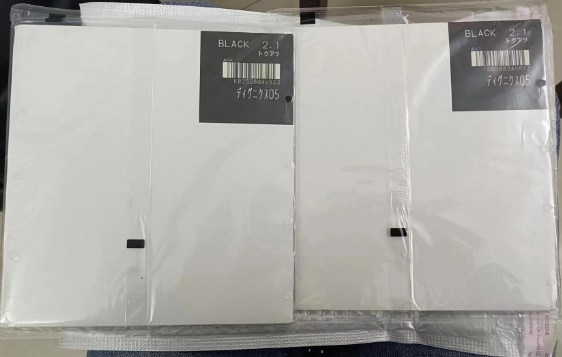
You can certainly use it on the forehand side. For the backhand, my own sheet was around 51g. The weight distribution between forehand and backhand rubbers is entirely personal preference, and whether they affect each other varies from person to person.
Something similar happened with T05 early on. The national team version — the CHINA SP — had noticeably firmer and tougher sponge than the market version, harder to punch through, more powerful, a bit like the current T05 Hard. But as the sponge got harder, short-game control became more difficult and the sponge’s dwell feel diminished compared to the market version; it demands more effort. So I eventually found the market version more comfortable to use. Some national team players have admitted the same — the market version is easier to play.
The CHINA edition of D09c also has a firmer and slightly tougher sponge. However, a few sheets I played of the white-shell special edition from the Japanese national team didn’t feel noticeably harder. My guess is that it still varies by player — from what I understand, the D05 used by Harimoto Mia is definitely firmer.
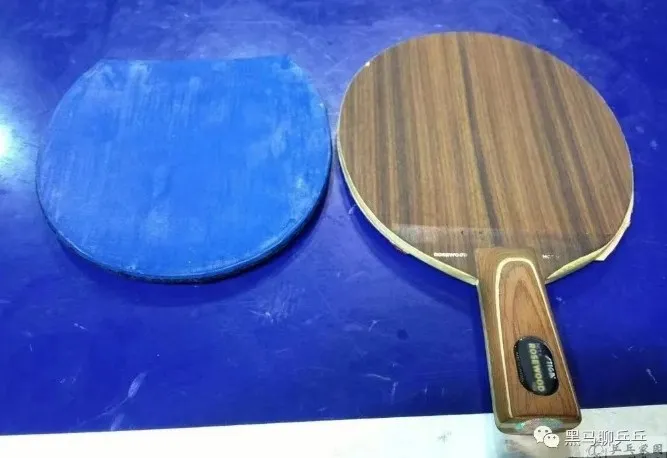
Something similar occurs with Yasaka’s Ma Lin Extra Hard. The custom version has a harder sponge.
With DHS, the situation is a bit different. Several national players’ custom Hurricane rubbers don’t actually feel as hard as the hardness number suggests, though they do have good resilience. Bottom line: don’t blindly chase “custom” editions — you have to assess whether they suit your game.
Custom Blades: How Are They Made?
This is obviously more complex. Blades can be tailored to a player’s exact needs. For example, Stiga designed a “water-drop” shaped face for Xu Xin’s Rose Wood 5, and made Zhu Yuling’s Stiga Clipper CR with a large 163 x 157 mm face.
Earlier, Butterfly made a custom Aramid Carbon blade for Kong Fanghui with one side pure wood and the other Aramid carbon. More recently, they made custom fiber blades for Taiwanese women players — outer fiber on one side and inner on the other, or an inner ZLC version with a paulownia core instead of ayous.
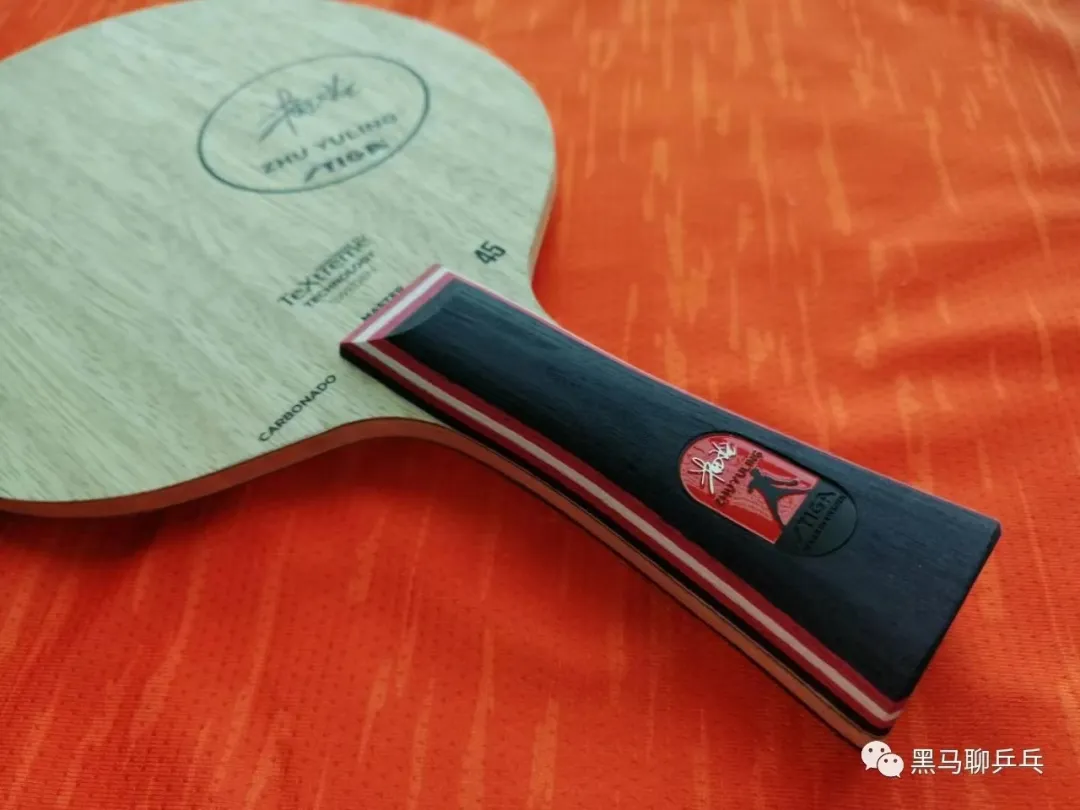
A simpler form of custom blade work is “hardening.” Zhu Yuling’s Carbon 45, for example, is one such approach — selecting wood from closer to the root of the tree, which is denser. The resulting blade is springier and more powerful than a standard Carbon 45, though not everyone will like it. Personally I still prefer the regular Carbon 45, which lets you generate topspin effortlessly. Its power ceiling is lower, but it plays through cleanly and freely.
Stiga’s custom Spirit for the national team is harder than the market version. Joola’s custom for Zhou Qihao — the Zhou Qihao 90 — is also hardened. And some brands’ so-called “player specials” are actually just market versions that happen to be on the heavier and harder end of the batch.
No need to chase these blindly. Think carefully about whether a harder, heavier blade suits you — it does hit harder on flat topspin, but it’s also more tiring to play.