Why You're Always Slower to Attack Than Junior Players: Table Tennis Q&A
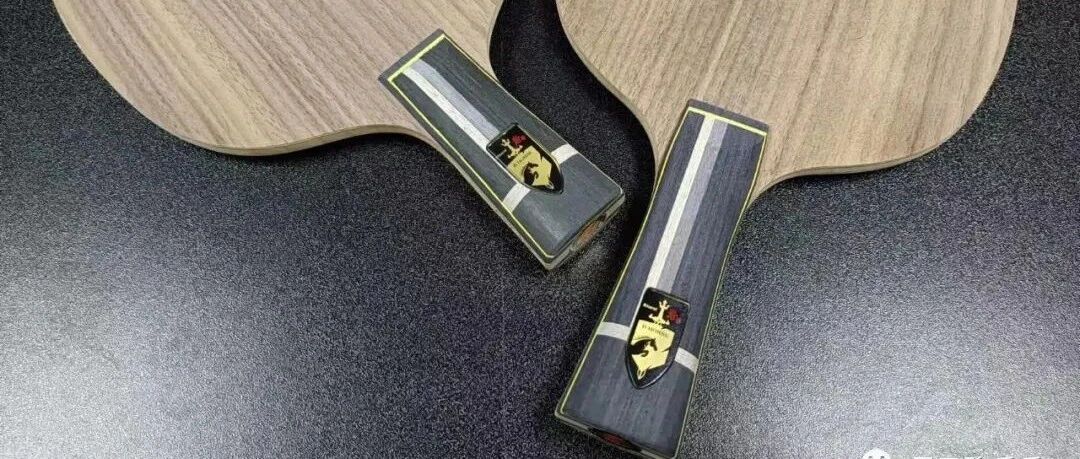
This is a brand-new, technique-focused column in question-and-answer format. The mystery respondents are two former national players — both now veteran coaches — who prefer to stay anonymous. They just want a peaceful life and a good night’s sleep, not fame.
Sharing these technical insights with readers feels genuinely valuable, and it complements the main content of the channel.
And so, the “Peak Performance” column was born.
When Alexis Lebrun serves, his index finger is positioned that way — does that have a specific purpose?
More power, deeper contact on the ball, grip shifted closer to the paddle head, better feel, and the web of the thumb adds force. A normal penhold serve mainly uses fingers and wrist, without the thumb web — he uses all of it. Similar principle to Waldner’s serve.
Facing serves with some disguise — hook motion, where it’s hard to tell heavy topspin, heavy underspin, or no-spin — especially the well-executed weak topspin or underspin, how do you read them?
For short balls where you can’t clearly read weak topspin vs. weak underspin, if you’re using penhold, the receive technique is to “press” through the ball.
For shakehand, focus on the side of the ball: keep the wrist still, with just a small amount of wrist tension, use your body weight to push into the ball, and use the forearm to cut across the side. If you can flip from the side, even better. Weak rotation can always be flipped — you can ignore the topspin/underspin distinction, because it’s barely spinning anyway. Just contact the side of the ball and treat it as no-spin when you flip.
Sometimes in a match I get tunnel vision and just want to drive the ball past my opponent — no variation, all power. Should I also be mixing in more high-arc loops? How do I play with more variety and better control?
You’re powering through, but you can’t put your opponent away — that means your attack is ineffective. There are probably two reasons. One is your own error rate is high — your consistency on consecutive drives and loops isn’t solid enough.
The other is your opponent is very stable on defense. For a player to defend stably, several conditions need to be met: (1) they use body weight to defend; (2) they’re very comfortable with your spin and rhythm; (3) your shot direction isn’t wide enough — the angle is too narrow, so they can move and still keep their weight balanced; (4) you have no feint or misdirection to disrupt them; (5) your pace variation and spin variation are too limited.
To win, you either fix your own consecutive attack consistency — or you break one of those five conditions your opponent relies on.
Left-right, long-short, fast-slow, drive and lob, straight and diagonal, real and fake loops, plus misdirection drives — stack those up and your opponent cannot defend.
Points don’t always come from raw power. Especially against a very familiar opponent: they read your lines, your pace, your spin, your rhythm perfectly — defending becomes easy. The more familiar they are with you, the better they defend, because they know all your patterns. That also means your game lacks variety.
I can’t beat the junior players trained from a young age anymore. The win rate is about even, but I’m always slower to initiate — I’m stuck blocking. What should I do?
Because you haven’t done the specific, detailed, structured training they have. You can only initiate on balls you’re already comfortable with. Trained juniors are different: once their fundamentals are solid, the drills are all serve-and-attack, and control-then-attack. The technically sharper ones attack straight off the receive. Even the weaker ones transition into the attack after one control shot. That’s why they seize the initiative earlier. And even when they defend a ball, it’s just a redirection — next ball they’re counter-looping or counter-driving.
The second point: their attacking instinct is extremely sharp. The moment they see any opportunity — even a tiny one — they take it. You’re inconsistent about initiating and not sure when to go for it. That’s the gap.
To win, start by relying on control. If your opponent attacks fast and aggressively, let them attack — but don’t let them get quality. Then use your counter-loop or counter-drive power to pressure them. Young players are generally fast, but the ball quality isn’t that high.
The main lever is tempo disruption: fast-slow, long-fast push, throw them off so they can’t produce quality. Add one wide angle on top. When the angle opens up, their next ball will be lower quality — then you step back and counter.
First option: win it off your serve and attack, ideally in one shot. If you’re receiving, your only path is to neutralize their quality first, then counter-loop or counter-drive.