10 Things You Should Know About Elite Table Tennis Players
1 — They Know That Most of the Match Happens in the Brain
Talk to national team players and you’ll find they all firmly believe that top-level players must have top-level table tennis IQ. At the highest level, what separates the very best from the merely excellent is ultimately mental acuity. Every national team player trains ferociously. But brain capacity differs from person to person, and so does the speed at which people absorb knowledge.
Table tennis competition is an inherently self-disciplined sport. You have to go for bold attacks while staying composed and precise. Under enormous pressure, your execution still has to be steady. It goes against human nature — and yet you have no choice but to embrace the challenge. Every player faces this.
But at the top level, it’s the highest table tennis IQ that prevails. Both players are constantly probing each other and shifting tactics. When one tactic stops working, how quickly can you move to the next? When do you cycle back to the original tactic?
2 — They Know How to Focus
Ordinary players might listen to music to relax and get into the zone before a match. But most top players choose pre-match meditation, or mentally rehearsing the flow and adjustments of the match. Blocking out unnecessary distractions from outside the court, and sustaining focus, is second nature to them.
3 — They Love Talking About Table Tennis
Just as equipment enthusiasts love talking gear — it’s pure, spontaneous passion.
4 — They Can’t Wait to Start Practicing
Especially after identifying a new flaw. Once they know the fix, elite players are desperate to implement it immediately.
5 — They Are Students of Competition
Whether in table tennis or basketball, the truly elite grow rapidly through match experience. Absorbing lessons and constantly reviewing footage gives them an ever-growing mental library.
Of course, players who keep repeating the same mistakes simply cannot be called “elite.”
6 — They Can Produce Heavy Spin Serves, But Often Serve “Flat and Soft”
One big difference you notice when playing against high-level amateurs versus provincial or national team players: professional serves are often seemingly “weak and limp,” yet carry intense spin.
A national team friend of mine always tells me: “The important thing about your serve isn’t to make it spinny — you should mostly be serving no-spin. Because your spin doesn’t mean anything to them. The heavier the spin, the more they can borrow off it and attack.”
For elite players, the most important thing about a serve is not how much spin it carries, but how well it deceives — making the opponent misread it.
7 — They Attack Deep Long Balls, Can Produce Short Balls, and Flexibly Push Short, Flip, or Drive Off Different Serves
This is simply an accurate description of technical completeness.
8 — They Love Attacking the Opponent’s Elbow (Middle Position) or Switching Between the Body and Open Court
This is well understood. In top-level competition, pushing a fast deep ball into the elbow zone, or constantly alternating between the backhand corner and the middle, is a standard tactic to pin down the opponent and create openings for your own attack.
9 — They Keep Their Body and Equipment in Peak Condition
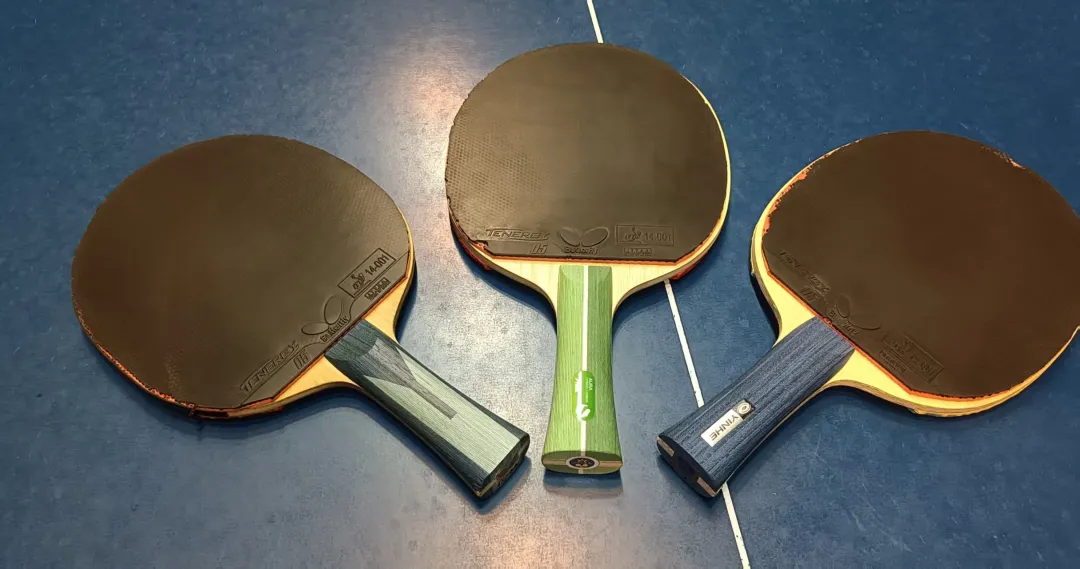
Is this why Timo Boll re-glues multiple fresh rubber sheets before every practice session, using two new sheets per training? Extravagant!
On the physical side, big tournaments require careful nutrition loading — and strict avoidance of unfamiliar food.