Yinhe T-11+ Review: A Featherlight Balsa-Carbon Hitting Machine
Pros
- Exceptionally light and mobile, one of the lightest offensive blades around
- Fast balsa-carbon speed with more control than typical carbon blades
- Stiffness makes hitting through spin and flat smashing easy
- Excellent flicking and a stable short game for such a fast blade
- Strong, spinny chopping and very good speed both close and far from the table
- Outstanding value and consistently well made
Cons
- Heavy topspin looping is the clear weakness
- Fragile surface that can splinter, must be sealed before use
- Passive blocks can lack rebound, rewards an active punch
- Not beginner friendly, the short game needs concentration with fast rubbers
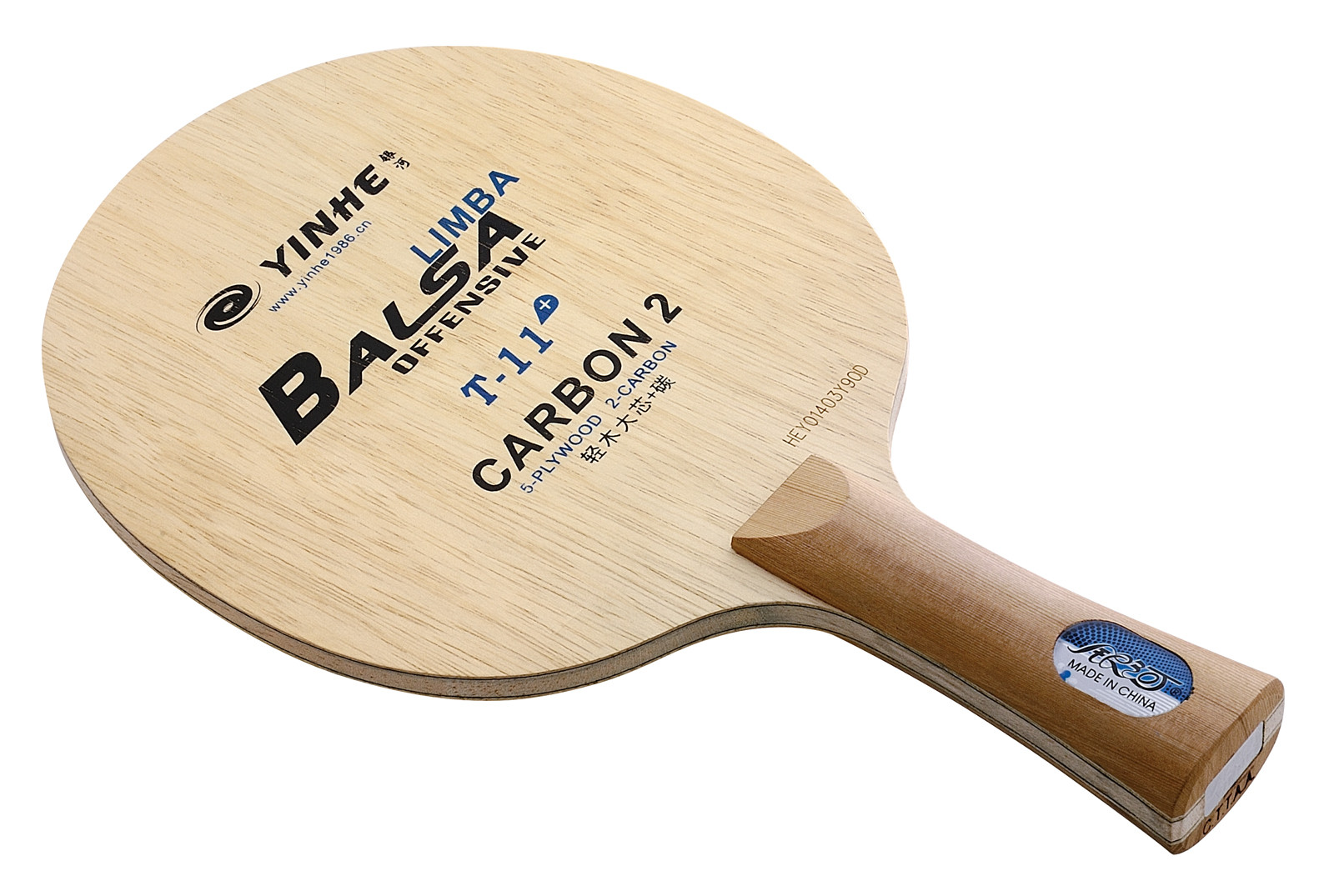
The Yinhe T-11+ (Yinhe is also sold under the names Galaxy and Milkyway) is one of those budget blades that has earned a near cult following among value hunters and Amazon shoppers. The appeal is simple: a balsa core wrapped in carbon and thin wood outer plies, which makes a blade that is fast yet astonishingly light, often quoted around the low to high seventies in grams. That mix promises easy mobility and quick, flat power at a fraction of the price of premium carbon blades. The picture here pulls first-hand experiences from three independent communities, Revspin, TableTennisDaily and the OOAK Forum, to separate the marketing from the reality and pin down which players this blade actually suits.
Performance
The T-11+ lives on the marriage of speed and low weight. Owners across all three sources call it fast, very light and surprisingly controllable for a carbon blade. On Revspin the recurring line is a very fast balsa blade with soft carbon layers that still allows good control, with more lateral control than typical carbon blades. The TableTennisDaily owner boils it down to fast speed, very good control and very light, and that summary echoes everywhere. Flat, direct attacking is where it shines. On the OOAK Forum, league player so_devo, who plays a low arc loop drive forehand, found the stiffness made hitting through spin easy and called it a good flat hitters blade. He rated flicking excellent and the blade really stable and mobile off its light weight, with a superb short game. After more sessions he revised his speed read upward, deciding it was actually quite a bit faster than his reference Avalox BT555, and it became his match setup. Smashing and blocking land in the same column. Reviewer after reviewer singles it out for hitting, smashing and blocking, and Kolev on OOAK called smash great and block flawless. One caveat on blocking: so_devo noted some blocks lacked rebound, so the blade rewards a punchy, active block over a passive one.
Heavy topspin is the clear weakness. The T-series is built around a stiff, low dwell, fast rebound feel. Der_Echte on TableTennisDaily warned these carbon blades have near zero dwell and fast rebound, so you need almost mushy soft rubbers to get any kind of control, and that the result is hard to use for a flexible spin based game. Kolev felt an obvious lack of spin from the stiffness, though so_devo, with his flatter strokes, actually pulled more spin than from his more flexible reference blade, which shows how much the outcome rides on technique. Rubber pairing is therefore critical. The TableTennisDaily owner stresses the T-11+ is a lot better with soft rubbers and not really good with Chinese hard rubbers like Hurricane III NEO and Skyline TG III NEO. Revspin reviewers agree, steering you toward rubbers that are not too fast, otherwise short balls get hard to control. Get the pairing right and the blade holds reasonable power at two to three metres from the table and chops magnificently at distance, with real dig into the ball.
What Reviewers Agree (and Disagree) On
The communities agree firmly on the core identity: light, fast, stiff, great for hitting, smashing and blocking, and not a natural spin loop blade. They agree too that it needs soft rubbers and must be sealed before use. The split is over spin and feel. Kolev hit an obvious lack of spin from the stiffness, while so_devo, a flatter loop drive player, pulled more spin than from a more flexible blade. The lesson is that the T-11+ rewards direct contact and punishes players who lean on long dwell and brush loops. Weight spreads a little too: figures run from around seventy grams up to the high seventies, with OOAK admin haggisv noting most examples he has seen sit in the high seventies. Durability splits the room. tt2u reported splinters after only a few sessions, while Kolev and so_devo had no splinter problems at all after multiple regluing, the difference coming down to sealing and glue choice.
Who Should Buy It
Reach for the T-11+ if you are a flat hitter, a pips-out or combination player, a blocker, or a power loop driver who attacks through the ball from distance and wants serious speed without weight. It is also a strong value option for anyone curious about balsa-carbon feel on a tight budget. Pair it with soft to medium rubbers rather than hard, fast Chinese rubbers, and seal the surface before gluing to head off splintering. Stay away if your game runs on heavy, spinny topspin loops with long dwell, if you want a forgiving beginner blade, or if you prefer a passive blocking style, since the T-11+ rewards an active punch. As more than one reviewer puts it, a looper chasing maximum spin should look elsewhere.
FAQ
Is the Yinhe T-11+ good for looping?
Not for heavy topspin loops. Reviewers across Revspin and the forums agree looping is the blade’s biggest weakness, down to its stiff, low dwell, fast rebound feel. It rewards flatter loop drives and direct contact over slow, spinny brush loops. If maximum spin is your priority, look elsewhere.
How heavy is the T-11+ and what is it made of?
It is a balsa-cored blade with carbon and thin wood outer plies, a five wood plus two carbon construction. It is very light, reported weights running from around seventy grams to the high seventies. The balsa core is what keeps it so light despite the speed.
What rubbers should I use on the Yinhe T-11+?
Soft to medium rubbers work best. Owners report it pairs well with softer European rubbers and gets harder to control with fast Chinese hard rubbers like Hurricane III NEO. Softer sponges tame the short game and keep the speed in check.
Does the T-11+ need to be sealed?
Yes. Multiple reviewers warn the surface is fragile and can splinter when you pull rubber off, so seal the blade before gluing. Those who sealed it and used careful glue reported no splinter problems even after several rubber changes.
Is the T-11+ suitable for beginners?
It is not the most beginner friendly choice. It is fast, and the short game demands concentration, especially with quick rubbers. One experienced reviewer described it as not a beginners blade. Intermediate and advanced flat hitters and blockers will get the most from it.