Stiga Allround Classic Review: The Control Benchmark That Still Teaches the Game
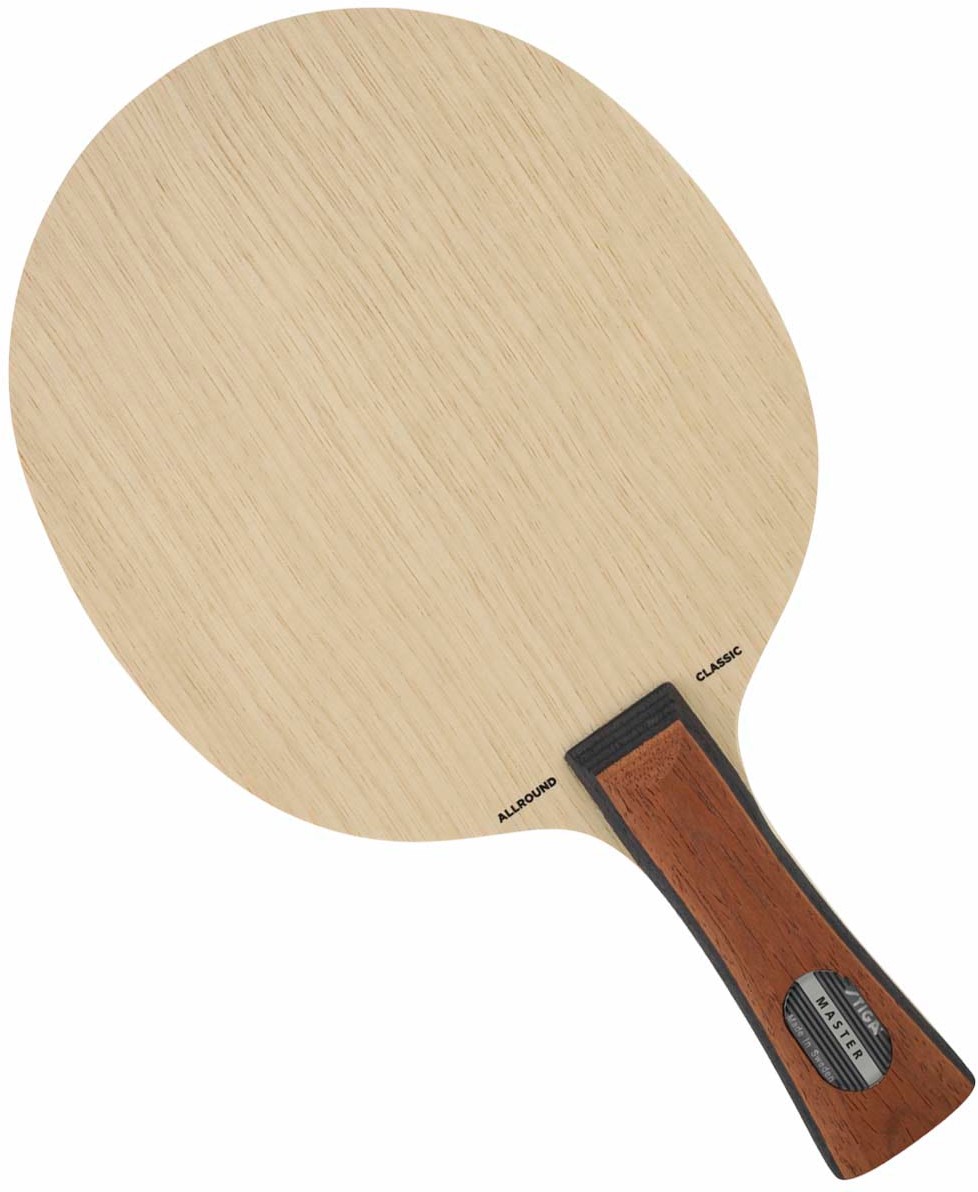
Pros
- Class-leading control and a long dwell time — the soft, all-wood feel gives you exactly what you put into the shot
- Honest vibration and feedback that helps you learn strokes and master touch play
- Shifts to suit your game by rubber choice: classic rubbers for all-round, tensors for offense, tacky Chinese rubber for spin
- Outstanding value and longevity — many owners keep it for years and simply mount faster rubbers as they improve
Cons
- Slow by modern standards — there is little inherent power, especially away from the table
- A medium-small sweet spot that asks you to supply your own pace and good contact
- Not the blade for a pure, power-first attacking game from distance
Few blades have put more people into real table tennis than the Stiga Allround Classic. A plain five-ply, all-wood blade rated for an all-round game, it has been the coaches’ default for beginners for decades. This review pulls together three independent English-language sources — the Revspin community database, r/tabletennis discussion, and the TableTennisDaily equipment reviews — to explain why a slow, soft blade is still one of the most recommended sticks in the sport.
Performance
Control defines this blade, not speed. The soft, flexible all-wood build gives a long dwell time and plenty of touch, which is the whole reason coaches reach for it: the feedback is honest, so you feel whether you struck the ball cleanly, and the short game and delicate touch shots come far easier to learn. Revspin’s community ratings say the same thing, with control around 8.9 and consistency around 8.6 out of 10 against a speed of roughly 6.6, and the manufacturer’s own numbers put it near the bottom for speed and near the top for control. Reviewers keep calling it ‘medium speed with some vibration’ on a medium-small sweet spot that ‘gives you exactly what you put into the shot.’ The price is power. It is slow by modern standards with little inherent pace, especially away from the table, so distance power-looping is off the table. Its real trick is how it shifts with rubber choice: classic rubbers for a safe all-round game, tensors for more offense, tacky Chinese rubber for spin, slower or thinner sponge for control and defense.
What Reviewers Agree (and Disagree) On
All three sources agree on the essentials: strong control, fine feel and feedback, and a lot of value, all bought with low speed. The only split is over who should keep it and for how long. Some players treat it as a beginner’s stepping stone to swap out once technique catches up; others, including control and blocking players, keep it for years and just mount faster rubbers as they improve. No source calls it fast, and none argues it is anything but a control-first blade.
Who Should Buy It
Buy the Allround Classic if you are a beginner or developing player building correct technique, feel and touch, or a control-oriented all-round or blocking player who puts placement and feedback ahead of speed, especially on a budget. The honest feedback and long dwell do real teaching work, and faster rubbers keep the blade relevant for years as your game grows. Skip it if you are an established attacker who wants inherent pace and power from distance; it will read as too slow, and a stiffer OFF or carbon blade suits you better.
FAQ
Is the Stiga Allround Classic good for beginners?
Yes. It is one of the most coach-recommended beginner blades. The high control, honest feedback and long dwell time make it a natural for developing strokes and touch, and it costs very little.
Is it too slow to keep as I improve?
Not necessarily. Plenty of players keep it for years and add pace through faster rubbers, whether tensors or tacky Chinese rubber for spin. If you want speed from the blade itself, you will eventually move to a stiffer or carbon blade.
What rubbers pair well with it?
It leans heavily on rubber choice: classic rubbers for an all-round game, tensors for offense, tacky Chinese rubber for spin, slower or thinner sponge for control and defense.
Can advanced players use it?
Yes. Control-oriented and blocking players who prize feel and placement over speed use it happily. It just won’t carry a power-first attacking game from distance.