Stiga Allround Classic vs Yasaka Sweden Extra: Which Should You Buy?
| Stiga Allround Classic | Yasaka Sweden Extra | |
|---|---|---|
| Our rating | 8.4/10 | 8.7/10 |
| feel | soft, high control | soft-medium, high control |
| handle | FL/ST/AN | FL/ST |
| plies | 5W | 5W (all wood) |
| speed | ALL | ALL+ |
| thickness_mm | 5.1 | 5.7 |
| weight_g | 75 | 85 |
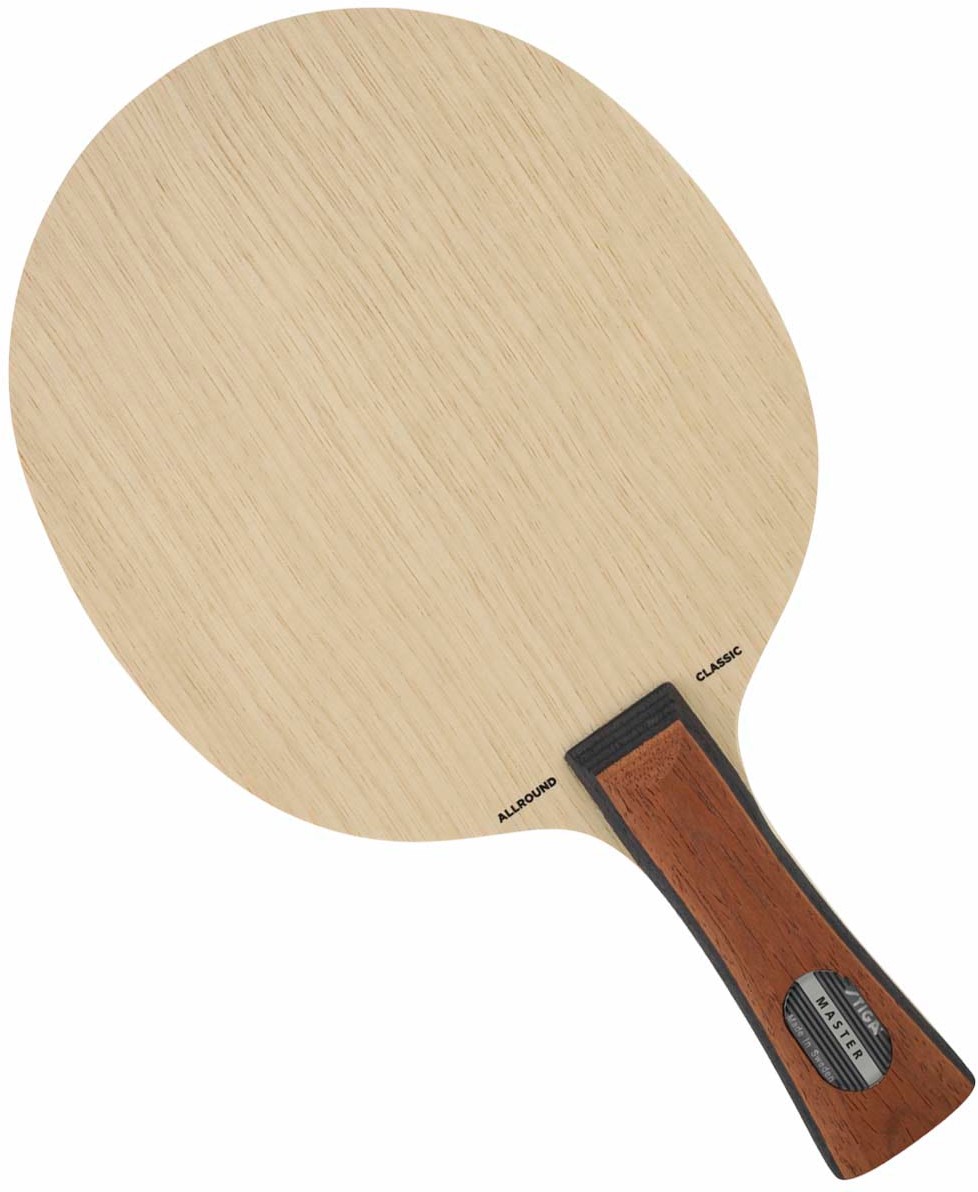
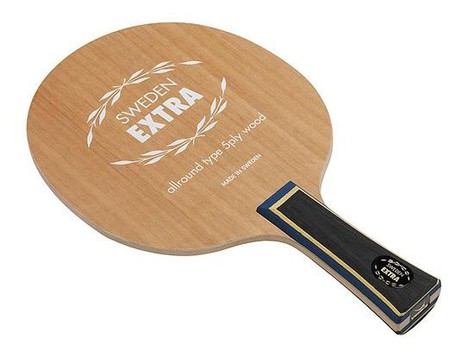
We may earn a commission from links on this page. Learn more.
The Highest-Rated Blade in This Entire Comparison Set
Across every pairing in this batch, the Yasaka Sweden Extra’s 8.7 overall rating is the highest of any single product — ahead of the Allround Classic’s already strong 8.4, and ahead of every other blade and rubber covered elsewhere in this data. It also does something no other blade in these comparisons manages: it leads the Allround Classic on every single measured axis. That’s worth being clear-eyed about rather than treating as a simple “buy the better one” story, because the size of each lead varies enormously, and the qualitative pros/cons text reveals at least one place where the numbers don’t tell the full story.
Speed and Weight: the Two Gaps That Are Actually Large
Of the six axes, two show real, substantial differences. Speed runs 1.2 points in the Sweden Extra’s favor (7.8 vs 6.6), matching its ALL+ classification against the Allround Classic’s plain ALL rating — a rare case in this dataset where the marketing label and the measured gap agree. Weight is the bigger number: a 3.6-point gap on the radar (2.8 vs 6.4) corresponds to a real 10-gram difference, 75g for the Allround Classic against 85g for the Sweden Extra. That extra weight is the most legitimate physical reason to hesitate before switching — more mass means more fatigue over long sessions and a different swing feel for anyone specifically drawn to the Allround Classic’s exceptional lightness.
Control, Stiffness, Hardness: Small Leads That Shouldn’t Drive the Decision
Control (9.1 vs 8.9), stiffness (3.6 vs 3.1), and hardness (4.8 vs 4.5) all favor the Sweden Extra by 0.2 to 0.5 points — real numbers, but small enough that you shouldn’t expect a dramatic in-hand difference on any one of them alone. If these were the only differences between the two blades, this wouldn’t be much of a comparison at all.
Consistency: a Genuinely Elite Number on Both Sides
Consistency is 9.3 for the Sweden Extra against 8.6 for the Allround Classic — both are among the steadiest blades in this entire dataset (only the Allround Classic Carbon’s 9.6 rates higher), and the 0.7-point gap between them is real but modest given how high both scores already are. Neither blade should surprise you with an unpredictable shot.
The One Place the Allround Classic Still Wins, According to Sweden Extra’s Own Review Base
Here’s the honest caveat that keeps this from being a clean sweep: the Sweden Extra’s own con list states plainly that “ball feedback is a little less pronounced than the Stiga Allround Classic for players who love heavy vibration.” None of the six radar axes here measure that specific quality directly, but it’s a real, sourced difference — if the reason you love the Allround Classic is the tactile, high-vibration connection to the ball rather than its measured control or consistency numbers, the Sweden Extra’s own reviewers admit it doesn’t fully replicate that feeling, even while beating the Allround Classic on every number that is measured.
Handle Options: a Small Practical Difference
The Allround Classic ships in FL, ST, and AN handles; the Sweden Extra is only listed in FL and ST. If an anatomic handle is part of your setup and non-negotiable, that alone settles the question regardless of the axis data.
Should You Switch?
For most players who’ve outgrown the Allround Classic’s control-first, beginner-oriented ceiling, the Sweden Extra is a defensible upgrade — its own pros describe it as offering “a slightly faster, more direct response than the Stiga Allround Classic, without losing control,” which is exactly what the axis data confirms: modest gains in speed and control together, not one at the expense of the other. The two legitimate reasons to stay on the Allround Classic are the vibration-feedback preference noted above, and a specific need for its lighter 75g build or AN handle option.
Bottom Line
If you want the strongest all-around blade of this pairing on the numbers, the Sweden Extra earns that with a full sweep of every axis and the highest overall rating in this entire comparison set. But “wins every axis” doesn’t mean “wins every reason to buy a blade” — weight, handle shape, and the specific tactile feedback the Allround Classic delivers are all real, sourced considerations that don’t show up on a radar chart.
Frequently asked questions
Is the Yasaka Sweden Extra really better than the Allround Classic on everything?
On every measured axis, yes, though the gaps range from tiny (control, hardness) to substantial (speed, weight).
Does the Allround Classic have any advantage left?
Yes — per the Sweden Extra's own con list, its ball feedback is less pronounced than the Allround Classic's for players who specifically love heavy vibration feedback, and the Allround Classic is 10 grams lighter.
Is the Sweden Extra good for beginners?
Yes, its bestFor description names developing and intermediate control players as its core audience, similar to the Allround Classic, though it carries a bit more speed and weight.
Which handle options does the Sweden Extra offer?
FL and ST only, versus the Allround Classic's FL, ST, and AN — worth checking if you rely on an anatomic handle.