Stiga Allround Classic vs Stiga Offensive Classic: Which Should You Buy?
| Stiga Allround Classic | Stiga Offensive Classic | |
|---|---|---|
| Our rating | 8.4/10 | 8.4/10 |
| feel | soft, high control | thin, flexible, soft-medium springy all-wood with strong vibration and feedback |
| handle | FL/ST/AN | FL/ST/AN (WRB hollow-handle version also sold) |
| plies | 5W | 5W (all wood) — outer veneers commonly described as koto or limba over spruce and ayous |
| speed | ALL | OFF- (offensive minus; community-rated, occasionally felt as ALL+ to OFF) |
| thickness_mm | 5.1 | 5.4 |
| weight_g | 75 | 83 |
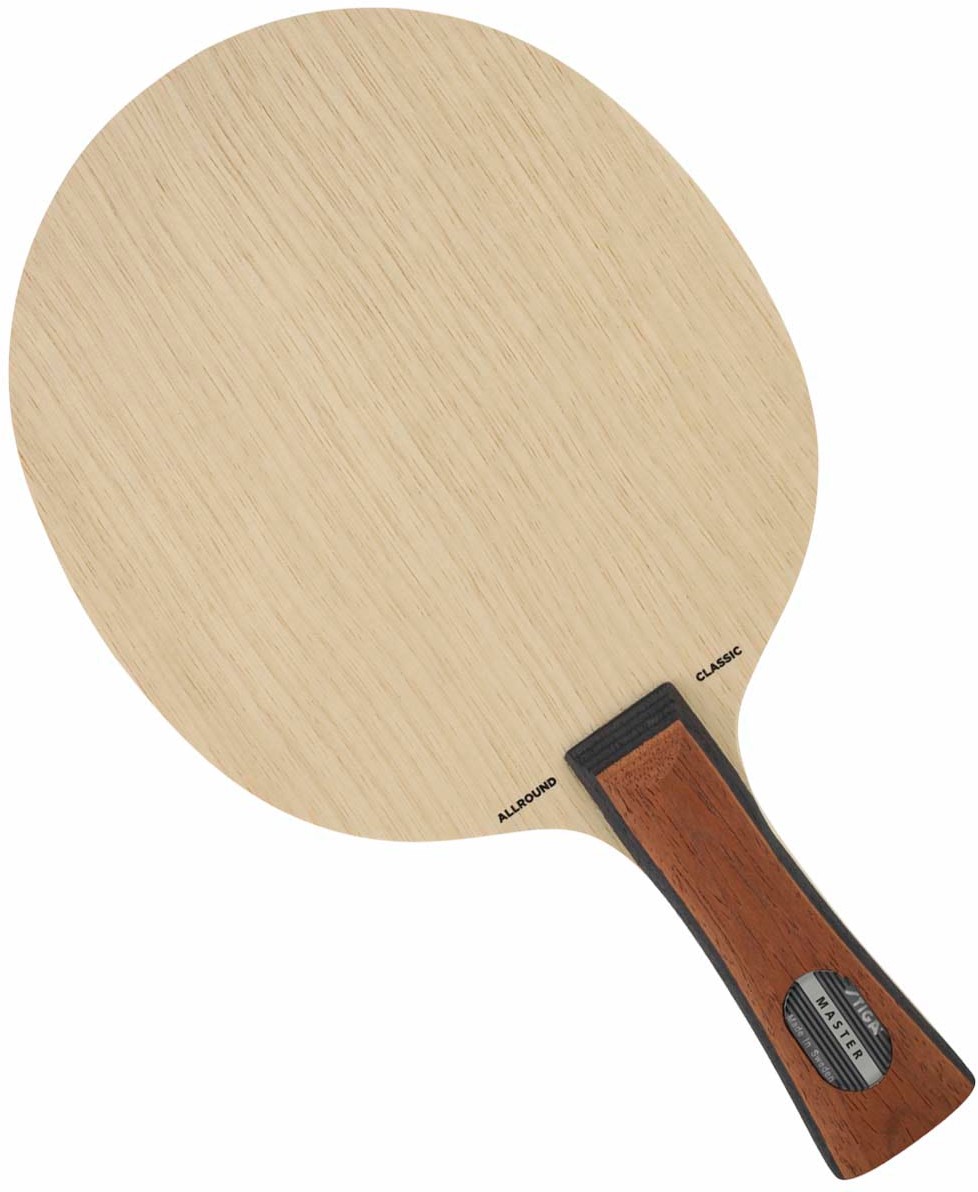
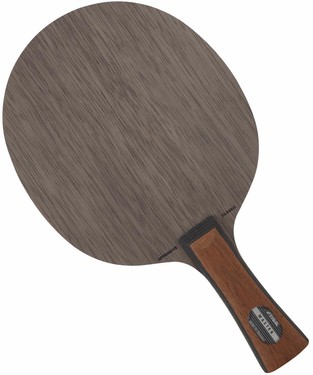
We may earn a commission from links on this page. Learn more.
Two Blades, One Identical Overall Score
Both blades post the same 8.4 overall rating, but unlike some ties in this dataset, the underlying axis gaps here are all real and moderate rather than one huge outlier. The largest is weight, at 2.9 points (Allround Classic 2.8 vs Offensive Classic 5.7); the smallest meaningful gap is control, at 0.6 points (8.9 vs 8.3). Nothing here is a wash — every axis moves the same direction consistently: the Offensive Classic is faster, stiffer, harder, and heavier, while the Allround Classic is more controlled and more consistent. That’s a coherent, predictable trade-off, not statistical noise.
Weight Is the Biggest Number, and It’s a Real 8 Grams
A 2.9-point gap on the weight axis translates to a genuine 8-gram difference in the spec sheet — 75g for the Allround Classic against 83g for the Offensive Classic. Eight grams doesn’t sound like much until you’re two hours into a training session; it’s a meaningful part of why the Allround Classic remains the more common recommendation for absolute beginners, who benefit from less mass to control while learning stroke timing.
Speed: a Real 1-Point Difference, Not a Rounding Error
The Offensive Classic rates 7.6 on speed against the Allround Classic’s 6.6. A full point is a genuine, feel-able difference in this kind of aggregated rating — this isn’t the near-tie you sometimes see in this dataset. Combined with its “high throw” (per its own pros list) that “makes looping and topspin easy,” the extra speed on the Offensive Classic shows up specifically in attacking strokes rather than blocks or pushes, where both blades perform close to the table without much separation.
Stiffness and Hardness Both Favor the Offensive Classic, Modestly
Stiffness (3.1 vs 3.8) and hardness (4.5 vs 5.4) both run about 0.7 to 0.9 points in the Offensive Classic’s favor. Worth noting: even without carbon plies, the Offensive Classic’s thin, flexible-yet-springy wood construction still measures firmer than the soft Allround Classic — its “linear, predictable speed that scales with how hard you swing” (per its pros) comes from that added stiffness working with its flex, not against it. Neither gap is huge on its own, but together with the speed gap they paint a consistent picture: this is the more responsive, higher-ceiling blade of the pair.
Consistency and Control: the Allround Classic’s Compensation
The Allround Classic answers back with a 0.7-point consistency edge (8.6 vs 7.9) and a 0.6-point control edge (8.9 vs 8.3) — both real but modest, and the smallest deltas in this comparison. Don’t expect a night-and-day difference in forgiveness between these two; both are excellent control blades by any reasonable standard, and the Allround Classic’s advantage here is a matter of degree, not category.
The Upgrade Path Is Written Directly Into the Offensive Classic’s Own Description
This is the one pairing in this dataset where the “next step” language is completely literal: the Offensive Classic’s bestFor explicitly names its audience as including “Allround Classic graduates after a touch more pace without giving up feel.” That’s not an inference — it’s how the blade is positioned by its own reviewer base, gathered from sources including Revspin, TableTennisDaily, and Megaspin. If you started on the Allround Classic, found its 6.6 speed rating limiting, but don’t want to give up the wood-forward touch and feedback that drew you to it in the first place, the Offensive Classic is the documented next rung on that ladder — not a different kind of blade, but a slightly quicker version of the same idea.
When Staying on the Allround Classic Makes More Sense
If you’re not yet finding the Allround Classic’s speed limiting — if your matches are still being decided by placement and consistency rather than raw pace — the axis data doesn’t support switching. You’d be trading a 0.6-point control edge and a 0.7-point consistency edge for a 1-point speed gain and 8 extra grams of blade weight, a trade that only pays off once your technique is asking for more than the Allround Classic can supply.
A Caution on the Offensive Classic’s Known Weakness
Worth factoring in regardless of which you choose: the Offensive Classic’s thin top veneer “can splinter at the edges and may need sealing.” The Allround Classic doesn’t carry that specific warning in its own con list. If you buy the Offensive Classic, budget for edge sealing as routine maintenance, not an exception.
Bottom Line
This comparison is unusually clean: every axis points the same direction, the gaps are real rather than noise, and the manufacturer’s own positioning tells you exactly when to make the switch. Stay on the Allround Classic while you’re still building technique and value control above all else. Move to the Offensive Classic once you want more pace and higher throw without giving up the wood-forward feel — that’s precisely the upgrade path its own bestFor description names.
Frequently asked questions
Is the Offensive Classic really the "upgrade" from the Allround Classic?
Yes — its own bestFor description explicitly names Allround Classic graduates after a touch more pace without giving up feel as part of its target audience.
How much heavier is the Offensive Classic?
About 8 grams (83g vs 75g), which shows up as the largest single axis gap between these two blades.
Is the control difference between them significant?
Not hugely — it's the smallest gap in this comparison (0.6 points), so both remain genuinely high-control blades.
Does the Offensive Classic need special care?
Yes — its thin top veneer can splinter at the edges, so sealing it is worth doing as routine maintenance rather than an afterthought.