Stiga Allround Classic vs Stiga Clipper Wood: Which Should You Buy?
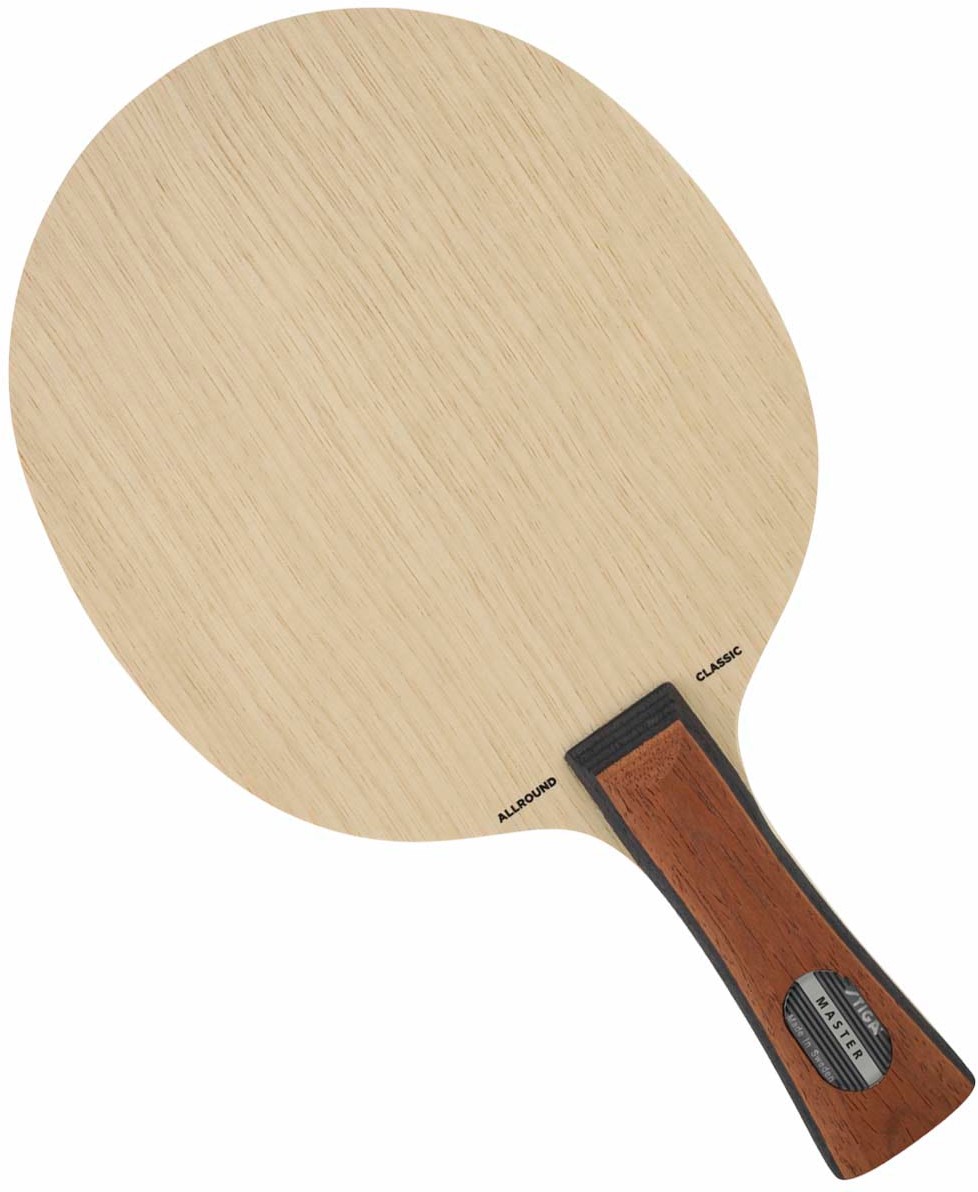
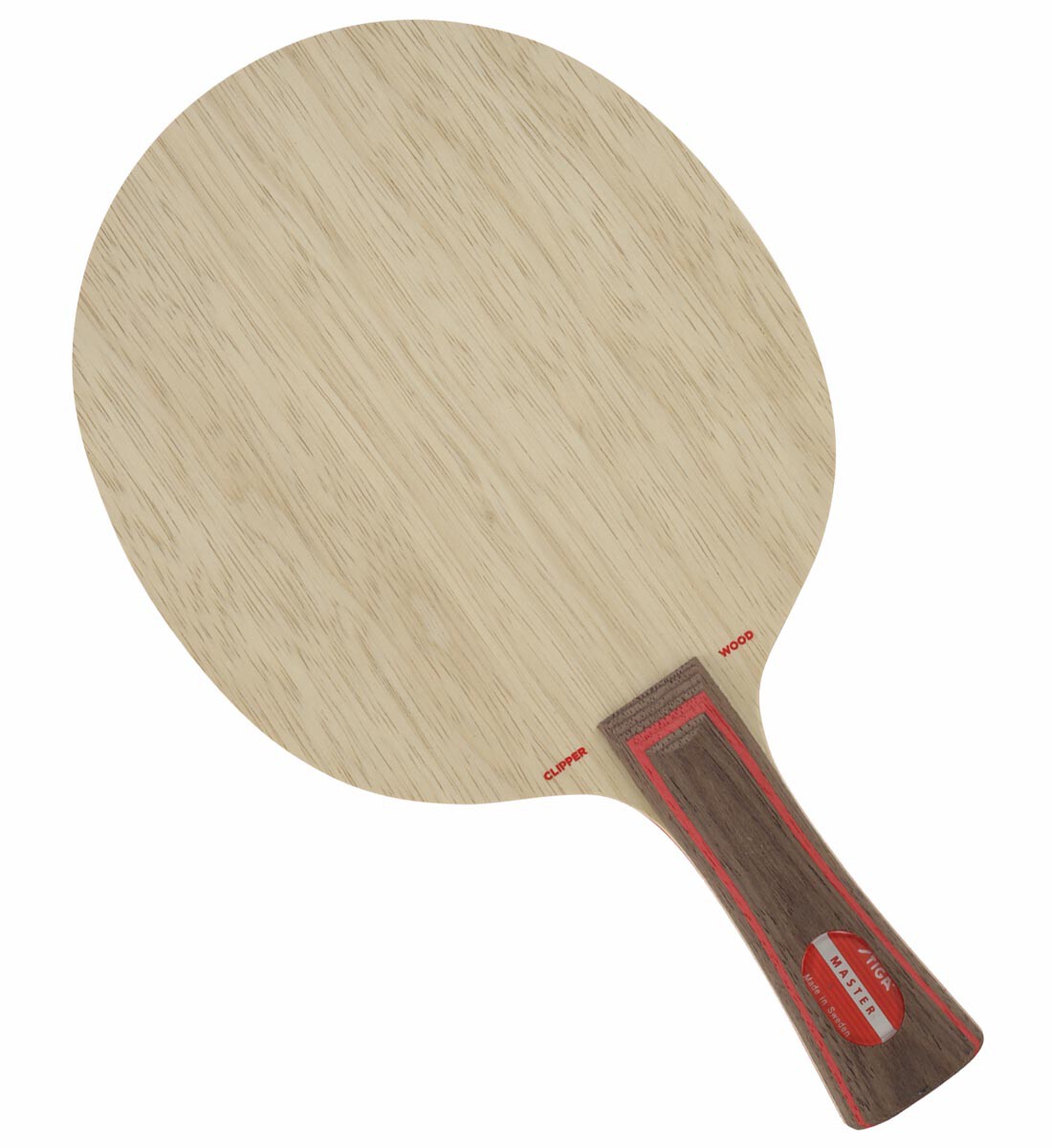
| Stiga Allround Classic | Stiga Clipper Wood | |
|---|---|---|
| Our rating | 8.4/10 | 8.4/10 |
| Feel | soft, high control | solid, medium-stiff, hard fast all-wood with a big sweetspot |
| Handle | FL/ST/AN | FL/ST/AN/PEN |
| Plies | 5W | 7W (all wood) - limba outer plies over an ayous core, no carbon or synthetic layers |
| Speed | ALL | OFF |
| Sponge thickness | 5.1 mm | 6.3 mm |
| Weight | 75 g | 90 g |
We may earn a commission from links on this page. Learn more.
Same Overall Rating, Wildly Different Profiles
Both blades land at 8.4 overall, but that tie is the least useful number here. Look at the axis deltas and you’ll find the largest weight gap in this dataset (5.4 points, Allround Classic at 2.8 vs Clipper Wood at 8.2), a 2.8-point stiffness gap, and a 2.0-point speed gap. Two blades sharing an overall score can still be built for almost opposite jobs, and that’s exactly the case here.
Weight Is the Biggest, Most Physical Difference
The 5.4-point weight-axis gap corresponds to a real 15-gram difference in the spec sheet: 75g for the Allround Classic against 90g for the Clipper Wood. That’s not a rounding difference — it’s enough that Clipper Wood’s own con list flags it directly: “runs heavy and can cause fatigue over long sessions.” If you play long matches or multiple sessions in a day, that weight difference will show up in your arm before it shows up in your shot quality. The Allround Classic’s lightness (2.8 on the weight axis, among the lightest blades in this whole lineup) is part of why it’s recommended for beginners building strokes — less mass to manage while you’re still learning timing.
Speed: a Real 2-Point Gap, With an Honest Asterisk
Clipper Wood rates 8.6 on speed against the Allround Classic’s 6.6 — a genuine 2-point gap, one of the largest in this comparison. But take the Clipper Wood’s own listed con seriously: reviewers note its “real-world speed sits in OFF, not the OFF+ its reputation suggests.” In other words, even the faster of these two blades is described by its own user base as underdelivering slightly against its reputation — it’s faster than the Allround Classic without question, but don’t expect it to hit like a modern OFF+ blade just because of the extra plies.
Why Clipper Wood Is Still a “Control Blade” Despite the Speed Gap
This is the least intuitive part of the data: despite outscoring the Allround Classic by 2 full points on speed, Clipper Wood’s own bestFor describes it for players who “prioritize control, feeling and a big sweetspot over raw top-end speed” and who need to “pair the blade with faster European or Japanese rubbers to unlock its power.” The extra speed in the Clipper Wood’s numbers is headroom built into the blade via its 7-ply all-wood construction (versus the Allround Classic’s 5-ply), not power that shows up automatically. You still have to supply it with rubber choice and technique — the blade itself remains, per its reviewer base, a control-and-feel platform first.
Stiffness and Hardness: Real, but Secondary
The stiffness gap (3.1 vs 5.9, a 2.8-point difference) and hardness gap (4.5 vs 5.7, 1.2 points) both point the same direction: Clipper Wood is the firmer, more solid-feeling blade of the two, with a larger sweet spot per its own pros list (“big sweetspot and excellent, confidence-building control”). The Allround Classic’s softness is what gives it the “wood-like touch” and long dwell time its own pros describe — you feel more of the ball longer before it leaves the blade.
Consistency and Control: the Small Gaps That Don’t Matter Much
Control is nearly tied (8.9 vs 8.5, a 0.4-point gap) — both blades are genuinely excellent at control, and you shouldn’t pick between them expecting one to be meaningfully more forgiving than the other on that axis alone. Consistency favors the Allround Classic by 1.2 points (8.6 vs 7.4), a real but moderate edge — worth knowing, but not the deciding factor most players will care about compared to the weight and speed gaps above.
The Realistic Migration Path
The bestFor language on both sides maps a common upgrade path: the Allround Classic is aimed at “beginners transitioning to their first custom setup,” while Clipper Wood targets “improving intermediates to advanced players.” If you started on the Allround Classic and are now finding its 6.6 speed rating limiting against faster opponents, Clipper Wood is a defensible next step — you gain 2 points of speed and a bigger sweet spot, at the cost of 15 grams of added weight and a firmer, less forgiving-feeling wood. If fatigue or touch-play precision matters more to you than top-end pace, that trade isn’t worth making, and the Allround Classic remains the better tool even at a higher level of play.
Bottom Line
These are not interchangeable “classic wood blades.” Clipper Wood is heavier, stiffer, and faster on paper, but its own reviewer base still treats it as a control-first tool that needs rubber help to access real power. The Allround Classic is lighter, softer, and more consistent, built for players who haven’t yet outgrown a pure feel-and-touch platform. Pick based on the weight and speed gaps — the control difference between them is close enough to ignore.
Frequently asked questions
Is Clipper Wood actually faster than the Allround Classic?
Yes, by a real 2-point margin (8.6 vs 6.6) — though Clipper Wood's own reviewers note its real-world speed sits closer to OFF than the OFF+ its reputation suggests.
Which blade is lighter?
The Allround Classic, at 75g versus Clipper Wood's 90g — a 15-gram gap that shows up as the largest single difference in the axis data.
Is Clipper Wood a good control blade despite its higher speed rating?
Yes — its own bestFor description still frames it as a control-and-feel blade for loopers who pair it with faster rubber to unlock power, not a default fast-hitting weapon.
Should I upgrade from the Allround Classic to Clipper Wood?
Only if speed and a bigger sweet spot matter more to you than weight and fatigue over long sessions — the two blades trade almost directly on those axes.