Top Penhold Blades for Amateur Players Revisited, Part 2
6. Fan Zhendong ALC
This is the best-selling penhold blade in Japan domestically — which says a lot. Whether you’re a shakehand or penhold player, wouldn’t you at least try the blade of the reigning Grand Slam champion? I’m not saying the blade itself is all that extraordinary; I’m saying it has an almost irresistible pull.
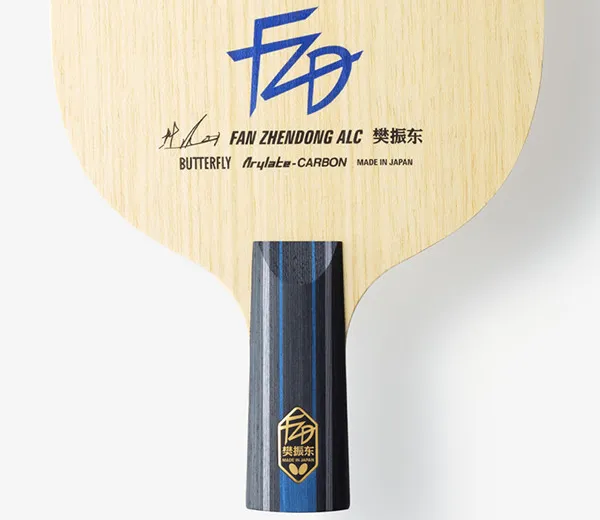
The Fan Zhendong ALC penhold represents a style where looping and fast attack are equally valued — similar to the Zhang Jike ALC (used by Zhao Zihao and Wong Chun Ting) and the Lin Gaoyuan ALC (used by Zheng Peifeng). After the Lin ALC was discontinued, the Fan ALC with its similar ball-hugging feel naturally became the top choice. To be more precise, it’s still best suited to an all-round loop style using the reverse side. If your game leans more toward fast attack, there are better blade options.
7. Taksim
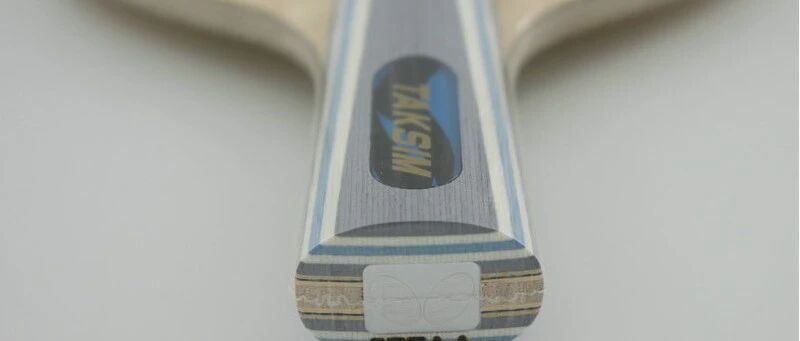
Famous as the “King of Butterfly” blade, it has sold phenomenally well — arguably Butterfly’s best-selling blade in the Chinese market. You can stock up and always move them. While no current pro players use it, which makes calling it “top tier” feel a stretch — but with those sales numbers, can you really say it isn’t?
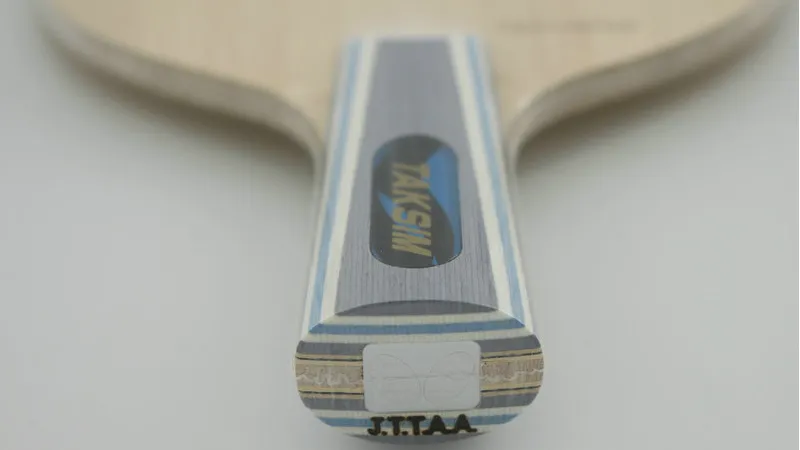
It’s an artifact of a certain era. For single-side penhold push-and-attack play, nothing fits better. The feel is crisp and transparent. The paulownia large core absorbs shock beautifully. The explosive power is outstanding — with Hurricane, that one forehand punch off a loop is genuinely fast. Of course, if you want to loop out longer arcs with less effort, I still think the Chongmingniao (Phoenix) is more suited — its slightly thinner construction improves spin production and controllability.
8. Swat
The Swat represents an “old reliable” attitude and philosophy. Why not the Victas Ni Xialian? Granted, the blade now bearing her name has more prestige. But I always felt that micro-tuning via charred wood layers to create subtle differences isn’t all that compelling. In terms of raw sales, the pure-wood seven-ply Swat is the more legitimate top seller — it has consistently ranked among the top three penhold blade sellers in Japan for years.
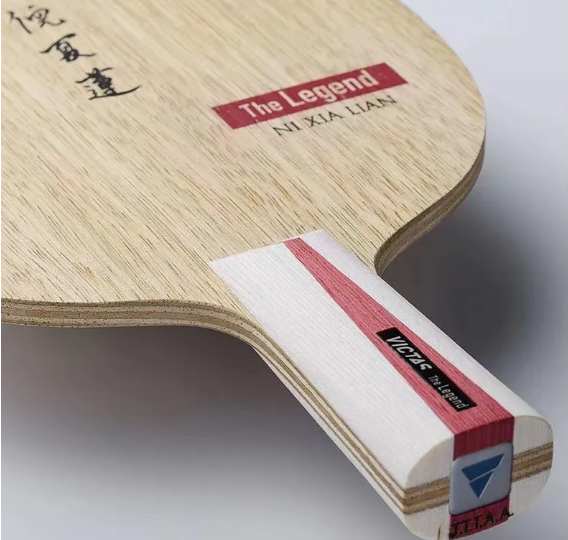
Being a top seller doesn’t necessarily mean being expensive — it can simply mean being widely trusted. This blade can be used with the reverse side too, but like the current Stiga CL, it’s competent but unremarkable — you always have better options. More often than not it functions as a training blade.
That said, from the perspective of a two-sided pimple-only style, it’s actually excellent — versatile enough for all sorts of tricky variation.
9. Super Zhang Jike ZLC
The Super ZLC fiber construction isn’t just a gimmick, and it isn’t solely about the “Super Zhang Jike” name. In practice, it maintains high speed and a large sweet spot while minimizing susceptibility to incoming spin — meaning its ability to generate spin is modest (unless the rubber itself is very spin-heavy), but it gets the ball on the table and accelerates with ease, effectively neutralizing the opponent’s spin.
Users include Wong Chun Ting and Zhuang Zhiyuan. In the amateur penhold world, it’s also among Butterfly’s top-selling blades in China despite its high price.
10. Innerforce Layer ZLC
The all-around king — affectionately nicknamed “Little Yellow Man.” Notable users: Li Jiao and Felix Lebrun. There was once a 4,000-yuan penhold Innerforce Layer ZLC player-edition in front of me, but since I play shakehand I didn’t cherish it — and only regretted it afterward.
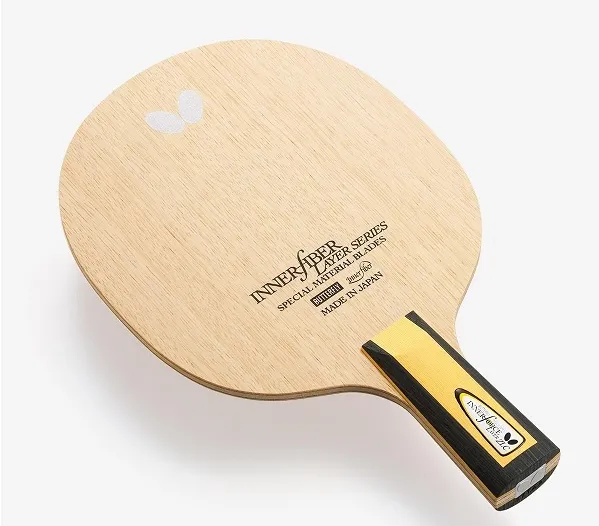
Li Jiao, a two-time European Championship women’s singles winner who once dominated European women’s table tennis, used the Innerforce Layer ZLC to make the best possible case for it as a blade that suits both looping and attacking. And before signing with Tibhar, the younger Lebrun also used this penhold version.
The shakehand Innerforce Layer ZLC was once the blade of choice for the legendary Zhang Yining, world champion Liu Shiwen, as well as Lee Sangsu, Koki Niwa, Mattenet, and others. The penhold version is well worth considering too.