Heima's Custom Blade Lineup: A Complete Rundown with Rubber Pairing Tips
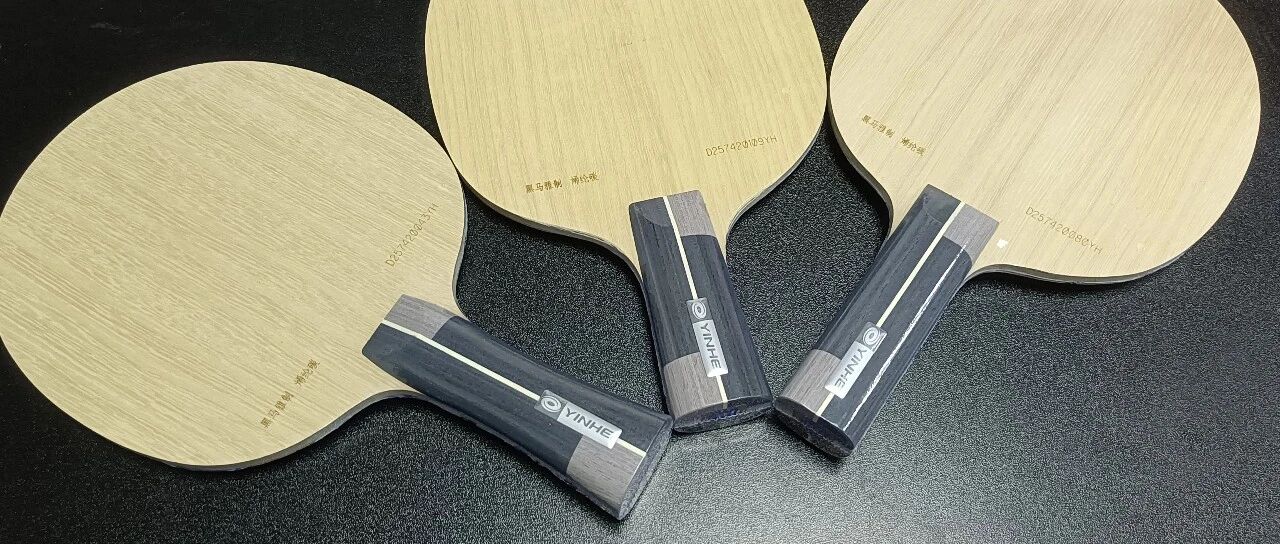
Some club members have been asking me for a while to write a summary of all my own blades and my thoughts on pairing rubbers with them. Here it is — a kind of stock-take, and a way to move forward with a clearer head.
1. Heima Custom PLC
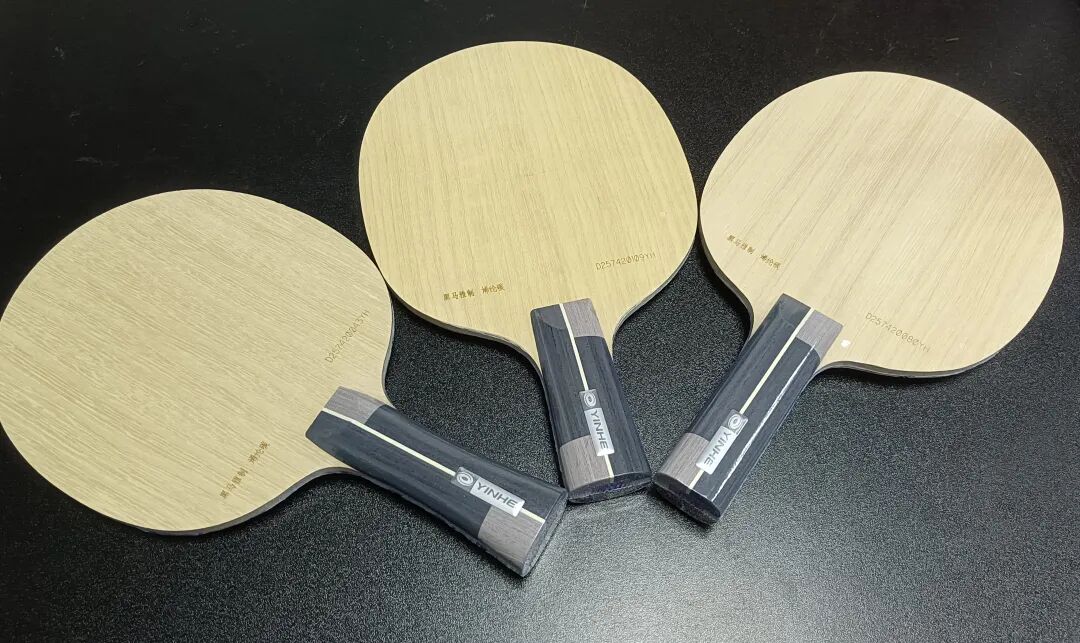
Regardless of whether you like the feel or have mixed reactions, the custom shop at Yinhe’s Blue Gold Workshop has maintained its highest standard throughout. From wood selection to fiber materials and bonding, it avoids the rigid, wooden feel of the commercial versions and adds a lot of solidity.
The idea behind the Heima PLC was to build a version of the Mizutani Jun ZLC with better depth. The Mizutani Jun ZLC has great feel and forgiveness, but relatively mediocre depth. After the Heima PLC came out, people had very different impressions. Rao Laoshi, the former top-ranked amateur player in Shenzhen, said the feel really does remind him of the Mizutani ZLC. Some friends compared it to the CNF; others said it was like Fan Zhendong ZLC. A few mentioned the transparent dwell quality of Stiga blades.
But almost universally, they agreed: this is a high-forgiveness, high-dwell blade with decent first-speed and good win rate. And veteran player Lao Zhong’s take: in all his years, this is the first Heima series blade he genuinely approves of from the heart. (Though he hadn’t tried the Heima custom KLC or ALC before.)
For rubber pairing — this is a PLC construction (performance similar to ZLC), so rubber hardness really affects how the blade feels to you. Generally, don’t go too hard. Pairing it with something like Tenergy 05 Hard or Skyline 2 might be a bit much. Otherwise it’s not too picky. Good value forehand rubbers include National Standard 3, Hyper Power AMG (the new one), or Big Dipper 5. Boosted Hurricane also works fine. As long as your rubber is medium hardness, it harmonizes well with this blade. Both tacky and tensor rubbers work on forehand and backhand.
2. Heima Custom ALC
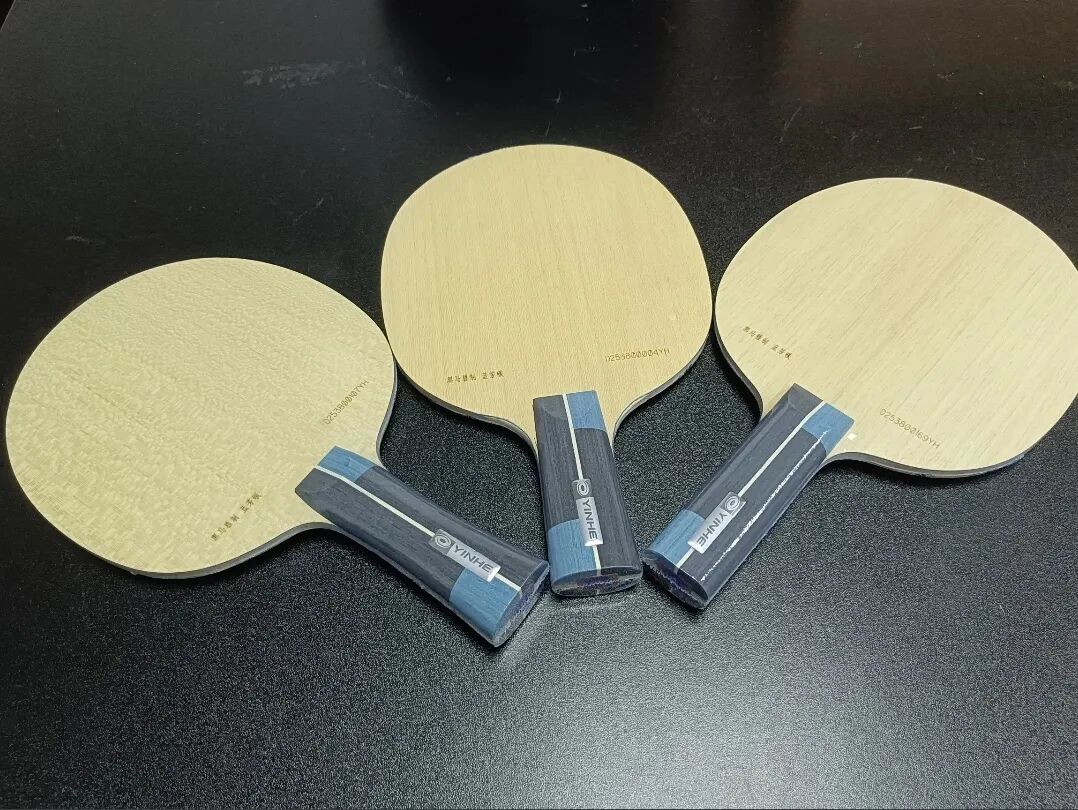
Outer blue arylate-carbon construction — generally considered Yinhe’s strongest suit. When I discussed the brief with the factory head, I asked for something in the softer-and-more-transparent style of the Liu Dingshuo custom. I’ve always felt the Liu Dingshuo custom has excellent depth but demands more effort and has a higher entry barrier. Easy playability really matters. With the Heima ALC, I think the dwelling sensation on contact and the explosive snap after full swing are both very well realized.
I’m not sure whether the Heima ALC or KLC has the higher re-purchase rate, but some players have bought four or five Heima ALCs. Some think it’s softer than the Fan Zhendong ALC; others treat it as a pro-grade version of the Zhang Jike ALC. Despite different opinions, the Heima ALC consistently gets strong reviews.
For rubber pairing — forehand tacky rubbers should still outperform tensor rubbers here. That said, I think tensor rubbers with good grip also work — things like T05 Hard, Z1 Turbo, Platinum DNA and similar.
Some players consider this the pinnacle of the Heima series, and I’m inclined to agree. Part of the reason may simply be that outer ALC construction is the most accessible to begin with.
3. Heima Custom KLC
Inner KLC construction. One of the higher compliments I’ve heard: some players feel it’s easier to play than the Q968 or S968. That said, for loading forehand topspin with rotation, it doesn’t quite match the W968. But the backhand explosiveness, among inner arylate-carbon blades, is genuinely at the top. So players with balanced forehand and backhand who use inner carbon love it. Many buy it again.
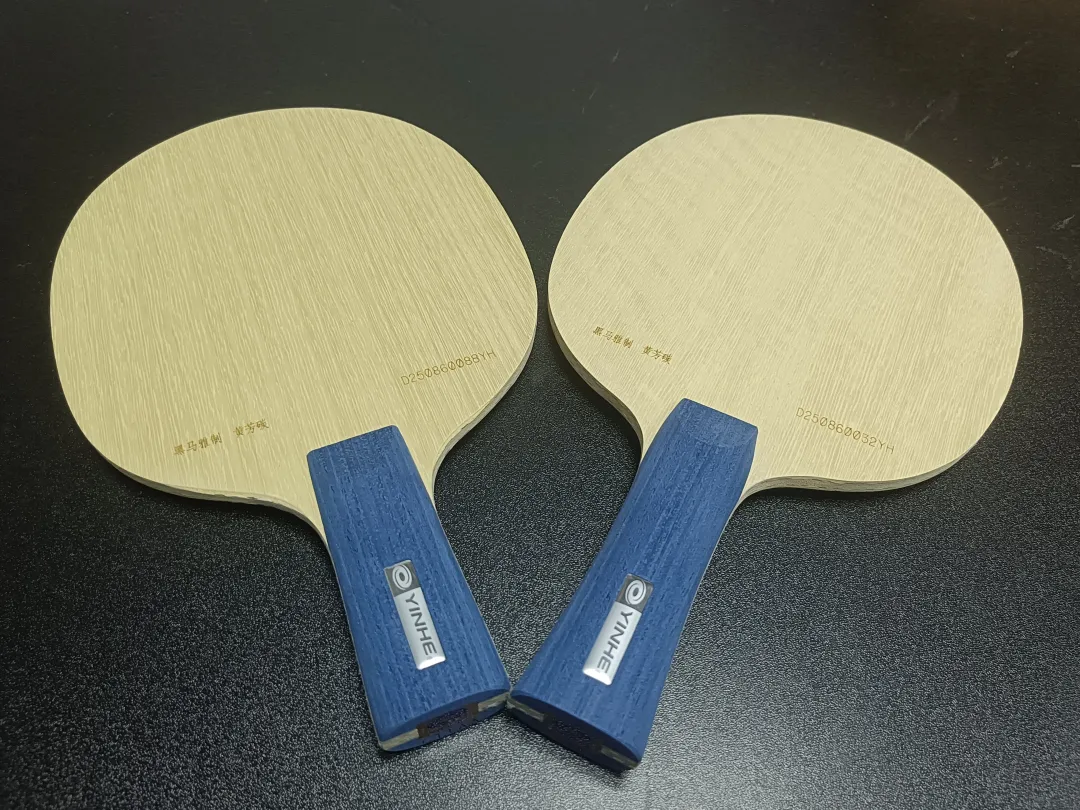
This blade’s forehand needs a bit of breaking in before it fully opens up. Once it does, the combination with the rubber becomes very natural and generating spin becomes easy.
Forehand rubber options to consider: boosted NEO Blue National, C55.0, or the very cost-effective Plasma 500S.
4. Mo Yu Winter Edition
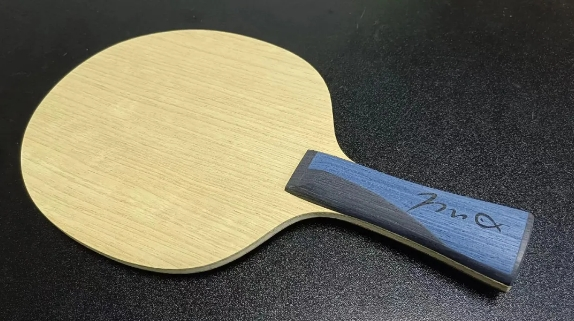
This one also has a strong re-purchase rate. Limba face veneer and power veneer, with inner Japanese import green arylate-carbon — this combination ensures the feel doesn’t fall off a cliff suddenly and the blade plays smooth and consistent. In terms of ball quality, it doesn’t threaten like the Heima custom series. But forgiveness is high, and it’s genuinely not picky about rubbers. I’ve tried tensor, slightly tacky, and full tacky on it — all worked. Forehand and backhand are also well balanced.
Many people see it as the inner carbon version of the Carbon 45 or Lin Gaoyuan ALC. The power ceiling isn’t sky-high, but it is rock-solid.
5. Miao
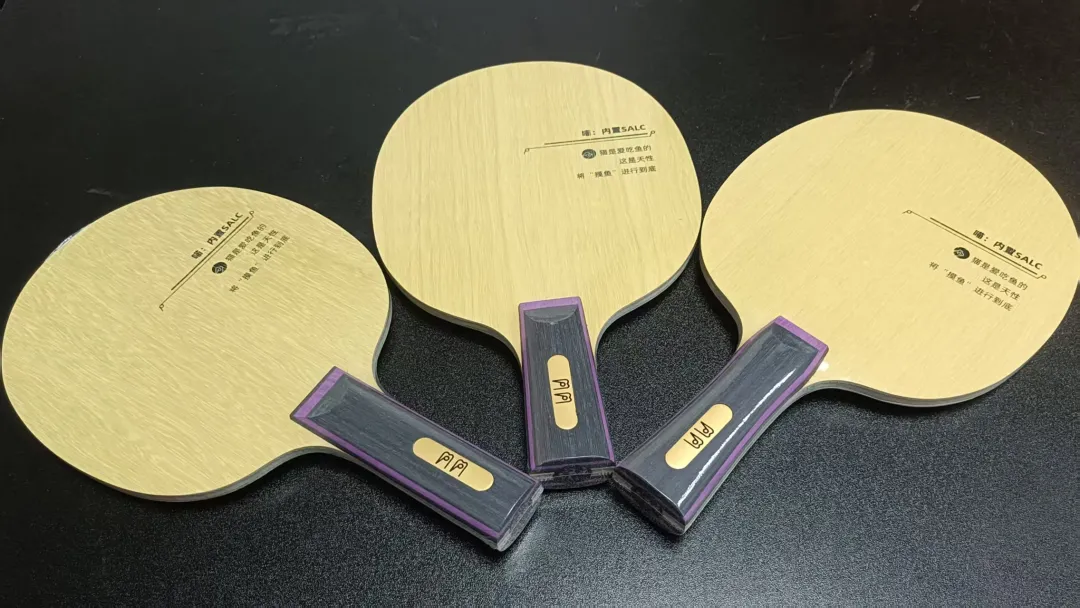
It sells well, partly because of the price — 260 yuan. The inner super blue arylate-carbon inside is appealing. The structure is also the same as Harimoto Tomokazu’s SALC, which is a selling point. The feel will naturally differ, but some players call it a success story: at that price, the Miao delivers real performance. Balanced and stable are its main traits. Not violent. It’s also not picky about rubbers — and it actually pairs better with Hurricane rubber than the Harimoto SALC does.
6. Yanyang
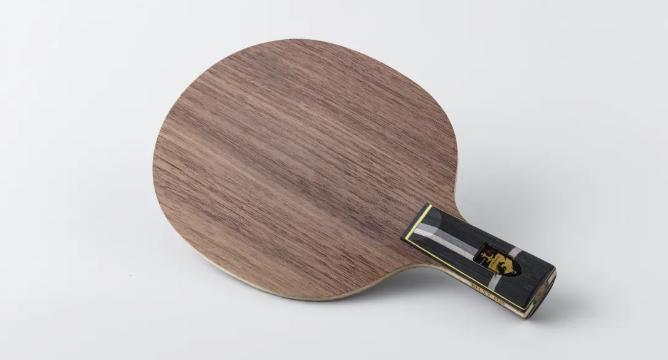
The reason we discontinued the green arylate-carbon Yanyang last year but kept the yellow arylate-carbon version is that the yellow one has a very distinct character. The attack response near the table is sharp, feedback is crisp, and when you put full swing in, it bites hard. People who like it really love it — some have bought seven or eight. People who don’t like it say it’s hard to get through.
Primarily, a few retired provincial-team players and advanced amateurs still use it. Discontinuing it completely didn’t feel right. It sells slowly, but that’s okay. For playing with pips — short pips, long pips — it can be surprisingly impressive. If you put a backhand tensor rubber on, keep the hardness moderate. For the forehand, tacky is generally the better call.
7. Yaonie PLUS
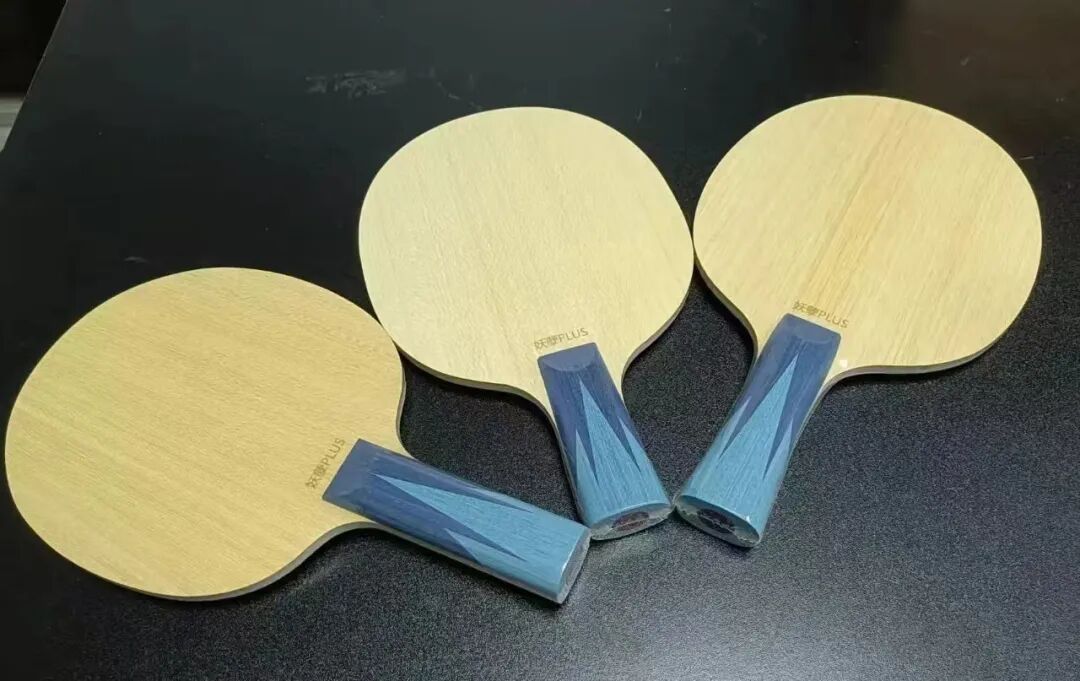
A hybrid structure with green arylate-carbon on one side and blue arylate-carbon on the other — outer layer. In practice, the green carbon side is more springy and resilient, while the blue carbon side dwells more. It suits some long pips players, or players whose forehand and backhand styles are quite different. Easy to get on the table, not picky about rubber.
Some readers may not love the idea of me talking up my own blades — that’s human nature. And it’s hard not to feel a bit proud when it’s your own product. You can always filter out those parts and just read my takes on other brands’ gear. Those will naturally be a bit more objective.